
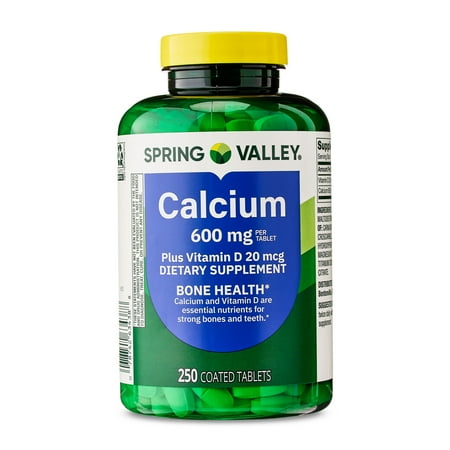

Spring Valley Calcium Plus Vitamin D Tablets Dietary Supplement 600 mg 250 Count
Analysis updated August 2026 · How Scout scores
At a glance
Summary
This supplement contains beneficial ingredients such as calcium carbonate and cholecalciferol, which support bone health and calcium absorption. However, the presence of maltodextrin, mineral oil, and titanium dioxide raises concerns due to their processed nature and potential health impacts. The formulation includes several additives, which detracts from its overall quality compared to cleaner alternatives.
Key ingredients 17
CholecalciferolVery Good
Cholecalciferol, or Vitamin D3, is crucial for calcium absorption and bone health. It is the most effective form of Vitamin D for raising blood levels. It also supports immune function and overall health.
Risks
Excessive intake can lead to hypercalcemia, a condition characterized by too much calcium in the blood.
Benefits
Enhances calcium absorption, supports bone health, and boosts immune function.
Medium Chain TriglyceridesGood
Medium chain triglycerides (MCTs) are fats that are rapidly absorbed and used for energy. They are beneficial for cognitive function and weight management. MCTs are derived from coconut or palm kernel oil.
Risks
Excessive consumption may lead to gastrointestinal discomfort.
Benefits
Supports energy production and may aid in weight management and cognitive function.
TocopherolGood
Tocopherol, a form of Vitamin E, acts as an antioxidant protecting cells from damage. It supports immune function and skin health. It is a beneficial addition to supplements for its protective properties.
Benefits
Acts as an antioxidant and supports immune function and skin health.
Calcium CarbonateNeutral
Standard formulation ingredient — neither beneficial nor harmful at typical use.
Risks
May cause gastrointestinal discomfort such as bloating or constipation in sensitive individuals.
Benefits
Provides a high amount of elemental calcium, supporting bone density and overall skeletal health.
Carnauba WaxNeutral
Carnauba wax is used as a coating agent to give tablets a shiny finish. It is derived from the leaves of the carnauba palm and is considered safe for consumption. It does not contribute any nutritional value.
See more about Carnauba Wax →Croscarmellose SodiumNeutral
Croscarmellose sodium is a disintegrant used to help tablets dissolve in the digestive tract. It is generally considered safe and effective for this purpose. It does not provide any nutritional benefits.
See more about Croscarmellose Sodium →GlycerinNeutral
Glycerin is used as a humectant to maintain moisture in tablets. It is generally recognized as safe and is metabolized as a carbohydrate. It does not offer significant nutritional benefits.
See more about Glycerin →Hydroxypropyl MethylcelluloseNeutral
Hydroxypropyl methylcellulose is a plant-derived compound used as a thickener and emulsifier. It is considered safe for consumption and is commonly used in supplements. It does not provide nutritional benefits.
See more about Hydroxypropyl Methylcellulose →SilicaNeutral
Silica is used as an anti-caking agent to prevent clumping in supplements. It is naturally occurring and considered safe for consumption. It does not provide nutritional benefits.
See more about Silica →Sodium AscorbateNeutral
Sodium ascorbate is a form of Vitamin C used for its antioxidant properties. It is less acidic than ascorbic acid, making it gentler on the stomach. It supports immune function and collagen synthesis.
Benefits
Supports immune function and acts as an antioxidant.
StarchNeutral
Starch is used as a filler and binder in supplements. It is a carbohydrate that provides no significant nutritional benefits. It is generally considered safe for consumption.
Triethyl CitrateNeutral
Triethyl citrate is used as a stabilizer and plasticizer in supplements. It is derived from citric acid and is generally recognized as safe. It does not provide nutritional benefits.
See more about Triethyl Citrate →MaltodextrinBad
Maltodextrin is a carbohydrate used as a filler or thickener in supplements. It is highly processed and can cause spikes in blood sugar levels. Its inclusion is often unnecessary and can be replaced with healthier alternatives.
Risks
May cause rapid spikes in blood sugar levels, which can be problematic for individuals with insulin sensitivity.
Mineral OilBad
Mineral oil is used as a lubricant in supplements but is a petroleum-derived product. It can interfere with the absorption of fat-soluble vitamins. Its use is generally discouraged in favor of more natural alternatives.
Risks
May interfere with the absorption of fat-soluble vitamins if consumed in large amounts.
Polysorbate 80Bad
Processed additive flagged under Scout's ingredient doctrine.
See more about Polysorbate 80 →SugarBad
Refined added sugar.
Risks
Excessive consumption can contribute to weight gain and dental issues.
Titanium DioxideVery Bad
Titanium dioxide is used as a whitening agent in supplements. It is a controversial additive due to potential health concerns related to its nanoparticle form. Its use is primarily cosmetic and does not provide nutritional benefits.
Risks
Potential health concerns related to its nanoparticle form, though more research is needed.
Processing
Processed Foods
Get the full breakdown in the Scout appTake Scout shopping
Scan any product to see lab results, healthy alternatives, and your personalized analysis.
Download on theApp Store GET IT ONGoogle Play