
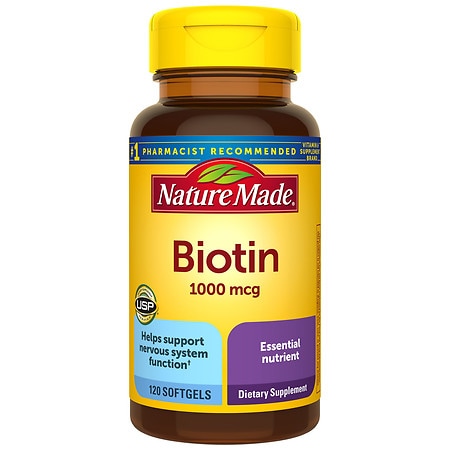



Nature Made Biotin 1000 mcg Softgels - 120ct: Gluten-Free, No Artificial Flavors, Colors or Preservatives
Analysis updated August 2026 · How Scout scores
At a glance
Summary
This biotin supplement includes a beneficial active ingredient, biotin, which supports energy metabolism and the health of hair, skin, and nails. However, the presence of soybean oil, a seed oil that can promote inflammation, and lecithin, a processed emulsifier, detracts from its overall quality. The formulation lacks artificial flavors, colors, or preservatives, which is positive, but the inclusion of these less desirable ingredients impacts its rating.
Key ingredients 6
BiotinGood
Biotin is a B-vitamin that plays a crucial role in energy metabolism and the health of hair, skin, and nails. It is a high-quality active ingredient in supplements, often used to support cellular energy production. Biotin is water-soluble, making it safe for consumption as excess amounts are excreted in urine.
Benefits
Biotin supports healthy hair, skin, and nails and is essential for energy metabolism.
GelatinNeutral
Gelatin is used as a gelling agent in softgels and is derived from animal collagen. It is a common ingredient in supplements and does not pose significant health concerns. Gelatin is generally considered safe and is used to encapsulate active ingredients effectively.
Benefits
Gelatin helps in forming the softgel structure, allowing for easy ingestion of the supplement.
GlycerinNeutral
Glycerin is used as a humectant and sweetener in supplements, helping to maintain moisture and improve texture. It is generally recognized as safe and does not pose significant health risks. Glycerin is a common ingredient in softgels, contributing to their pliability and preservation.
Benefits
Glycerin helps maintain moisture and improve the texture of the softgel.
Yellow BeeswaxNeutral
Yellow beeswax is used as a thickening agent and stabilizer in supplements. It is a natural ingredient that helps maintain the integrity of the softgel. Beeswax is generally considered safe and does not pose significant health risks.
Benefits
Beeswax helps stabilize the softgel and maintain its structure.
LecithinBad
Lecithin is used as an emulsifier in supplements, often derived from soy or sunflower. While it helps blend ingredients, it can be highly processed and may contain allergens. Lecithin is not considered harmful but is less desirable due to its processing and potential allergenic properties.
Risks
May contain allergens and is often highly processed.
Benefits
Lecithin aids in emulsifying ingredients, improving the consistency of the product.
Soybean OilVery Bad
Soybean oil is a seed oil high in omega-6 fatty acids, which can promote inflammation when consumed in excess. It is often highly processed and refined, which can reduce its nutritional quality. The presence of soybean oil in supplements is generally discouraged due to potential health concerns.
Risks
High omega-6 content may promote inflammation when consumed in excess.
Processing
Processed Foods
Get the full breakdown in the Scout appTake Scout shopping
Scan any product to see lab results, healthy alternatives, and your personalized analysis.
Download on theApp Store GET IT ONGoogle Play