
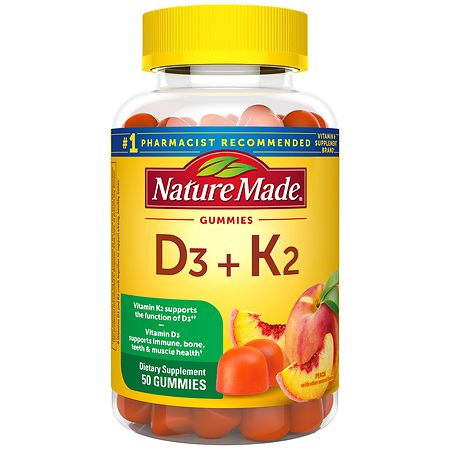



Nature Made Vitamin D3 K2 Gummies, Vitamin D 5000 IU per serving, Bone & Immune Support - 50ct
Analysis updated June 2026 · How Scout scores
At a glance
Summary
This supplement contains beneficial ingredients like Cholecalciferol and Menaquinone-7, which are important for bone and cardiovascular health. However, the presence of added colors and natural flavors, which can include artificial additives, detracts from its overall healthfulness. Additionally, the use of sunflower lecithin as an emulsifier indicates a moderate level of processing.
Key ingredients 13
CholecalciferolVery Good
Cholecalciferol, or Vitamin D3, is essential for calcium absorption and bone health. It is a high-quality active ingredient that supports immune function and overall health. Its inclusion in supplements is beneficial for individuals with limited sun exposure.
Benefits
Supports bone health and immune function by enhancing calcium absorption.
Menaquinone-7Very Good
Menaquinone-7, a form of Vitamin K2, plays a crucial role in bone and cardiovascular health. It helps direct calcium to the bones and away from arteries, reducing the risk of arterial calcification. This form of Vitamin K2 is highly bioavailable and effective.
Benefits
Promotes bone health and reduces the risk of arterial calcification by directing calcium to the bones.
WaterNeutral
Water is used as a solvent and to provide moisture in gummy formulations. It is a neutral ingredient with no significant health impacts. Its presence is essential for the texture and consistency of the gummies.
Benefits
Essential for maintaining the texture and consistency of the gummies.
PectinNeutral
Pectin is a natural gelling agent derived from fruits, used to provide structure to gummies. It is a plant-based alternative to gelatin, suitable for vegetarians. Its use is common in gummy formulations for texture.
Benefits
Provides a plant-based gelling option suitable for vegetarians.
Citric AcidNeutral
Citric acid is used as a preservative and to add tartness to gummies. It is a common food additive that enhances flavor and shelf life. Its presence is typical in gummy formulations for taste and preservation.
Risks
Excessive consumption may lead to dental erosion due to its acidic nature.
Benefits
Enhances flavor and acts as a preservative to extend shelf life.
Sodium CitrateNeutral
Sodium citrate is used as an acidity regulator and to enhance flavor in gummies. It is a common food additive that helps maintain pH balance. Its presence is typical in processed foods for flavor and stability.
Benefits
Helps maintain pH balance and enhances flavor.
Tapioca StarchNeutral
Tapioca starch is used as a thickening agent in gummy formulations. It is derived from cassava root and provides a gluten-free alternative for texture enhancement. Its use is common in gluten-free and processed foods for thickening.
Benefits
Provides a gluten-free thickening option for texture enhancement.
Organic Cane SugarBad
Processed additive flagged under Scout's ingredient doctrine.
Risks
Excessive consumption of sugar can lead to health issues such as obesity and dental problems.
Benefits
Provides a natural source of sweetness with fewer chemicals due to its organic nature.
Organic Tapioca SyrupBad
Processed additive flagged under Scout's ingredient doctrine.
Risks
High consumption can contribute to increased sugar intake and related health issues.
Benefits
Offers a natural sweetening option with fewer chemicals due to its organic status.
Colors AddedBad
Added colors are used to enhance the visual appeal of gummies. They may include artificial dyes, which can be associated with hyperactivity in children and other health concerns. The use of artificial colors is generally discouraged in health-focused products.
Risks
Potential links to hyperactivity and allergic reactions in sensitive individuals.
Modified Food StarchBad
Chemically modified starch additive.
Benefits
Improves texture and stability in gummy formulations.
Natural FlavorsBad
Natural flavors are used to enhance the taste of gummies but can be a catch-all term for various additives. The lack of transparency in their composition can be concerning for consumers seeking clean labels. They are often criticized for not being as 'natural' as implied.
Risks
Potential for undisclosed additives and allergens.
Sunflower LecithinBad
Sunflower lecithin is used as an emulsifier to improve texture and consistency. While it is a refined product, it is not as harmful as seed oils but still considered a processed additive. Its use is common in processed foods for emulsification.
Risks
Potential for allergic reactions in sensitive individuals.
Benefits
Improves texture and consistency in food products.
Processing
Ultra-Processed Foods
Get the full breakdown in the Scout appTake Scout shopping
Scan any product to see lab results, healthy alternatives, and your personalized analysis.
Download on theApp Store GET IT ONGoogle PlayAmazon pricing & content
Amazon price as of . Product prices and availability are accurate as of the date/time indicated and are subject to change. Any price and availability information displayed on Amazon.com at the time of purchase will apply to the purchase of this product.
CERTAIN CONTENT THAT APPEARS ON THIS SITE COMES FROM AMAZON. THIS CONTENT IS PROVIDED “AS IS” AND IS SUBJECT TO CHANGE OR REMOVAL AT ANY TIME.