
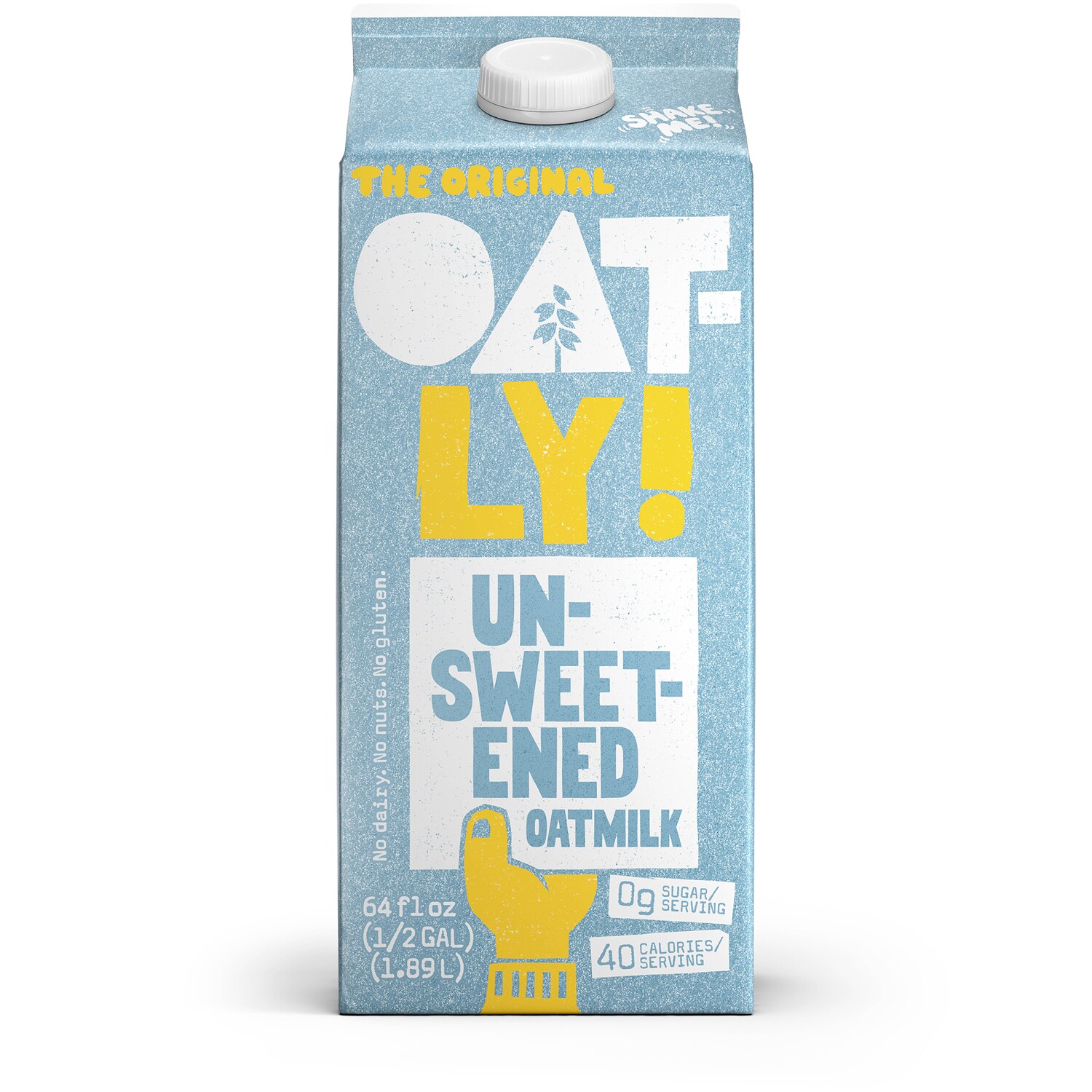

Oatly Unsweetened Oatmilk
Analysis updated August 2026 · How Scout scores
At a glance
Summary
Oatly Unsweetened Oatmilk is an ultra-processed product, which limits its score despite some positive aspects. It contains beneficial ingredients like oats, riboflavin, and vitamin B12, which enhance its nutritional profile. However, the presence of low erucic acid rapeseed oil, a highly processed seed oil, and multiple additives detracts from its overall healthiness.
Key ingredients 13
OatsVery Good
Oats are a whole grain that provides dietary fiber and essential nutrients. They are minimally processed and contribute to heart health and digestion. Oats are a good source of beta-glucans, which can help lower cholesterol levels.
Risks
May contain gluten if not certified gluten-free, which can be a concern for those with celiac disease or gluten sensitivity.
Benefits
Rich in dietary fiber and beta-glucans, supporting heart health and digestion.
Sea saltGood
Sea salt is a minimally processed source of sodium and trace minerals. It enhances flavor and provides essential electrolytes. Unlike refined salt, it retains some natural minerals.
Risks
Excessive sodium intake can contribute to hypertension, but moderate use is generally safe.
Benefits
Provides essential electrolytes and trace minerals, enhancing flavor and nutritional value.
RiboflavinGood
Riboflavin, or vitamin B2, is essential for energy production and cellular function. It is often added to fortify plant-based milks to enhance their nutritional profile. It supports skin health and energy metabolism.
Benefits
Supports energy production and cellular function, contributing to overall health.
Vitamin B12Good
Vitamin B12 is essential for nerve function and red blood cell production. It is often added to plant-based milks to compensate for the lack of naturally occurring B12. It is crucial for vegetarians and vegans who may not get enough from their diet.
Benefits
Supports nerve function and red blood cell production, crucial for overall health.
WaterNeutral
Water is a neutral ingredient that serves as a base for the oatmilk. It is essential for hydration but does not provide additional nutritional benefits. It is used to dilute and blend other ingredients.
See more about Water →Dipotassium phosphateNeutral
Dipotassium phosphate is used as a stabilizer and emulsifier in food products. It helps maintain texture and consistency but does not provide nutritional benefits. It is generally recognized as safe when used in small amounts.
Risks
Excessive consumption may lead to imbalances in mineral levels, but this is unlikely at typical usage levels.
Calcium carbonateNeutral
Standard formulation ingredient — neither beneficial nor harmful at typical use.
Risks
Excessive intake can lead to hypercalcemia, but this is rare with normal consumption.
Benefits
Provides a source of calcium, supporting bone health and density.
Tricalcium phosphateNeutral
Tricalcium phosphate is used as a calcium fortifier in food products. It helps increase the calcium content but does not offer additional health benefits beyond mineral supplementation. It is generally recognized as safe for consumption.
Benefits
Provides additional calcium, supporting bone health.
Citrus fiberNeutral
Citrus fiber is used as a natural stabilizer and thickener in food products. It is derived from citrus fruits and adds fiber content. It is generally recognized as safe and contributes to texture.
Benefits
Adds dietary fiber, which can support digestive health.
Dicalcium phosphateNeutral
Dicalcium phosphate is used as a calcium and phosphorus fortifier. It helps improve the mineral content of food products but does not provide additional health benefits. It is generally recognized as safe for consumption.
Benefits
Provides calcium and phosphorus, supporting bone health.
Vitamin A acetateNeutral
Vitamin A acetate is a synthetic form of vitamin A used to fortify foods. It supports vision and immune function but is not naturally occurring in plant-based milks. It is generally recognized as safe when used in appropriate amounts.
Risks
Excessive intake can lead to hypervitaminosis A, but this is rare with normal consumption.
Benefits
Supports vision and immune function, enhancing the nutritional profile of the product.
Vitamin D2Neutral
Vitamin D2 is a plant-based form of vitamin D used to fortify foods. It supports bone health and calcium absorption but is less effective than vitamin D3. It is generally recognized as safe for consumption.
Benefits
Supports bone health and calcium absorption, enhancing the nutritional profile of the product.
Low erucic acid rapeseed oilVery Bad
Rapeseed oil is a seed oil high in omega-6 fatty acids, which can promote inflammation when consumed in excess. It is highly processed and often refined, which can reduce its nutritional quality. The extraction process may involve chemical solvents.
Risks
High omega-6 content may promote inflammation when consumed in excess.
Processing
Ultra-Processed Foods
Get the full breakdown in the Scout appTake Scout shopping
Scan any product to see lab results, healthy alternatives, and your personalized analysis.
Download on theApp Store GET IT ONGoogle PlayAmazon pricing & content
Amazon price as of . Product prices and availability are accurate as of the date/time indicated and are subject to change. Any price and availability information displayed on Amazon.com at the time of purchase will apply to the purchase of this product.
CERTAIN CONTENT THAT APPEARS ON THIS SITE COMES FROM AMAZON. THIS CONTENT IS PROVIDED “AS IS” AND IS SUBJECT TO CHANGE OR REMOVAL AT ANY TIME.