
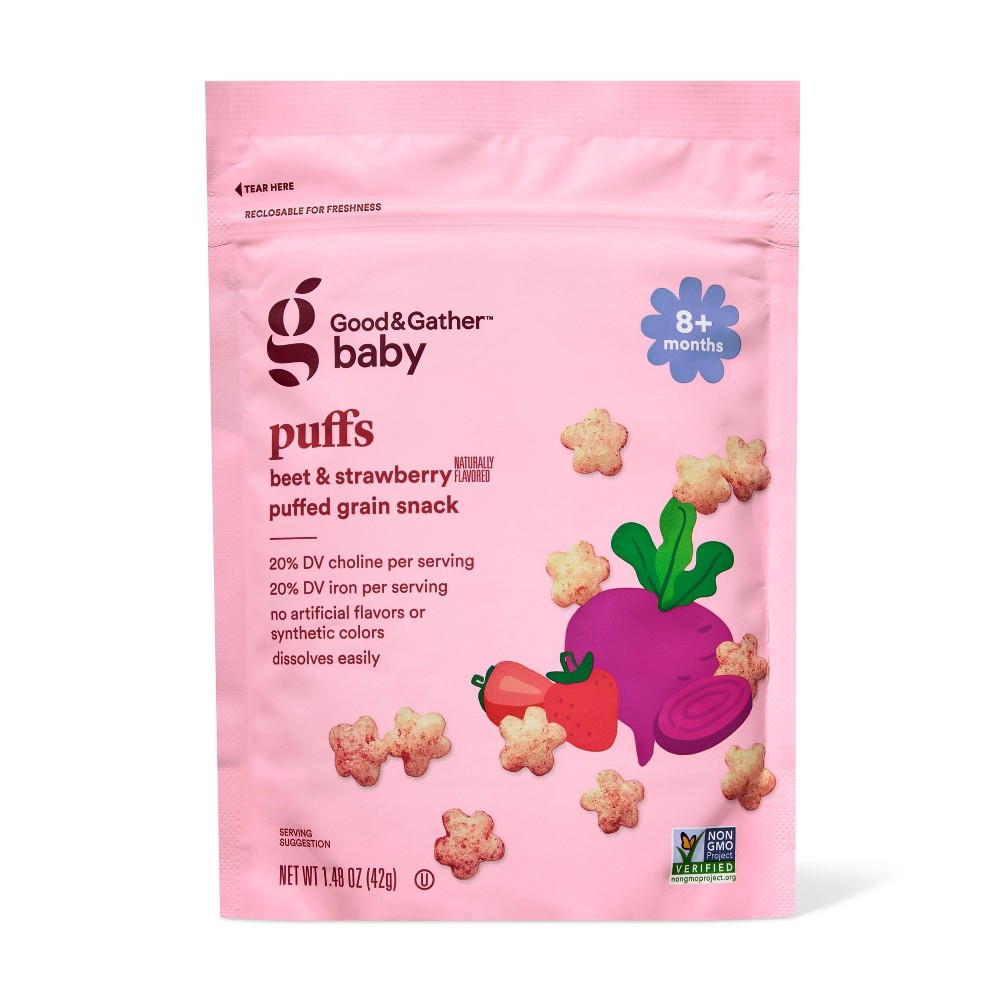

Puffs Beet & Strawberry Baby Snacks - 1.48oz - Good & Gather™: Age 8 Months and Up, Ready to Eat, 3rd Stage, Bag
Analysis updated July 2026 · How Scout scores
At a glance
Summary
This product contains several beneficial ingredients such as whole grain sorghum flour, beet powder, and strawberry powder, which contribute to its nutritional value. However, it is a processed food with the inclusion of natural flavors, which are often highly processed and lack transparency. The presence of multiple additives, although not excessive, also impacts the overall score, reflecting its moderate processing level.
Key ingredients 15
Whole grain sorghum flourGood
Whole grain sorghum flour is a nutritious whole grain that provides fiber and essential nutrients. It is minimally processed, retaining its natural vitamins and minerals. Sorghum is gluten-free, making it suitable for those with gluten sensitivities.
Benefits
Rich in fiber and antioxidants, which support digestive health and may reduce inflammation.
Beet powderGood
Beet powder is a concentrated form of beets, retaining many of the nutrients and antioxidants found in fresh beets. It is minimally processed and adds natural color and nutrients to foods. Beets are known for their potential to support cardiovascular health.
Benefits
Rich in nitrates and antioxidants, which may support blood pressure regulation and overall cardiovascular health.
Strawberry powderGood
Strawberry powder is made from dehydrated strawberries, preserving their natural vitamins and antioxidants. It is a minimally processed ingredient that adds flavor and nutrients. Strawberries are known for their high vitamin C content and antioxidant properties.
Benefits
Provides vitamin C and antioxidants that support immune function and reduce oxidative stress.
Mixed tocopherolsGood
Mixed tocopherols are a form of vitamin E used as a natural preservative to prevent oxidation. They are derived from natural sources and help maintain the freshness of food products. Vitamin E is an antioxidant that supports immune function and skin health.
Benefits
Acts as an antioxidant, protecting cells from damage and supporting overall health.
Choline bitartrateGood
Choline bitartrate is a source of choline, an essential nutrient important for brain health and liver function. It is added to foods to enhance nutritional value, particularly in products for infants and children. Choline supports cognitive development and memory.
Benefits
Supports brain health and cognitive function, particularly important during early development.
Vitamin EGood
Vitamin E is an essential nutrient with antioxidant properties, protecting cells from oxidative damage. It is often added to foods to enhance nutritional value and preserve freshness. Vitamin E supports immune function and skin health.
Benefits
Acts as an antioxidant, supporting immune health and protecting against oxidative stress.
Vitamin B1Good
Vitamin B1, also known as thiamine, is essential for energy metabolism and nerve function. It is added to foods to ensure adequate intake, particularly in processed foods. Thiamine supports energy production and neurological health.
Benefits
Supports energy metabolism and is crucial for proper nerve function.
Vitamin B3Good
Vitamin B3, or niacin, is important for energy production and maintaining healthy skin and nerves. It is often added to foods to prevent deficiencies and support overall health. Niacin plays a role in converting food into energy.
Benefits
Supports energy metabolism and helps maintain healthy skin and nerves.
Vitamin B6Good
Vitamin B6 is essential for protein metabolism and cognitive development. It is added to foods to enhance nutritional content and support brain health. Vitamin B6 is involved in neurotransmitter synthesis and immune function.
Benefits
Supports brain health and immune function, playing a role in neurotransmitter synthesis.
Electrolytic ironGood
Electrolytic iron is a form of iron used to fortify foods and prevent iron deficiency anemia. It is an essential mineral for oxygen transport and energy production. Iron fortification helps meet daily nutritional needs, especially in infants and children.
Risks
Excessive iron intake can lead to toxicity, but this is rare with normal consumption.
Benefits
Supports oxygen transport and energy production, preventing iron deficiency anemia.
Rice flourNeutral
Rice flour is a common gluten-free alternative used in various food products. It is a refined carbohydrate with limited nutritional benefits compared to whole grains. While it provides energy, it lacks fiber and essential nutrients found in whole grains.
Benefits
Provides a gluten-free carbohydrate source suitable for those with gluten intolerance.
Apple juice concentrateNeutral
Apple juice concentrate is used as a natural sweetener in food products. It is a processed form of apple juice with reduced water content, concentrating sugars. While it adds natural sweetness, it lacks the fiber and nutrients of whole apples.
Risks
High in natural sugars, which can contribute to increased calorie intake if consumed in excess.
Benefits
Provides natural sweetness without the need for added refined sugars.
Calcium carbonateNeutral
Standard formulation ingredient — neither beneficial nor harmful at typical use.
Risks
Excessive intake may lead to hypercalcemia, but this is rare with normal consumption.
Benefits
Supports bone health and helps prevent osteoporosis by providing essential calcium.
Natural flavorBad
Natural flavor is a broad term for flavoring agents derived from natural sources but often involves significant processing. It lacks transparency, making it difficult to assess its exact composition and health impact. The use of natural flavors can mask the absence of real ingredients.
Risks
Potential for undisclosed allergens or additives that may cause sensitivities in some individuals.
MaltodextrinBad
Processed additive flagged under Scout's ingredient doctrine.
Risks
May cause spikes in blood sugar levels, particularly in individuals with insulin sensitivity.
Benefits
Provides a quick source of energy, useful in sports nutrition and energy products.
Processing
Processed Foods
Get the full breakdown in the Scout appTake Scout shopping
Scan any product to see lab results, healthy alternatives, and your personalized analysis.
Download on theApp Store GET IT ONGoogle Play