
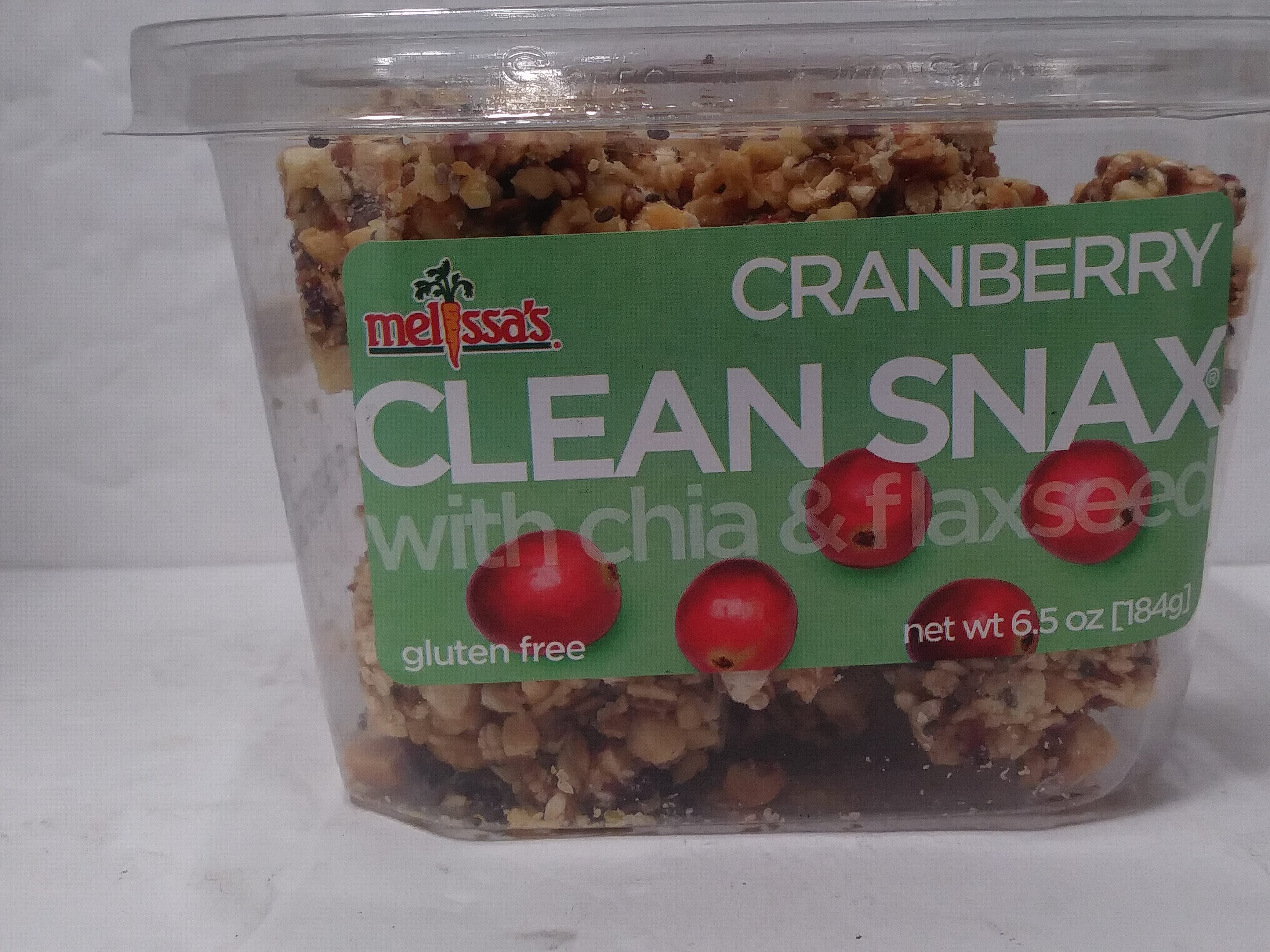



MELISSA'S, CLEAN SNAX WITH CHIA & FLAXSEED, CRANBERRY
Analysis updated August 2026 · How Scout scores
At a glance
Summary
This snack bar contains a variety of nutrient-dense ingredients such as peanuts, cranberries, flaxseed, and chia seeds, which provide healthy fats, fiber, and antioxidants. However, the presence of evaporated cane juice and rice syrup contributes to a high sugar content, which is a concern. Despite being processed, the product avoids major harmful ingredients like seed oils and artificial additives, allowing it to score relatively well within its category.
Key ingredients 11
FlaxseedVery Good
Flaxseed is high in omega-3 fatty acids and fiber, promoting heart health and digestive regularity. It contains lignans, which have antioxidant properties. Flaxseed is minimally processed and retains its nutritional benefits.
Risks
High intake may interfere with certain medications and cause digestive issues if not consumed with enough water.
Benefits
Flaxseed supports heart health and provides essential omega-3 fatty acids and fiber.
PeanutsGood
Peanuts are a good source of protein and healthy fats, contributing to satiety and energy. They contain resveratrol and other antioxidants that support heart health. Peanuts are minimally processed and retain their nutritional value.
Risks
Peanuts can be a common allergen and may cause severe allergic reactions in sensitive individuals.
Benefits
Rich in protein and healthy fats, peanuts support heart health and provide sustained energy.
CranberriesGood
Cranberries are rich in antioxidants and vitamin C, which support immune function and reduce oxidative stress. They are known for their role in urinary tract health. The natural sugars in cranberries are balanced by their fiber content.
Risks
Excessive consumption may lead to digestive discomfort due to their high acidity.
Benefits
Cranberries support urinary tract health and provide antioxidants that protect against oxidative damage.
White Sesame SeedsGood
White sesame seeds are a good source of healthy fats, protein, and minerals like calcium and magnesium. They contain lignans and phytosterols that support cardiovascular health. Sesame seeds are minimally processed and nutrient-dense.
Risks
Sesame seeds can be an allergen and may cause reactions in sensitive individuals.
Benefits
Rich in healthy fats and minerals, sesame seeds support bone health and cardiovascular function.
AlmondsGood
Almonds are rich in healthy monounsaturated fats, vitamin E, and magnesium, supporting heart health and antioxidant defense. They are minimally processed and provide a good source of plant-based protein. Almonds contribute to satiety and energy balance.
Risks
Almonds can be a common allergen and may cause reactions in sensitive individuals.
Benefits
Rich in healthy fats and nutrients, almonds support heart health and provide antioxidant benefits.
CashewsGood
Cashews provide healthy fats, protein, and essential minerals like magnesium and zinc. They support heart health and energy metabolism. Cashews are minimally processed and offer a creamy texture and flavor.
Risks
Cashews can be an allergen and may cause reactions in sensitive individuals.
Benefits
Provide healthy fats and essential minerals, supporting heart health and energy metabolism.
Chia SeedsGood
Chia seeds are high in omega-3 fatty acids, fiber, and protein, promoting heart health and digestive regularity. They absorb liquid and form a gel, which can aid in satiety. Chia seeds are minimally processed and nutrient-dense.
Risks
Excessive consumption without adequate hydration may cause digestive discomfort.
Benefits
Support heart health and provide essential omega-3 fatty acids and fiber.
HoneyGood
Traditional whole-food sweetener with trace enzymes and antioxidants.
Risks
High consumption can lead to increased blood sugar levels and related health issues.
Benefits
Provides natural sweetness with trace antioxidants and antimicrobial properties.
Sea SaltGood
Sea salt is a natural source of sodium and trace minerals, supporting electrolyte balance and hydration. It is minimally processed compared to refined table salt. Sea salt enhances flavor without the additives found in refined salts.
Risks
Excessive sodium intake can lead to hypertension and cardiovascular issues.
Benefits
Provides essential minerals and supports electrolyte balance and hydration.
Evaporated Cane JuiceNeutral
Evaporated cane juice is a less refined sugar that retains some molasses content, providing trace minerals. It is still a source of added sugar and should be consumed in moderation. Compared to refined sugar, it offers slightly more nutrients but similar caloric content.
Risks
High consumption of added sugars can contribute to metabolic disorders and dental issues.
Benefits
Provides a natural sweetening option with trace minerals compared to refined sugar.
Rice SyrupNeutral
Rice syrup is a sweetener derived from rice, providing glucose as its primary sugar. It is less sweet than cane sugar and often used in processed foods. While it offers a natural alternative to refined sugars, it still contributes to overall sugar intake.
Risks
Excessive consumption can lead to increased blood sugar levels and related health issues.
Benefits
Offers a natural sweetening option with a lower glycemic index than some other sweeteners.
Processing
Processed Foods
Get the full breakdown in the Scout appTake Scout shopping
Scan any product to see lab results, healthy alternatives, and your personalized analysis.
Download on theApp Store GET IT ONGoogle Play