

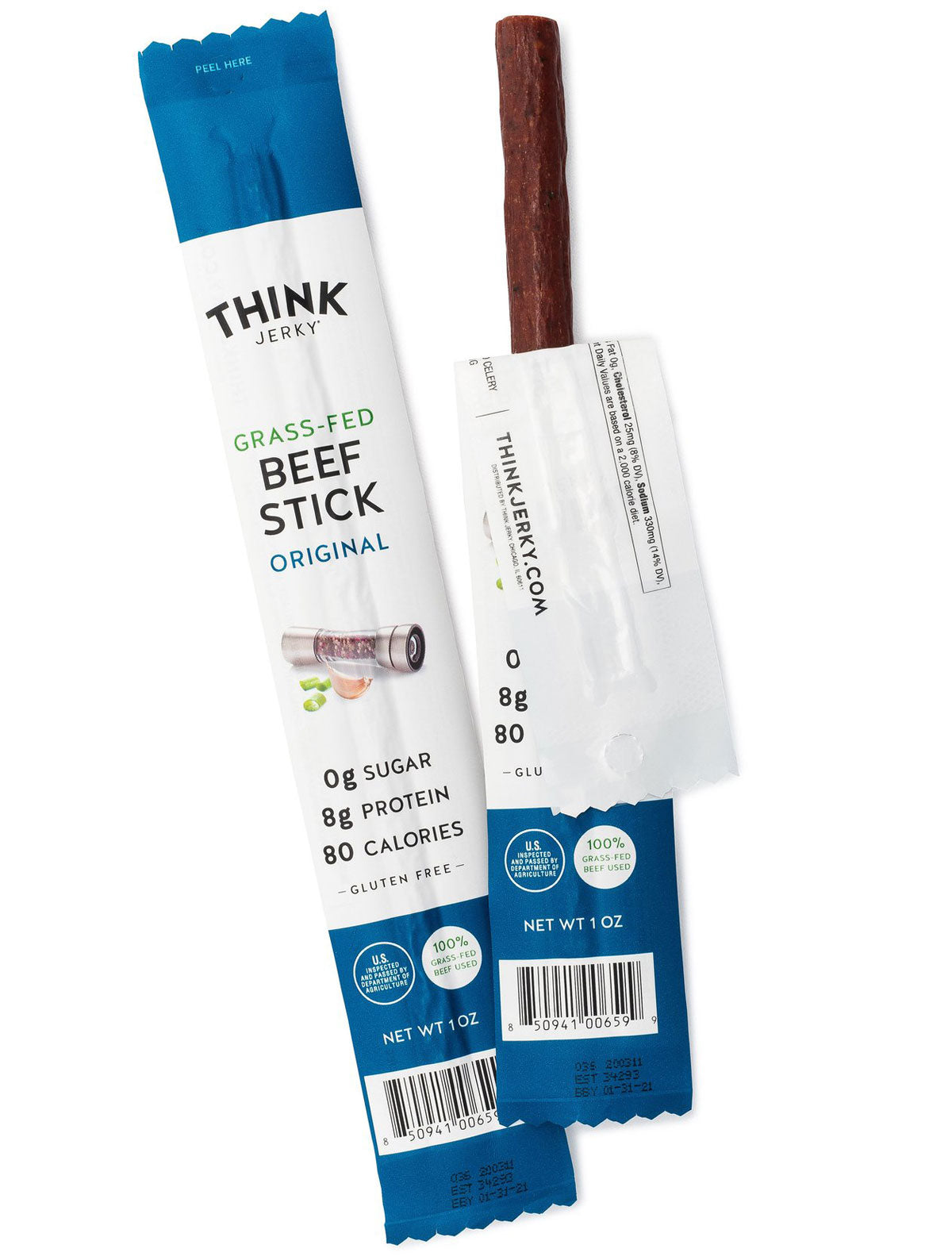





Kirkland Signature GRASS-FED BEEF STICKS
Kirkland SignatureAnalysis updated August 2026 · How Scout scores
Near you
Kirkland Signature is carried at Costco stores. Find one within 25 miles.
At a glance
Summary
The Kirkland Signature Grass-Fed Beef Sticks are made with high-quality grass-fed beef, which is a rich source of protein and beneficial omega-3 fatty acids. The product includes natural preservatives like vinegar and cultured celery powder, contributing to a cleaner label. However, the presence of yeast extract, which can contain glutamates, and the processed nature of the product slightly reduce its overall health score.
Key ingredients 13
BeefVery Good
Grass-fed beef is a high-quality protein source with a rich amino acid profile. It contains higher levels of omega-3 fatty acids and antioxidants compared to grain-fed beef. The grass-fed label indicates better animal welfare and environmental practices.
Benefits
Rich in essential amino acids and healthy fats that support muscle growth and overall health. Contains higher levels of beneficial nutrients like omega-3s and CLA.
Sea SaltGood
Sea salt is a natural source of sodium and trace minerals. It is less processed than regular table salt and retains beneficial minerals. The use of sea salt can enhance flavor without excessive processing.
Risks
Excessive sodium intake can lead to high blood pressure and cardiovascular issues.
Benefits
Provides essential sodium and trace minerals that are important for maintaining electrolyte balance.
VinegarGood
Vinegar is a natural preservative and flavoring agent. It provides acidity that can enhance flavor and preserve the product. The use of vinegar is associated with minimal processing and natural preservation.
Benefits
Acts as a natural preservative and flavor enhancer, contributing to the product's shelf life and taste.
SpicesGood
Spices are used to enhance flavor and may provide antioxidant benefits. They are minimally processed and can contribute to the product's taste profile. The use of spices is generally associated with positive health impacts due to their natural origin.
Benefits
Adds flavor and potential antioxidant benefits, contributing to the product's overall taste and nutritional profile.
Cultured Celery PowderGood
Cultured celery powder is used as a natural preservative due to its nitrate content. It is a cleaner alternative to synthetic preservatives like sodium nitrite. The use of cultured celery powder aligns with cleaner labeling practices.
Benefits
Acts as a natural preservative, helping to maintain product safety and shelf life without synthetic additives.
PaprikaGood
Paprika is a spice that adds color and flavor to foods. It is rich in antioxidants and vitamins like vitamin A. The use of paprika is associated with minimal processing and natural flavor enhancement.
Benefits
Provides color, flavor, and antioxidants, contributing to the product's nutritional and sensory qualities.
Citrus ExtractGood
Citrus extract is used for its natural preservative and flavoring properties. It contains antioxidants and can enhance the product's freshness. The use of citrus extract is associated with natural preservation methods.
Benefits
Acts as a natural preservative and flavor enhancer, contributing to the product's freshness and taste.
Garlic PowderGood
Garlic powder is used for flavor enhancement and may offer health benefits due to its antioxidant properties. It is minimally processed and adds a distinct taste to the product. The use of garlic powder is associated with positive health impacts.
Benefits
Enhances flavor and provides antioxidants, contributing to the product's taste and potential health benefits.
Rosemary ExtractGood
Rosemary extract is used as a natural antioxidant and preservative. It helps extend the shelf life of products by preventing oxidation. The use of rosemary extract is associated with natural preservation and flavor enhancement.
Benefits
Acts as a natural antioxidant, helping to preserve the product and enhance its flavor profile.
WaterNeutral
Water is used as a processing aid and does not contribute nutritional value. It helps in maintaining moisture content in the product. There are no health concerns associated with water in this context.
See more about Water →Encapsulated Lactic AcidNeutral
Encapsulated lactic acid is used as a preservative and flavor enhancer. It helps in maintaining the product's shelf life and safety. The encapsulation process minimizes direct acid contact, reducing potential flavor impact.
Benefits
Helps preserve the product and maintain its safety by inhibiting microbial growth.
Encapsulated Citric AcidNeutral
Encapsulated citric acid acts as a preservative and acidity regulator. It is commonly used to enhance flavor and preserve freshness. The encapsulation process helps control the release of acid, minimizing flavor alteration.
Benefits
Contributes to product stability and flavor enhancement by controlling acidity.
Yeast ExtractBad
Yeast extract is used as a flavor enhancer and can contain naturally occurring glutamates. It is often used to boost umami flavor in processed foods. Some individuals may be sensitive to glutamates, leading to potential adverse reactions.
Risks
May cause sensitivity reactions in individuals sensitive to glutamates.
Benefits
Enhances flavor by providing umami taste, which can improve the overall palatability of the product.
Processing
Processed Foods
Get the full breakdown in the Scout appTake Scout shopping
Scan any product to see lab results, healthy alternatives, and your personalized analysis.
Download on theApp Store GET IT ONGoogle PlayAmazon pricing & content
CERTAIN CONTENT THAT APPEARS ON THIS SITE COMES FROM AMAZON. THIS CONTENT IS PROVIDED “AS IS” AND IS SUBJECT TO CHANGE OR REMOVAL AT ANY TIME.