
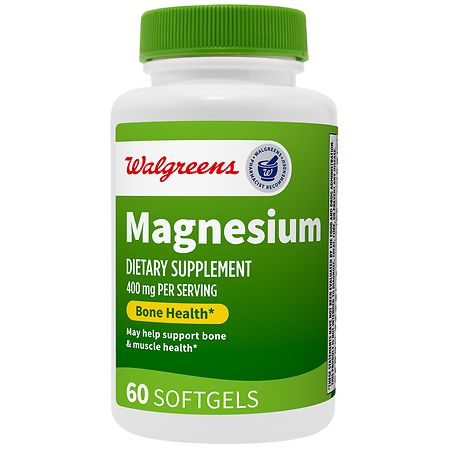

Walgreens Magnesium 400 mg Softgels (60 days) - 60.0 ea
Analysis updated September 2026 · How Scout scores
At a glance
Summary
This magnesium supplement contains magnesium oxide, which is a cost-effective but less bioavailable form of magnesium. The presence of carrageenan, a controversial thickening agent linked to potential digestive issues, and lecithin, a processed emulsifier, slightly detracts from its overall quality. While the formulation is functional, the inclusion of these additives impacts its rating.
Key ingredients 8
Magnesium OxideGood
Magnesium oxide is a common form of magnesium used in supplements to support bone health and muscle function. It is a cost-effective source of magnesium, though it has lower bioavailability compared to other forms like magnesium citrate. Despite this, it remains a popular choice for its affordability and effectiveness in increasing magnesium levels.
Risks
Excessive intake may lead to gastrointestinal discomfort, including diarrhea.
Benefits
Supports muscle and nerve function, and is essential for bone health.
Medium Chain TriglyceridesNeutral
Medium chain triglycerides (MCTs) are fats that are more easily digested than long-chain triglycerides. They are often used in supplements for their potential to provide quick energy. MCTs are generally considered neutral in terms of health impact when consumed in moderation.
Risks
Excessive consumption may lead to digestive issues such as diarrhea or stomach cramps.
Benefits
May provide a quick source of energy and support weight management.
Hydroxypropyl StarchNeutral
Hydroxypropyl starch is a modified starch used as a thickener or stabilizer in food products. It is generally recognized as safe and does not significantly impact health. Its role in supplements is primarily functional, aiding in the consistency and stability of the product.
GlycerinNeutral
Glycerin is a sugar alcohol used as a sweetener and humectant in food and supplements. It is generally considered safe and does not have a significant impact on blood sugar levels. Its primary function in supplements is to maintain moisture and improve texture.
Risks
Excessive consumption may cause digestive discomfort.
Benefits
Helps maintain moisture and improve the texture of supplements.
Purified Water USPNeutral
Purified water is used as a solvent in many food and supplement products. It is free from impurities and contaminants, ensuring product safety and quality. Its role is purely functional, providing a medium for other ingredients.
Benefits
Ensures product safety and quality by providing a clean solvent.
Red FerricNeutral
Red ferric, likely referring to iron oxide, is used as a colorant in supplements. It is generally recognized as safe when used in small amounts. Its primary function is aesthetic, providing color to the product.
Benefits
Provides color to supplements without significant nutritional benefits.
CarrageenanBad
Carrageenan is a thickening agent derived from red seaweed, often used in processed foods. It has been associated with gastrointestinal inflammation and other digestive issues in some studies. Its use in supplements is controversial due to these potential health concerns.
Risks
May cause gastrointestinal inflammation and discomfort in sensitive individuals.
Benefits
Provides thickening and stabilizing properties in food products.
LecithinBad
Lecithin is an emulsifier commonly derived from soy or sunflower, used to improve texture and consistency in food products. While generally safe, it is considered a processed ingredient and may contain traces of allergens. Its role in supplements is primarily functional, not nutritional.
Risks
May contain traces of allergens such as soy, which can be problematic for sensitive individuals.
Benefits
Improves texture and consistency in food and supplement products.
Processing
Processed Foods
Get the full breakdown in the Scout appTake Scout shopping
Scan any product to see lab results, healthy alternatives, and your personalized analysis.
Download on theApp Store GET IT ONGoogle PlayAmazon pricing & content
Amazon price as of . Product prices and availability are accurate as of the date/time indicated and are subject to change. Any price and availability information displayed on Amazon.com at the time of purchase will apply to the purchase of this product.
CERTAIN CONTENT THAT APPEARS ON THIS SITE COMES FROM AMAZON. THIS CONTENT IS PROVIDED “AS IS” AND IS SUBJECT TO CHANGE OR REMOVAL AT ANY TIME.