
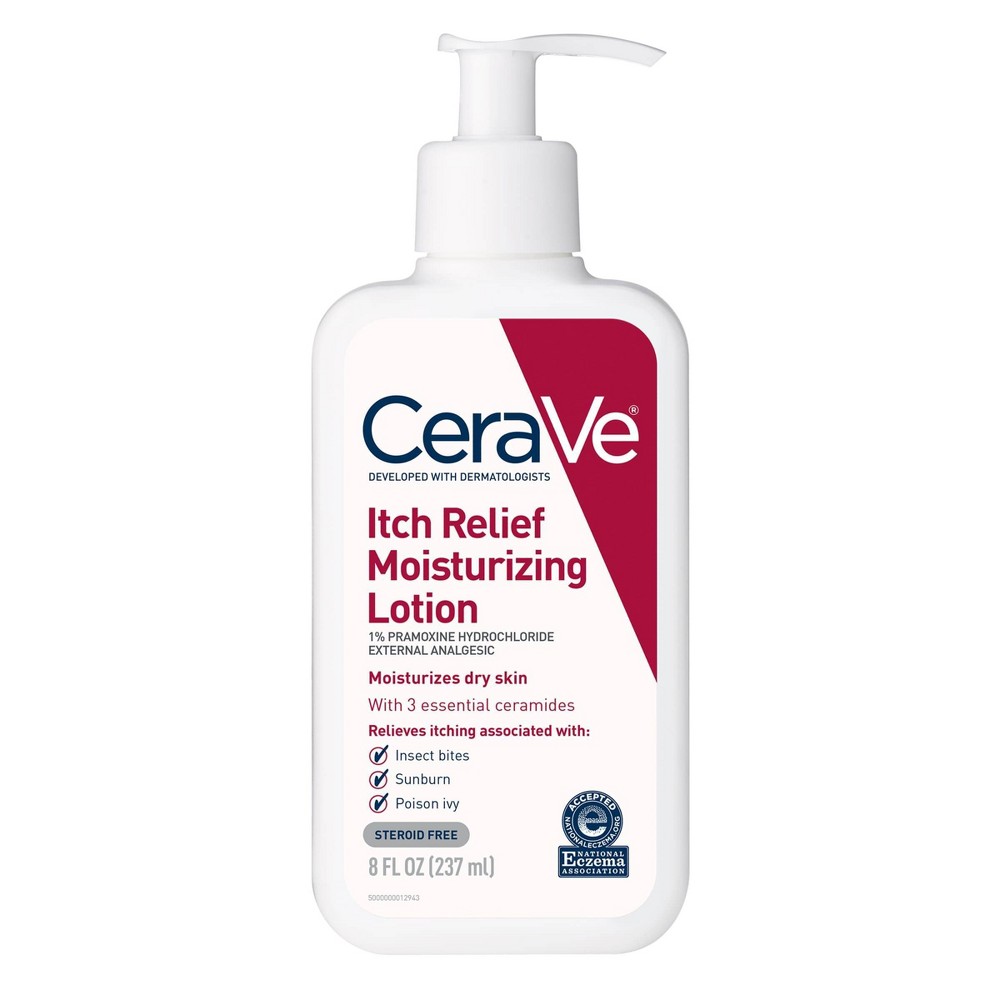
CeraVe Itch Relief Moisturizing Lotion for Dry and Itchy Skin Unscented - 8 fl oz
Analysis updated August 2026 · How Scout scores
At a glance
Summary
This lotion contains beneficial ingredients like niacinamide, ceramides, and glycerin, which support skin hydration and barrier function. However, the presence of alcohol and alcohol denat can be drying and irritating, especially for sensitive skin. The inclusion of PEG compounds and phenoxyethanol also contributes to a moderate processing level, impacting the overall safety and naturalness of the product.
Key ingredients 34
ceramide apVery Good
Ceramide AP is another type of ceramide that supports skin barrier function. It helps retain moisture and improve skin resilience. It is beneficial for maintaining healthy skin.
Risks
Generally considered safe with minimal risk.
Benefits
Supports skin barrier and enhances moisture retention.
ceramide eopVery Good
Ceramide EOP is a ceramide that plays a crucial role in skin barrier repair. It helps protect the skin from environmental damage and moisture loss. It is beneficial for dry and compromised skin.
Risks
Generally considered safe with minimal risk.
Benefits
Repairs skin barrier and protects against moisture loss.
hydrolyzed hyaluronic acidVery Good
Hydrolyzed hyaluronic acid is a smaller molecule form of hyaluronic acid that penetrates the skin more easily. It provides deep hydration and helps plump the skin. It is highly beneficial for all skin types, especially dry and dehydrated skin.
Risks
Generally considered safe with minimal risk.
Benefits
Provides deep hydration and improves skin plumpness.
glycerinGood
Glycerin is a humectant that attracts moisture to the skin. It is widely used in skincare products for its hydrating properties. It is safe and beneficial for all skin types.
Risks
Generally considered safe with minimal risk.
Benefits
Provides excellent hydration and improves skin barrier function.
niacinamideGood
Niacinamide is a form of vitamin B3 that offers multiple skin benefits. It helps improve skin barrier function, reduce inflammation, and even out skin tone. It is well-tolerated by most skin types.
Risks
Minimal risk of irritation.
Benefits
Improves skin barrier, reduces inflammation, and evens skin tone.
allantoinGood
Allantoin is a skin-soothing agent that helps calm irritation and promote healing. It is commonly used in products for sensitive or irritated skin. It is safe and beneficial for most skin types.
Risks
Generally considered safe with minimal risk.
Benefits
Soothes irritation and promotes skin healing.
ceramide npGood
Ceramide NP is a lipid that helps restore the skin barrier. It is essential for maintaining skin hydration and preventing moisture loss. It is beneficial for dry and sensitive skin types.
Risks
Generally considered safe with minimal risk.
Benefits
Restores skin barrier and improves hydration.
sodium pcaGood
Sodium PCA is a humectant that helps attract moisture to the skin. It is naturally occurring in the skin and is highly effective at maintaining hydration. It is safe and beneficial for all skin types.
Risks
Generally considered safe with minimal risk.
Benefits
Provides excellent hydration and improves skin moisture levels.
cholesterolGood
Cholesterol is a lipid that helps maintain the skin barrier. It is essential for healthy skin function and hydration. It is beneficial for dry and compromised skin.
Risks
Generally considered safe with minimal risk.
Benefits
Supports skin barrier and enhances hydration.
tasmannia lanceolata fruit extractGood
Tasmannia lanceolata fruit extract is a botanical extract with anti-inflammatory properties. It helps soothe irritated skin and reduce redness. It is beneficial for sensitive and reactive skin types.
Risks
Generally considered safe with minimal risk.
Benefits
Soothes irritation and reduces skin redness.
tocopheryl acetateGood
Tocopheryl acetate is a form of vitamin E that acts as an antioxidant. It helps protect the skin from free radical damage and supports skin health. It is beneficial for maintaining healthy and youthful skin.
Risks
Generally considered safe with minimal risk.
Benefits
Provides antioxidant protection and supports skin health.
phytosphingosineGood
Phytosphingosine is a lipid that helps support the skin barrier and reduce inflammation. It is beneficial for maintaining healthy skin and reducing redness. It is safe and effective for sensitive and reactive skin types.
Risks
Generally considered safe with minimal risk.
Benefits
Supports skin barrier and reduces inflammation.
waterNeutral
Water is a common solvent used in cosmetic formulations. It helps dissolve other ingredients and provides a base for the lotion. It is generally considered safe and non-irritating.
Risks
There are no significant risks associated with water in cosmetics.
Benefits
Water helps hydrate the skin by providing moisture.
isopropyl myristateNeutral
Isopropyl myristate is an emollient that helps improve the texture of the lotion. It can enhance the absorption of other ingredients into the skin. It is generally safe but can cause irritation in sensitive individuals.
Risks
May cause skin irritation or acne in sensitive individuals.
Benefits
Improves skin texture and enhances ingredient absorption.
peg-100 stearateNeutral
PEG-100 stearate is an emulsifier that helps blend water and oil components. It is commonly used in lotions and creams. It is generally considered safe but may contain impurities.
Risks
Potential contamination with ethylene oxide or 1,4-dioxane.
Benefits
Helps stabilize the formulation by emulsifying ingredients.
glyceryl stearateNeutral
Glyceryl stearate is an emulsifying agent that helps maintain the consistency of the lotion. It is derived from glycerin and stearic acid. It is generally safe and non-irritating.
Risks
Minimal risk of skin irritation.
Benefits
Helps maintain product consistency and provides a smooth texture.
alcoholNeutral
Standard formulation ingredient — neither beneficial nor harmful at typical use.
Risks
Can cause skin dryness and irritation.
Benefits
Enhances penetration of active ingredients.
cetyl alcoholNeutral
Cetyl alcohol is a fatty alcohol used as an emollient and thickener. It helps improve the texture and spreadability of the lotion. It is generally considered safe and non-irritating.
Risks
Minimal risk of skin irritation.
Benefits
Improves texture and provides moisturizing properties.
potassium phosphateNeutral
Potassium phosphate is used as a buffering agent to maintain pH balance. It helps stabilize the formulation. It is generally considered safe and non-irritating.
Risks
Minimal risk of irritation.
Benefits
Helps maintain pH balance and stabilize the product.
carbomerNeutral
Carbomer is a thickening agent used to create gel-like textures. It helps stabilize emulsions and improve product consistency. It is generally considered safe and non-irritating.
Risks
Minimal risk of irritation.
Benefits
Improves product texture and stability.
zinc citrateNeutral
Zinc citrate is used for its antimicrobial properties and to support skin health. It can help reduce inflammation and protect against bacteria. It is generally safe for topical use.
Risks
Minimal risk of irritation.
Benefits
Provides antimicrobial benefits and supports skin health.
sodium hydroxideNeutral
Sodium hydroxide is used to adjust the pH of cosmetic formulations. It is used in small amounts to ensure product stability. It is generally safe when used in low concentrations.
Risks
Can be irritating in high concentrations.
Benefits
Helps maintain product pH balance.
sodium lauroyl lactylateNeutral
Sodium lauroyl lactylate is an emulsifier and mild surfactant. It helps blend ingredients and improve product texture. It is generally considered safe and non-irritating.
Risks
Minimal risk of irritation.
Benefits
Enhances product texture and emulsification.
arginine pcaNeutral
Arginine PCA is a conditioning agent that helps improve skin hydration. It is derived from amino acids and is generally safe for use. It is beneficial for maintaining skin moisture.
Risks
Minimal risk of irritation.
Benefits
Improves skin hydration and conditioning.
myristic acidNeutral
Myristic acid is a fatty acid used as an emulsifier and thickener. It helps improve the texture and stability of the product. It is generally considered safe and non-irritating.
Risks
Minimal risk of irritation.
Benefits
Enhances product texture and stability.
palmitic acidNeutral
Palmitic acid is a fatty acid used as an emollient and thickener. It helps improve the texture and stability of the product. It is generally considered safe and non-irritating.
Risks
Minimal risk of irritation.
Benefits
Enhances product texture and stability.
dipotassium phosphateNeutral
Dipotassium phosphate is used as a buffering agent to maintain pH balance. It helps stabilize the formulation. It is generally considered safe and non-irritating.
Risks
Minimal risk of irritation.
Benefits
Helps maintain pH balance and stabilize the product.
xanthan gumNeutral
Xanthan gum is a thickening agent used to stabilize formulations. It helps improve the texture and consistency of the product. It is generally considered safe and non-irritating.
Risks
Minimal risk of irritation.
Benefits
Improves product texture and stability.
polyglyceryl-3 diisostearateNeutral
Polyglyceryl-3 diisostearate is an emulsifier that helps blend oil and water components. It improves the texture and stability of the product. It is generally considered safe and non-irritating.
Risks
Minimal risk of irritation.
Benefits
Enhances product texture and emulsification.
dimethiconeBad
Occlusive silicone film-former — flagged under clean-beauty doctrine.
Risks
May cause breakouts in acne-prone skin.
Benefits
Provides a protective barrier and improves skin texture.
behentrimonium methosulfateBad
Processed additive flagged under Scout's ingredient doctrine.
Risks
Minimal risk of irritation.
Benefits
Improves product feel and conditioning properties.
phenoxyethanolBad
Processed additive flagged under Scout's ingredient doctrine.
Risks
May cause irritation in sensitive skin.
Benefits
Prevents microbial growth and extends product shelf life.
disodium edtaBad
Processed additive flagged under Scout's ingredient doctrine.
Risks
May cause irritation in sensitive skin.
Benefits
Improves product stability and prevents metal ion interference.
alcohol denatVery Bad
Alcohol denat is used as a solvent and can help other ingredients penetrate the skin. However, it can be drying and irritating to the skin, especially in high concentrations. It is generally not recommended for dry or sensitive skin types.
Risks
Can cause skin dryness and irritation.
Benefits
Enhances penetration of active ingredients.
Get the full breakdown in the Scout appTake Scout shopping
Scan any product to see lab results, healthy alternatives, and your personalized analysis.
Download on theApp Store GET IT ONGoogle PlayAmazon pricing & content
Amazon price as of . Product prices and availability are accurate as of the date/time indicated and are subject to change. Any price and availability information displayed on Amazon.com at the time of purchase will apply to the purchase of this product.
CERTAIN CONTENT THAT APPEARS ON THIS SITE COMES FROM AMAZON. THIS CONTENT IS PROVIDED “AS IS” AND IS SUBJECT TO CHANGE OR REMOVAL AT ANY TIME.