
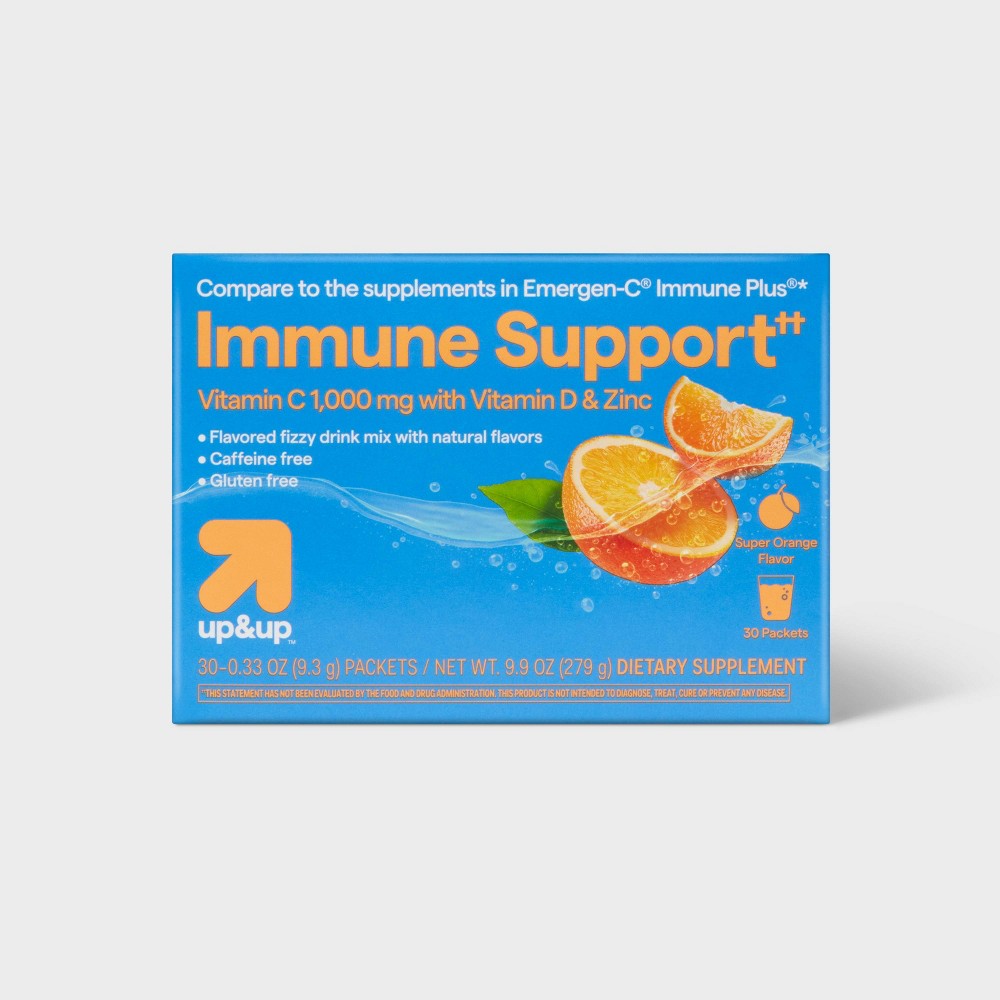



Vitamin C + D Immune Support Powder - Orange - 30ct - up&up™
Analysis updated August 2026 · How Scout scores
At a glance
Summary
This immune support powder contains several forms of added sugars, including fructose, dried cane syrup, and sucrose, which can contribute to increased calorie intake and potential metabolic issues. The presence of caramel color and unspecified 'flavors' raises concerns about potential artificial additives. While it includes some natural ingredients like fruit and vegetable juice concentrates, the overall formulation is moderately processed with multiple additives.
Key ingredients 18
GlycineGood
Beneficial ingredient — whole-food or functional value in this product class.
Benefits
May support sleep and cognitive function due to its role in neurotransmitter regulation.
Beta-caroteneGood
Beneficial ingredient — whole-food or functional value in this product class.
Benefits
Provides antioxidant properties and supports eye health.
Citric AcidNeutral
Citric acid is a natural acid found in citrus fruits, used as a preservative and flavor enhancer. It is generally recognized as safe and is commonly used in food products. It can enhance the flavor profile of foods without adding calories.
Benefits
Acts as a preservative and can enhance flavor without adding calories.
AcaciaNeutral
Acacia, also known as gum arabic, is a natural gum used as a stabilizer in food products. It is a source of dietary fiber and is generally considered safe. It can aid in digestion and improve gut health.
Benefits
Provides dietary fiber which can support digestive health.
Dried Fruit & Vegetable Juice ConcentratesNeutral
These concentrates are used for natural coloring and flavoring, derived from fruits and vegetables like beet and cherry. They provide some natural antioxidants but are present in small amounts. The processing reduces their nutritional content compared to whole fruits and vegetables.
Benefits
May provide some antioxidants and natural flavoring.
L-Aspartic AcidNeutral
L-Aspartic acid is a non-essential amino acid involved in the synthesis of other amino acids. It is generally recognized as safe and plays a role in energy production. However, it is not a significant source of nutrition in this product.
Benefits
Involved in energy production and amino acid synthesis.
Malic AcidNeutral
Malic acid is a naturally occurring acid found in fruits, used to enhance flavor and acidity in foods. It is generally recognized as safe and can improve the taste profile of products. It does not provide significant nutritional benefits.
Benefits
Enhances flavor and acidity without adding calories.
Rebaudioside ANeutral
Rebaudioside A is a steviol glycoside extracted from the stevia plant, used as a natural sweetener. It is calorie-free and does not affect blood sugar levels. It is considered safe for consumption and is a popular alternative to sugar.
Benefits
Provides sweetness without calories or impact on blood sugar levels.
Silicon DioxideNeutral
Silicon dioxide is used as an anti-caking agent to prevent clumping in powdered products. It is generally recognized as safe and does not contribute to nutritional value. It is widely used in the food industry for its functional properties.
Benefits
Prevents clumping and maintains product consistency.
Tartaric AcidNeutral
Tartaric acid is a naturally occurring acid used to enhance flavor and stabilize products. It is generally recognized as safe and is commonly used in food products. It does not provide significant nutritional benefits.
Benefits
Enhances flavor and stabilizes products without adding calories.
TocopherolsNeutral
Tocopherols are a form of vitamin E used to preserve freshness in food products. They are antioxidants that can help protect cells from damage. However, in this product, they are primarily used for preservation rather than nutritional benefits.
Benefits
Acts as an antioxidant and helps preserve freshness.
Orange OilNeutral
Orange oil is a natural oil extracted from orange peels, used for flavoring. It is generally recognized as safe and can enhance the flavor profile of foods. It does not provide significant nutritional benefits.
Benefits
Enhances flavor with natural citrus notes.
FructoseBad
Fructose is a simple sugar that can contribute to increased blood sugar levels and potential metabolic issues when consumed in excess. It is often used as a sweetener in processed foods, which may lead to overconsumption. Excessive intake of fructose can lead to insulin resistance and fatty liver disease.
Risks
High consumption of fructose is associated with obesity, insulin resistance, and liver disease.
Benefits
Fructose provides a quick source of energy, but it lacks significant nutritional benefits.
Dried Cane SyrupBad
Dried cane syrup is a form of sugar that can contribute to increased calorie intake and potential weight gain. It is a less refined sugar but still lacks essential nutrients. Overconsumption of added sugars like dried cane syrup is linked to various health issues.
Risks
Excessive consumption can lead to obesity, type 2 diabetes, and dental cavities.
Benefits
Provides a quick source of energy but offers no significant nutritional benefits.
MaltodextrinBad
Processed additive flagged under Scout's ingredient doctrine.
Risks
May cause spikes in blood sugar levels, especially in individuals with diabetes.
Caramel ColorBad
Caramel color is a food coloring agent that can contain potentially harmful byproducts like 4-MEI. It is used to enhance the appearance of food but offers no nutritional benefits. Some forms of caramel color have been linked to health concerns.
Risks
May contain 4-MEI, a compound linked to cancer in animal studies.
FlavorsBad
The term 'flavors' is a catch-all for various flavoring agents, which can include artificial components. The lack of specificity makes it difficult to assess safety and health impacts. Some artificial flavors may have negative health effects.
Risks
Potential exposure to artificial components with unknown health impacts.
SucroseBad
Sucrose is a common sugar that can contribute to increased calorie intake and potential weight gain. It is often added to foods for sweetness but lacks essential nutrients. Overconsumption of sucrose is linked to various health issues.
Risks
Excessive consumption can lead to obesity, type 2 diabetes, and dental cavities.
Benefits
Provides a quick source of energy but offers no significant nutritional benefits.
Processing
Processed Foods
Get the full breakdown in the Scout appTake Scout shopping
Scan any product to see lab results, healthy alternatives, and your personalized analysis.
Download on theApp Store GET IT ONGoogle PlayAmazon pricing & content
Amazon price as of . Product prices and availability are accurate as of the date/time indicated and are subject to change. Any price and availability information displayed on Amazon.com at the time of purchase will apply to the purchase of this product.
CERTAIN CONTENT THAT APPEARS ON THIS SITE COMES FROM AMAZON. THIS CONTENT IS PROVIDED “AS IS” AND IS SUBJECT TO CHANGE OR REMOVAL AT ANY TIME.