
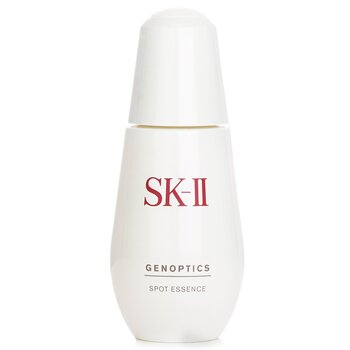


SK IIGenOptics Spot Essence 50ml/1.7oz
Analysis updated August 2026 · How Scout scores
At a glance
Summary
This serum contains several beneficial ingredients such as Galactomyces Ferment Filtrate, Niacinamide, and Panthenol, which are known for their moisturizing and skin-brightening properties. However, the presence of Polyacrylamide, which poses contamination risks, and Methylparaben, associated with potential endocrine disruption, negatively impacts the overall safety profile. The product's formulation includes both natural and synthetic components, leading to a moderate processing level.
Key ingredients 37
Galactomyces Ferment FiltrateVery Good
Galactomyces Ferment Filtrate is a fermented ingredient known for its moisturizing and brightening properties. It is rich in vitamins, amino acids, and enzymes that benefit the skin. It is considered beneficial for improving skin texture and radiance.
Risks
There are minimal risks, though some individuals may experience irritation.
Benefits
It improves skin texture, hydration, and radiance.
PanthenolVery Good
Panthenol, also known as provitamin B5, is a moisturizing and soothing agent. It helps to improve skin hydration, reduce inflammation, and enhance healing. It is widely regarded as a beneficial ingredient in skincare.
Risks
There are minimal risks, though it may cause irritation in sensitive skin.
Benefits
It improves hydration, reduces inflammation, and enhances healing.
Ascorbyl GlucosideVery Good
Ascorbyl Glucoside is a stable form of Vitamin C used for its antioxidant and brightening properties. It helps to protect the skin from free radicals and improve skin tone. It is considered a beneficial ingredient in skincare.
Risks
There are minimal risks, though it may cause irritation in sensitive skin.
Benefits
It protects against free radicals and improves skin tone.
TocopherolVery Good
Tocopherol, also known as Vitamin E, is an antioxidant used to protect the skin from free radical damage. It helps to improve skin hydration and reduce signs of aging. It is widely regarded as a beneficial ingredient in skincare.
Risks
There are minimal risks, though it may cause irritation in sensitive skin.
Benefits
It protects against free radicals and improves hydration.
NiacinamideGood
Niacinamide is a form of Vitamin B3 known for its anti-inflammatory and skin-brightening properties. It helps to improve skin elasticity, enhance barrier function, and even out skin tone. It is widely regarded as a beneficial ingredient in skincare.
Risks
There are minimal risks, though high concentrations may cause irritation.
Benefits
It improves skin elasticity, barrier function, and evens skin tone.
GlycerinGood
Glycerin is a humectant that attracts moisture to the skin, helping to keep it hydrated. It is widely used in skincare for its moisturizing properties. It is considered safe and beneficial for all skin types.
Risks
There are minimal risks, though it may cause stickiness in high concentrations.
Benefits
It attracts moisture and keeps the skin hydrated.
InositolGood
Beneficial ingredient — whole-food or functional value in this product class.
Risks
There are minimal risks associated with this ingredient.
Benefits
It improves skin hydration and texture.
CI 77492 (Iron Oxides)Good
Beneficial ingredient — whole-food or functional value in this product class.
Risks
There are minimal risks associated with this ingredient.
Benefits
It provides color and coverage.
CI 75130 (Beta-Carotene)Good
Beneficial ingredient — whole-food or functional value in this product class.
Risks
There are minimal risks associated with this ingredient.
Benefits
It provides color and coverage.
Aqua (Water)Neutral
Water is a common solvent used in cosmetics to dissolve other ingredients. It helps in the application and absorption of the product. It does not provide direct benefits or risks.
Risks
There are no significant risks associated with water in cosmetics.
Benefits
Water helps in the application and absorption of the product.
Butylene GlycolNeutral
Butylene Glycol is a common solvent and conditioning agent in cosmetics. It helps to improve the texture and spreadability of products. It is generally considered safe and non-irritating.
Risks
In rare cases, it may cause irritation in sensitive skin.
Benefits
It improves product texture and spreadability.
CyclopentasiloxaneNeutral
Cyclopentasiloxane is a silicone used for its smooth application and quick-drying properties. It helps to create a silky texture in cosmetic formulations. It is generally considered safe for use in cosmetics.
Risks
There are minimal risks, though it may cause buildup on the skin.
Benefits
It provides a smooth application and silky texture.
TriethylhexanoinNeutral
Triethylhexanoin is an emollient that helps to soften and smooth the skin. It is used to improve the texture and feel of cosmetic products. It is generally considered safe and non-irritating.
Risks
There are minimal risks associated with this ingredient.
Benefits
It softens and smooths the skin.
Pentylene GlycolNeutral
Pentylene Glycol is a synthetic humectant and solvent used to improve the texture and moisture retention of products. It is generally considered safe and non-irritating. It helps to enhance the efficacy of other ingredients.
Risks
There are minimal risks, though it may cause irritation in sensitive skin.
Benefits
It improves texture and moisture retention.
Nylon-12Neutral
Nylon-12 is a synthetic polymer used to enhance the texture and feel of cosmetic products. It provides a smooth, silky finish and helps to absorb excess oil. It is generally considered safe for use in cosmetics.
Risks
There are minimal risks associated with this ingredient.
Benefits
It provides a smooth finish and absorbs excess oil.
Phytosteryl/Octyldodecyl Lauroyl GlutamateNeutral
This ingredient is an emollient that helps to condition and soften the skin. It is derived from plant sources and is considered safe for use in cosmetics. It enhances the texture and feel of products.
Risks
There are minimal risks associated with this ingredient.
Benefits
It conditions and softens the skin.
PolymethylsilsesquioxaneNeutral
Polymethylsilsesquioxane is a silicone used to provide a smooth, silky texture to cosmetic products. It helps to improve the spreadability and feel of formulations. It is generally considered safe for use in cosmetics.
Risks
There are minimal risks, though it may cause buildup on the skin.
Benefits
It provides a smooth, silky texture.
Boron NitrideNeutral
Boron Nitride is a mineral used to enhance the texture and feel of cosmetic products. It provides a soft, silky finish and helps to absorb excess oil. It is generally considered safe for use in cosmetics.
Risks
There are minimal risks associated with this ingredient.
Benefits
It provides a soft finish and absorbs excess oil.
Caprylic/Capric TriglycerideNeutral
Caprylic/Capric Triglyceride is an emollient derived from coconut oil and glycerin. It helps to moisturize and condition the skin. It is generally considered safe and non-irritating.
Risks
There are minimal risks associated with this ingredient.
Benefits
It moisturizes and conditions the skin.
PEG-20 Sorbitan CocoateNeutral
PEG-20 Sorbitan Cocoate is an emulsifier used to stabilize formulations and improve texture. It helps to blend oil and water-based ingredients. It is generally considered safe for use in cosmetics.
Risks
There are minimal risks, though it may cause irritation in sensitive skin.
Benefits
It stabilizes formulations and improves texture.
PEG-11 Methyl Ether DimethiconeNeutral
This ingredient is a silicone-based emulsifier used to improve the texture and stability of cosmetic products. It helps to blend oil and water-based ingredients. It is generally considered safe for use in cosmetics.
Risks
There are minimal risks, though it may cause irritation in sensitive skin.
Benefits
It improves texture and stability of formulations.
Laureth-7Neutral
Laureth-7 is a surfactant and emulsifier used to improve the texture and stability of cosmetic products. It helps to blend oil and water-based ingredients. It is generally considered safe for use in cosmetics.
Risks
There are minimal risks, though it may cause irritation in sensitive skin.
Benefits
It improves texture and stability of formulations.
C13-14 IsoparaffinNeutral
C13-14 Isoparaffin is a synthetic hydrocarbon used as a thickening agent in cosmetics. It helps to improve the texture and spreadability of products. It is generally considered safe for use in cosmetics.
Risks
There are minimal risks associated with this ingredient.
Benefits
It improves texture and spreadability.
HexyldecanolNeutral
Hexyldecanol is an emollient used to soften and condition the skin. It helps to improve the texture and feel of cosmetic products. It is generally considered safe for use in cosmetics.
Risks
There are minimal risks associated with this ingredient.
Benefits
It softens and conditions the skin.
Xanthan GumNeutral
Xanthan Gum is a natural thickening agent used to stabilize and improve the texture of cosmetic products. It helps to create a smooth, gel-like consistency. It is generally considered safe for use in cosmetics.
Risks
There are minimal risks associated with this ingredient.
Benefits
It stabilizes and improves product texture.
Laminaria Saccharina ExtractNeutral
Laminaria Saccharina Extract is a marine extract used for its moisturizing and soothing properties. It helps to improve skin hydration and calm irritation. It is generally considered safe for use in cosmetics.
Risks
There are minimal risks associated with this ingredient.
Benefits
It moisturizes and soothes the skin.
Zea Mays Oil/Zea Mays (Corn) OilNeutral
Zea Mays Oil is a natural oil used for its emollient properties in cosmetics. It helps to moisturize and condition the skin. It is generally considered safe for use in cosmetics.
Risks
There are minimal risks associated with this ingredient.
Benefits
It moisturizes and conditions the skin.
MethiconeNeutral
Methicone is a silicone used to provide a smooth, silky texture to cosmetic products. It helps to improve the spreadability and feel of formulations. It is generally considered safe for use in cosmetics.
Risks
There are minimal risks, though it may cause buildup on the skin.
Benefits
It provides a smooth, silky texture.
Dimethicone/Vinyl Dimethicone CrosspolymerBad
Processed additive flagged under Scout's ingredient doctrine.
Risks
There are minimal risks, though it may cause buildup on the skin.
Benefits
It provides a smooth, silky texture.
Acrylates/C10-30 Alkyl Acrylate CrosspolymerBad
Processed additive flagged under Scout's ingredient doctrine.
Risks
There are minimal risks associated with this ingredient.
Benefits
It stabilizes and improves product texture.
PhenoxyethanolBad
Processed additive flagged under Scout's ingredient doctrine.
Risks
In high concentrations, it may cause irritation or allergic reactions.
Benefits
It prevents microbial growth and extends shelf life.
Benzyl AlcoholBad
Processed additive flagged under Scout's ingredient doctrine.
Risks
In high concentrations, it may cause irritation or allergic reactions.
Benefits
It prevents microbial growth and improves texture.
Aminomethyl PropanolBad
Processed additive flagged under Scout's ingredient doctrine.
Risks
There are minimal risks associated with this ingredient.
Benefits
It maintains product stability and efficacy.
Disodium EDTABad
Processed additive flagged under Scout's ingredient doctrine.
Risks
There are minimal risks associated with this ingredient.
Benefits
It improves stability and efficacy of formulations.
Sodium BenzoateBad
Synthetic preservative that can form benzene in the presence of vitamin C.
Risks
In high concentrations, it may cause irritation or allergic reactions.
Benefits
It prevents microbial growth and extends shelf life.
PolyacrylamideVery Bad
Polyacrylamide is a synthetic polymer used as a thickening agent in cosmetics. It is associated with potential contamination with acrylamide, a known neurotoxin. Due to these concerns, it is considered a harmful ingredient.
Risks
Potential contamination with acrylamide, a neurotoxin.
Benefits
It thickens and stabilizes formulations.
MethylparabenVery Bad
Methylparaben is a preservative used to prevent microbial growth in cosmetics. It is associated with potential endocrine disruption and skin irritation. Due to these concerns, it is considered a harmful ingredient.
Risks
Potential endocrine disruption and skin irritation.
Benefits
It prevents microbial growth and extends shelf life.
Get the full breakdown in the Scout appTake Scout shopping
Scan any product to see lab results, healthy alternatives, and your personalized analysis.
Download on theApp Store GET IT ONGoogle PlayAmazon pricing & content
Amazon price as of . Product prices and availability are accurate as of the date/time indicated and are subject to change. Any price and availability information displayed on Amazon.com at the time of purchase will apply to the purchase of this product.
CERTAIN CONTENT THAT APPEARS ON THIS SITE COMES FROM AMAZON. THIS CONTENT IS PROVIDED “AS IS” AND IS SUBJECT TO CHANGE OR REMOVAL AT ANY TIME.