

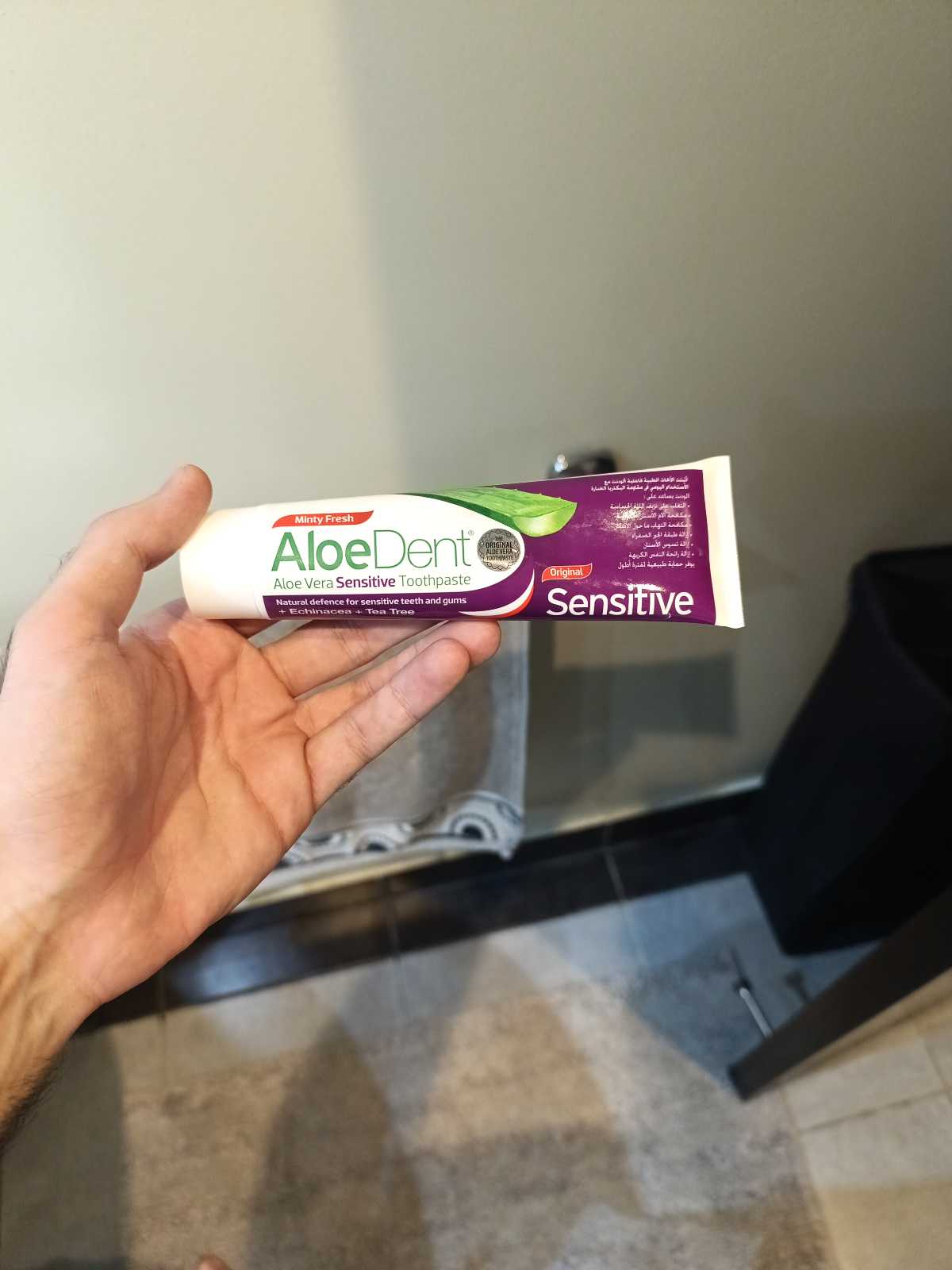

Optima Aloedent Aloe Vera Sensitive Toothpaste 100ml
Analysis updated August 2026 · How Scout scores
At a glance
Summary
This toothpaste contains beneficial ingredients such as aloe vera, xylitol, peppermint oil, and tea tree oil, which support oral health and hygiene. However, the presence of phenoxyethanol, a potential irritant, and the product's overall level of processing limit its score. Despite its positive components, the processing level and inclusion of a preservative prevent it from achieving a higher rating.
Key ingredients 17
XylitolVery Good
Xylitol is a natural sweetener that helps reduce cavity-causing bacteria in the mouth. It is highly beneficial for oral health and is often used in dental care products. It is safe and effective in preventing tooth decay.
Risks
In large amounts, xylitol can cause digestive discomfort.
Benefits
Xylitol reduces the risk of cavities by inhibiting the growth of harmful bacteria.
GlycerinGood
Beneficial ingredient — whole-food or functional value in this product class.
Risks
There are minimal risks associated with glycerin, though excessive use can lead to a sticky feeling in the mouth.
Benefits
Glycerin helps maintain the toothpaste's consistency and prevents it from drying out.
Aloe Barbadensis (Aloe vera) Leaf JuiceGood
Aloe vera is known for its soothing properties and can help reduce inflammation in oral tissues. It is beneficial for sensitive gums and oral health. It is a natural ingredient with minimal side effects.
Risks
There are minimal risks associated with aloe vera, though some individuals may experience allergic reactions.
Benefits
Aloe vera soothes oral tissues and can help reduce gum inflammation.
Mentha Piperita (Peppermint) OilGood
Peppermint oil is a natural antimicrobial agent that helps freshen breath. It is beneficial for oral hygiene and provides a pleasant taste. It is widely used in oral care products for its refreshing properties.
Risks
Some individuals may experience allergic reactions to peppermint oil.
Benefits
Peppermint oil freshens breath and has antimicrobial properties.
Melaleuca Alternifolia (Tea Tree) Leaf OilGood
Tea tree oil is a natural antimicrobial agent that helps reduce bacteria in the mouth. It is beneficial for oral hygiene and is often used in natural toothpaste. It is generally safe when used in appropriate concentrations.
Risks
Some individuals may experience allergic reactions to tea tree oil.
Benefits
Tea tree oil has antimicrobial properties that help maintain oral hygiene.
SorbitolNeutral
Sorbitol is a sugar alcohol used as a sweetener and humectant in toothpaste. It is less likely to cause cavities compared to regular sugar. It does not have significant oral health benefits.
Risks
In large amounts, sorbitol can cause digestive discomfort.
Benefits
Sorbitol helps keep the toothpaste moist and provides a sweet taste without promoting tooth decay.
Hydrated SilicaNeutral
Hydrated silica is used as a mild abrasive to help remove plaque and stains from teeth. It is generally considered safe for use in toothpaste. It does not provide additional oral health benefits beyond cleaning.
Risks
Excessive abrasiveness can potentially wear down enamel over time.
Benefits
Hydrated silica helps in cleaning teeth by removing surface stains and plaque.
Potassium CitrateNeutral
Potassium citrate is used to help reduce tooth sensitivity. It is generally considered safe and effective for this purpose. It does not have significant additional oral health benefits.
Risks
There are minimal risks associated with potassium citrate.
Benefits
Potassium citrate helps reduce tooth sensitivity.
HydroxyethylcelluloseNeutral
Hydroxyethylcellulose is a thickening agent used to improve the texture of toothpaste. It is considered safe and non-toxic. It does not contribute to oral health directly.
Risks
There are minimal risks associated with hydroxyethylcellulose.
Benefits
It helps maintain the consistency of the toothpaste.
MentholNeutral
Standard formulation ingredient — neither beneficial nor harmful at typical use.
Risks
Some individuals may experience allergic reactions to menthol.
Benefits
Menthol freshens breath and provides a cooling sensation.
Echinacea Angustifolia Root ExtractNeutral
Echinacea extract is believed to have immune-boosting properties, though its effectiveness in oral care is not well-documented. It is generally considered safe for use in toothpaste. It does not have significant proven benefits for oral health.
Risks
Some individuals may experience allergic reactions to echinacea.
Benefits
Echinacea is traditionally used for its potential immune-boosting properties.
EscinNeutral
Escin is a compound derived from horse chestnut and is used for its anti-inflammatory properties. Its effectiveness in oral care is not well-documented. It is generally considered safe for use in toothpaste.
Risks
There are minimal risks associated with escin.
Benefits
Escin may help reduce inflammation.
Citric AcidNeutral
Citric acid is used to adjust the pH of the toothpaste. It is generally considered safe and non-toxic. It does not provide significant oral health benefits.
Risks
Excessive use of citric acid can erode tooth enamel over time.
Benefits
Citric acid helps maintain the stability and effectiveness of the toothpaste.
CI75810 (Chlorophyllin-Copper Complex)Neutral
Chlorophyllin-copper complex is used as a colorant in toothpaste. It is generally considered safe and non-toxic. It does not contribute to oral health directly.
Risks
There are minimal risks associated with chlorophyllin-copper complex.
Benefits
It provides a natural green color to the toothpaste.
Sodium Lauroyl SarcosinateBad
Processed additive flagged under Scout's ingredient doctrine.
Risks
There are minimal risks associated with sodium lauroyl sarcosinate.
Benefits
It helps in cleaning teeth by creating foam and removing debris.
PhenoxyethanolBad
Phenoxyethanol is a preservative used to prevent microbial growth in products. It is considered a potential irritant and can cause allergic reactions in some individuals. It is not beneficial for oral health.
Risks
Phenoxyethanol can cause skin and eye irritation and allergic reactions.
Benefits
It helps preserve the product by preventing microbial growth.
LimoneneBad
Processed additive flagged under Scout's ingredient doctrine.
Risks
Limonene can cause allergic reactions in sensitive individuals.
Benefits
It provides a pleasant citrus fragrance to the toothpaste.
Processing
Processed Foods
Get the full breakdown in the Scout appTake Scout shopping
Scan any product to see lab results, healthy alternatives, and your personalized analysis.
Download on theApp Store GET IT ONGoogle Play