
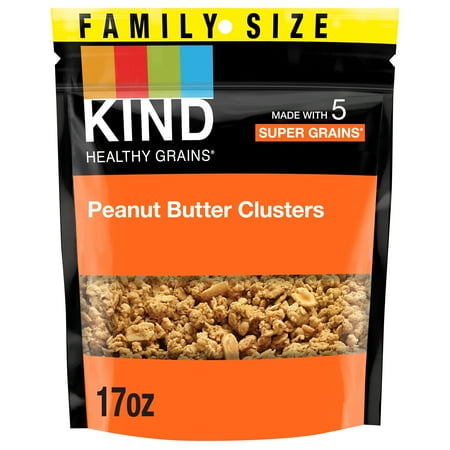



KIND Healthy Grains Clusters Peanut Butter 17 oz 1 Bag
Summary
This product contains several beneficial whole food ingredients like oats, peanuts, and brown rice, which contribute to its nutritional value. However, the presence of refined cane sugar and highly processed soy protein isolate detracts from its healthiness. The product is moderately processed, which limits its score despite the inclusion of nutrient-dense components.
At a glance
Key ingredients 16
OatsVery Good
Oats are a whole grain that provides a good source of fiber and essential nutrients. They are minimally processed and retain their natural nutritional profile. Oats can help lower cholesterol levels and support heart health.
Benefits
Rich in beta-glucan, a type of soluble fiber that can improve heart health and aid in digestion.
Cane sugarBad
Cane sugar is a refined sugar that can contribute to increased blood sugar levels. It is processed to remove impurities, resulting in a loss of nutrients. Excessive consumption can lead to health issues such as obesity and diabetes.
Risks
High intake of refined sugars is linked to metabolic disorders and increased risk of chronic diseases.
Benefits
Provides quick energy but lacks significant nutritional benefits.
Peanut butterGood
Peanut butter is a good source of protein and healthy fats. It is made by grinding peanuts, which retains most of the nutrients. It can support muscle growth and provide sustained energy.
Risks
Potential allergen for some individuals and can be high in calories.
Benefits
Rich in monounsaturated fats and protein, supporting heart health and muscle maintenance.
Soy protein isolateBad
Soy protein isolate is a highly processed form of soy protein. It is extracted using chemical processes that can strip away beneficial nutrients. It may not provide the same amino acid profile as animal-based proteins.
Risks
May contain residues from processing and can affect hormone levels due to phytoestrogens.
Benefits
Provides a plant-based protein source for those avoiding animal products.
Brown riceGood
Brown rice is a whole grain that retains its bran and germ, providing fiber and essential nutrients. It is minimally processed, preserving its natural health benefits. Brown rice can support digestive health and provide sustained energy.
Benefits
Rich in fiber and essential minerals like magnesium and selenium.
Tapioca syrupNeutral
Tapioca syrup is a natural sweetener derived from cassava root. It is less processed than refined sugars but still contributes to caloric intake. It is often used as a binding agent in food products.
Risks
May contribute to increased blood sugar levels if consumed in large amounts.
Benefits
Provides a gluten-free alternative to other sweeteners.
Peanut oilNeutral
Peanut oil is a plant-based oil high in monounsaturated fats. It is extracted from peanuts and can withstand high cooking temperatures. While it provides healthy fats, it lacks the nutrient density of whole peanuts.
Risks
Potential allergen and high in calories.
Benefits
Contains monounsaturated fats that support heart health.
PeanutsVery Good
Peanuts are a nutrient-dense legume rich in protein, healthy fats, and various vitamins and minerals. They are minimally processed and provide numerous health benefits. Peanuts can support heart health and provide sustained energy.
Risks
Potential allergen for some individuals.
Benefits
Rich in monounsaturated fats, protein, and antioxidants like resveratrol.
BuckwheatGood
Buckwheat is a gluten-free grain alternative that is high in fiber and essential nutrients. It is minimally processed and retains its natural health benefits. Buckwheat can support heart health and improve digestion.
Benefits
Rich in fiber, magnesium, and antioxidants.
MilletGood
Millet is a whole grain that is rich in fiber and essential nutrients. It is minimally processed and provides a gluten-free alternative to other grains. Millet can support digestive health and provide sustained energy.
Benefits
Rich in magnesium, phosphorus, and antioxidants.
AmaranthGood
Amaranth is a nutrient-dense grain that is high in protein and essential amino acids. It is minimally processed and retains its natural health benefits. Amaranth can support muscle growth and improve overall nutrition.
Benefits
Rich in protein, fiber, and essential minerals like iron and magnesium.
Peanut flourGood
Peanut flour is a high-protein, low-fat flour made from roasted peanuts. It is minimally processed and retains most of the nutrients found in peanuts. Peanut flour can enhance protein content in foods and provide a nutty flavor.
Risks
Potential allergen for some individuals.
Benefits
Rich in protein and provides a low-fat alternative to whole peanuts.
QuinoaVery Good
Quinoa is a complete protein source that contains all essential amino acids. It is minimally processed and provides a gluten-free alternative to grains. Quinoa can support muscle growth and provide sustained energy.
Benefits
Rich in protein, fiber, and essential nutrients like magnesium and iron.
Brown rice syrupNeutral
Brown rice syrup is a natural sweetener derived from brown rice. It is less processed than refined sugars but still contributes to caloric intake. It is often used as a binding agent in food products.
Risks
May contribute to increased blood sugar levels if consumed in large amounts.
Benefits
Provides a gluten-free alternative to other sweeteners.
Sea saltGood
Unrefined sea salt — a minimally processed, natural source of sodium and essential trace minerals, and a legitimate whole-food seasoning. Treated as a positive ingredient.
Risks
Excessive consumption can lead to high blood pressure and other health issues.
Benefits
Contains trace minerals that can support overall health.
Vitamin EGood
Vitamin E is an antioxidant that helps protect cells from oxidative damage. It is often added to foods to enhance nutritional value. Vitamin E can support skin health and immune function.
Benefits
Supports immune function and acts as an antioxidant to protect cells.
Processing
Processed Foods
Get the full breakdown in the Scout app
Scan any product to see lab results, healthy alternatives, and your personalized analysis.
Download on theApp Store