
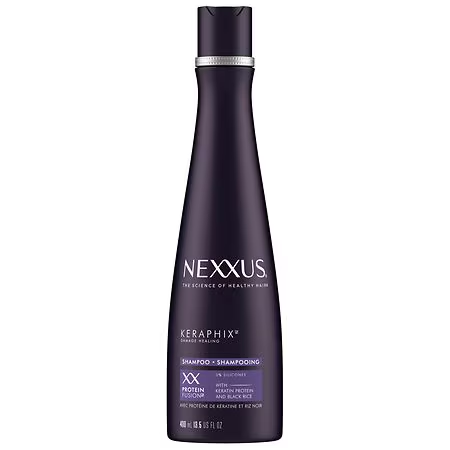


Nexxus Keraphix Shampoo for Damaged Hair 13.5 oz
Analysis updated August 2026 · How Scout scores
At a glance
Summary
This shampoo contains beneficial ingredients like collagen amino acids, hydrolyzed elastin, and hydrolyzed keratin, which help strengthen and repair damaged hair. However, it also includes sodium laureth sulfate, a harsher surfactant that can strip natural oils, and sodium chloride, which may dry out the hair and scalp. The presence of synthetic fragrance adds to the concerns, as it can cause irritation or allergic reactions.
Key ingredients 27
Collagen Amino AcidsGood
Collagen Amino Acids are used for their conditioning and strengthening properties. They help to improve the texture and appearance of hair. They are beneficial for damaged hair as they can help to repair and strengthen it.
Risks
There are no significant risks associated with collagen amino acids in shampoo.
Benefits
They help to strengthen and condition the hair, improving its overall health.
Hydrolyzed ElastinGood
Hydrolyzed Elastin is used for its conditioning and strengthening properties. It helps to improve the elasticity and resilience of hair. It is beneficial for damaged hair as it can help to repair and strengthen it.
Risks
There are no significant risks associated with hydrolyzed elastin in shampoo.
Benefits
It helps to improve the elasticity and strength of the hair.
Hydrolyzed KeratinGood
Hydrolyzed Keratin is a protein that helps to strengthen and repair damaged hair. It is known for its ability to penetrate the hair shaft and improve hair structure. It is beneficial for restoring the health and appearance of damaged hair.
Risks
There are no significant risks associated with hydrolyzed keratin in shampoo.
Benefits
It strengthens and repairs damaged hair, improving its overall health.
GluconolactoneGood
Beneficial ingredient — whole-food or functional value in this product class.
Risks
There are no significant risks associated with gluconolactone in shampoo.
Benefits
It helps to retain moisture and improve hair texture.
GlycerinGood
Glycerin is a humectant that helps to attract and retain moisture in the hair. It is beneficial for maintaining hydration and preventing dryness. It is widely used in hair care products for its moisturizing properties.
Risks
There are no significant risks associated with glycerin in shampoo.
Benefits
It helps to keep the hair hydrated and prevents dryness.
Water (Eau)Neutral
Water is a common solvent used in many cosmetic products. It helps to dissolve other ingredients and provides a base for the formulation. It does not have any direct benefits or risks in the context of shampoo.
Risks
There are no significant risks associated with water in shampoo.
Benefits
Water acts as a solvent and helps in the application of the shampoo.
Cocamidopropyl BetaineNeutral
Cocamidopropyl Betaine is a mild surfactant derived from coconut oil. It is used to enhance the foaming and cleansing properties of shampoos. It is generally considered safe and non-irritating.
Risks
In rare cases, it may cause allergic reactions in sensitive individuals.
Benefits
It provides gentle cleansing and helps to stabilize foam.
Glycol DistearateNeutral
Glycol Distearate is used as a pearlizing agent to give shampoos a creamy appearance. It also acts as an emulsifier and thickener. It does not have significant benefits or risks in the context of hair care.
Risks
There are no significant risks associated with glycol distearate in shampoo.
Benefits
It improves the texture and appearance of the shampoo.
Sodium ChlorideNeutral
Standard formulation ingredient — neither beneficial nor harmful at typical use.
Risks
It may cause dryness and irritation to the scalp.
Benefits
It helps to thicken the shampoo, improving its consistency.
Oryza Sativa (Rice) ExtractNeutral
Oryza Sativa (Rice) Extract is used for its conditioning properties. It can help to improve the texture and appearance of hair. However, its benefits are not as pronounced as other conditioning agents.
Risks
There are no significant risks associated with rice extract in shampoo.
Benefits
It provides mild conditioning benefits to the hair.
Polyquaternium-10Neutral
Polyquaternium-10 is a conditioning agent that helps to reduce static and improve hair manageability. It forms a film on the hair, providing a smooth feel. It is generally considered safe and effective for hair care.
Risks
There are no significant risks associated with polyquaternium-10 in shampoo.
Benefits
It improves hair manageability and reduces static.
PEG-6 Caprylic/Capric GlyceridesNeutral
PEG-6 Caprylic/Capric Glycerides are used as emulsifiers and solubilizers in cosmetic formulations. They help to blend oil and water-based ingredients. They are generally considered safe for use in hair care products.
Risks
There are no significant risks associated with PEG-6 Caprylic/Capric Glycerides in shampoo.
Benefits
They help to stabilize the formulation and improve texture.
Citric AcidNeutral
Citric Acid is used to adjust the pH of cosmetic products. It helps to maintain the stability and effectiveness of the formulation. It is generally considered safe for use in hair care products.
Risks
There are no significant risks associated with citric acid in shampoo.
Benefits
It helps to maintain the pH balance of the shampoo.
PPG-9Neutral
PPG-9 is used as a solvent and emollient in cosmetic formulations. It helps to improve the texture and spreadability of the product. It is generally considered safe for use in hair care products.
Risks
There are no significant risks associated with PPG-9 in shampoo.
Benefits
It improves the texture and spreadability of the shampoo.
PEG-150 Pentaerythrityl TetrastearateNeutral
PEG-150 Pentaerythrityl Tetrastearate is used as a thickening agent in cosmetic formulations. It helps to improve the texture and consistency of the product. It is generally considered safe for use in hair care products.
Risks
There are no significant risks associated with PEG-150 Pentaerythrityl Tetrastearate in shampoo.
Benefits
It helps to thicken the shampoo and improve its consistency.
PPG-2 Hydroxyethyl CocamideNeutral
PPG-2 Hydroxyethyl Cocamide is used as a thickening and foaming agent in shampoos. It helps to improve the texture and foam quality of the product. It is generally considered safe for use in hair care products.
Risks
There are no significant risks associated with PPG-2 Hydroxyethyl Cocamide in shampoo.
Benefits
It helps to improve the texture and foam quality of the shampoo.
Sodium SulfateNeutral
Sodium Sulfate is used as a filler and thickening agent in shampoos. It helps to improve the texture and consistency of the product. It is generally considered safe for use in hair care products.
Risks
There are no significant risks associated with sodium sulfate in shampoo.
Benefits
It helps to thicken the shampoo and improve its consistency.
TrehaloseNeutral
Trehalose is a sugar used for its moisturizing properties in cosmetic products. It helps to retain moisture and improve the texture of hair. It is generally considered safe for use in hair care products.
Risks
There are no significant risks associated with trehalose in shampoo.
Benefits
It helps to retain moisture and improve hair texture.
CitronellolNeutral
Citronellol is a fragrance component used to provide a pleasant scent to cosmetic products. It is derived from natural sources such as rose and geranium oils. It is generally considered safe for use in hair care products.
Risks
It may cause irritation or allergic reactions in sensitive individuals.
Benefits
It provides a pleasant scent to the shampoo.
CoumarinNeutral
Coumarin is a fragrance component used to provide a sweet scent to cosmetic products. It is derived from natural sources such as tonka beans. It is generally considered safe for use in hair care products.
Risks
It may cause irritation or allergic reactions in sensitive individuals.
Benefits
It provides a sweet scent to the shampoo.
Hexyl CinnamalNeutral
Hexyl Cinnamal is a fragrance component used to provide a floral scent to cosmetic products. It is derived from natural sources such as chamomile oil. It is generally considered safe for use in hair care products.
Risks
It may cause irritation or allergic reactions in sensitive individuals.
Benefits
It provides a floral scent to the shampoo.
Sodium Laureth SulfateBad
Sodium Laureth Sulfate is a surfactant used for its cleansing and foaming properties. However, it can strip natural oils from the hair and scalp, leading to dryness. It is considered a harsher ingredient compared to more gentle surfactants.
Risks
It may cause dryness and irritation to the scalp and hair.
Benefits
It effectively cleanses the hair by removing dirt and oil.
Sodium BenzoateBad
Synthetic preservative that can form benzene in the presence of vitamin C.
Risks
There are no significant risks associated with sodium benzoate in shampoo.
Benefits
It helps to preserve the product and prevent microbial growth.
Cocamide MEABad
Processed additive flagged under Scout's ingredient doctrine.
Risks
There are no significant risks associated with cocamide MEA in shampoo.
Benefits
It helps to stabilize the formulation and improve foam quality.
Disodium EDTABad
Processed additive flagged under Scout's ingredient doctrine.
Risks
There are no significant risks associated with disodium EDTA in shampoo.
Benefits
It helps to stabilize the formulation and improve product effectiveness.
LinaloolBad
Processed additive flagged under Scout's ingredient doctrine.
Risks
It may cause irritation or allergic reactions in sensitive individuals.
Benefits
It provides a floral scent to the shampoo.
Fragrance (Parfum)Very Bad
Fragrance (Parfum) is used to provide a pleasant scent to the product. However, it can contain a mixture of chemicals that may cause irritation or allergic reactions. It is often criticized for its lack of transparency regarding the specific chemicals used.
Risks
It may cause irritation or allergic reactions in sensitive individuals.
Benefits
It provides a pleasant scent to the shampoo.
Get the full breakdown in the Scout appTake Scout shopping
Scan any product to see lab results, healthy alternatives, and your personalized analysis.
Download on theApp Store GET IT ONGoogle PlayAmazon pricing & content
Amazon price as of . Product prices and availability are accurate as of the date/time indicated and are subject to change. Any price and availability information displayed on Amazon.com at the time of purchase will apply to the purchase of this product.
CERTAIN CONTENT THAT APPEARS ON THIS SITE COMES FROM AMAZON. THIS CONTENT IS PROVIDED “AS IS” AND IS SUBJECT TO CHANGE OR REMOVAL AT ANY TIME.