
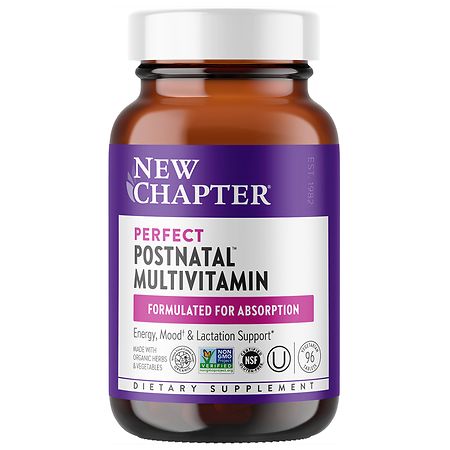

Perfect Postnatal Multivitamin by New Chapter - 96 Tablets
Analysis updated October 2026 · How Scout scores
At a glance
Summary
This multivitamin contains beneficial ingredients such as organic orange peel powder, carrot powder, and lactic acid bacteria, which support immune and gut health. However, the presence of organic soy flour, sunflower lecithin, and palm oil introduces some concerns due to potential hormonal effects and environmental impact. The product is moderately processed with a few additives, but it maintains a generally clean formulation with organic components.
Key ingredients 15
Organic Orange Peel PowderGood
Organic orange peel powder is rich in vitamin C and antioxidants, supporting immune health. Being organic, it is free from pesticide residues. It also adds natural flavor and nutrients to the product.
Benefits
Rich in vitamin C and antioxidants, supporting immune function.
Organic Carrot PowderGood
Organic carrot powder is a source of beta-carotene, which is converted to vitamin A in the body. It supports vision and immune health. Being organic, it is free from harmful pesticides.
Benefits
Provides beta-carotene, supporting vision and immune health.
Lactic Acid BacteriaGood
Lactic acid bacteria, including L. acidophilus, B. bifidum, and L. rhamnosus, are probiotics that support gut health. They help maintain a healthy balance of gut flora. Their presence in the product enhances digestive and immune health.
Benefits
Supports gut health and boosts the immune system.
Organic Alfalfa PowderGood
Organic alfalfa powder is rich in vitamins, minerals, and antioxidants. It supports overall health and wellness. Being organic, it is free from harmful pesticides.
Benefits
Rich in nutrients and antioxidants, supporting overall health.
Organic Saccharomyces CerevisiaeNeutral
Saccharomyces cerevisiae is a type of yeast used in fermentation, providing B vitamins and other nutrients. It is generally considered safe and beneficial for gut health. However, its benefits are limited to specific nutritional contributions.
Benefits
Provides B vitamins and supports gut health.
PapainNeutral
Papain is an enzyme derived from papaya, used to aid digestion. It is generally safe and beneficial for digestive health. However, its benefits are limited to its enzymatic activity.
Risks
May cause allergic reactions in sensitive individuals.
Benefits
Aids in digestion by breaking down proteins.
BromelainNeutral
Bromelain is an enzyme from pineapple, used for its anti-inflammatory properties. It supports digestion and may reduce inflammation. Its benefits are primarily related to its enzymatic and anti-inflammatory effects.
Risks
May cause allergic reactions or interact with certain medications.
Benefits
Supports digestion and has anti-inflammatory properties.
Organic Gum AcaciaNeutral
Organic gum acacia is a natural thickener and stabilizer. It is generally safe and used to improve texture. Its benefits are limited to its functional properties in food products.
Benefits
Improves texture and stability of the product.
Organic MaltodextrinNeutral
Organic maltodextrin is a carbohydrate used as a filler or thickener. It is generally considered safe but offers limited nutritional benefits. Being organic, it avoids pesticide residues.
Risks
May affect blood sugar levels if consumed in large amounts.
Benefits
Provides a source of carbohydrates and improves product texture.
Hydrated SilicaNeutral
Hydrated silica is used as an anti-caking agent to prevent clumping. It is generally recognized as safe. Its benefits are primarily functional, related to maintaining product consistency.
Benefits
Prevents clumping and maintains product consistency.
Organic Guar GumNeutral
Organic guar gum is a natural thickener and stabilizer. It is generally safe and used to improve texture. Its benefits are limited to its functional properties in food products.
Risks
May cause digestive issues if consumed in large amounts.
Benefits
Improves texture and stability of the product.
Fermented SoyNeutral
Fermented soy is used for its probiotic benefits and improved digestibility. It is generally considered safe and beneficial for gut health. Its benefits are primarily related to its fermentation process.
Risks
May contain phytoestrogens that could affect hormone levels.
Benefits
Provides probiotics and is easier to digest than non-fermented soy.
Organic Soy FlourBad
Organic soy flour is a soy-based ingredient that may have a poorer amino acid profile compared to animal-based proteins. It is often genetically modified and can contain phytoestrogens, which may affect hormone levels. Despite being organic, it is still considered less beneficial due to these concerns.
Risks
Contains phytoestrogens that may disrupt hormone balance and is often genetically modified.
Benefits
Being organic, it avoids pesticide residues and provides plant-based protein.
Organic Sunflower LecithinBad
Organic sunflower lecithin is used as an emulsifier. While it is less processed than soy lecithin, it is still considered a refined additive. It does not provide significant nutritional benefits.
Risks
May cause digestive issues in sensitive individuals.
Benefits
Acts as an emulsifier, improving product texture.
Organic Palm OilBad
Organic palm oil is a saturated fat that can contribute to heart disease if consumed in excess. Its production is also associated with environmental concerns. Despite being organic, it is still considered a less healthy fat option.
Risks
High in saturated fats, which may contribute to heart disease.
Benefits
Provides a stable fat source for cooking and food products.
Processing
Ultra-Processed Foods
Get the full breakdown in the Scout appTake Scout shopping
Scan any product to see lab results, healthy alternatives, and your personalized analysis.
Download on theApp Store GET IT ONGoogle Play