
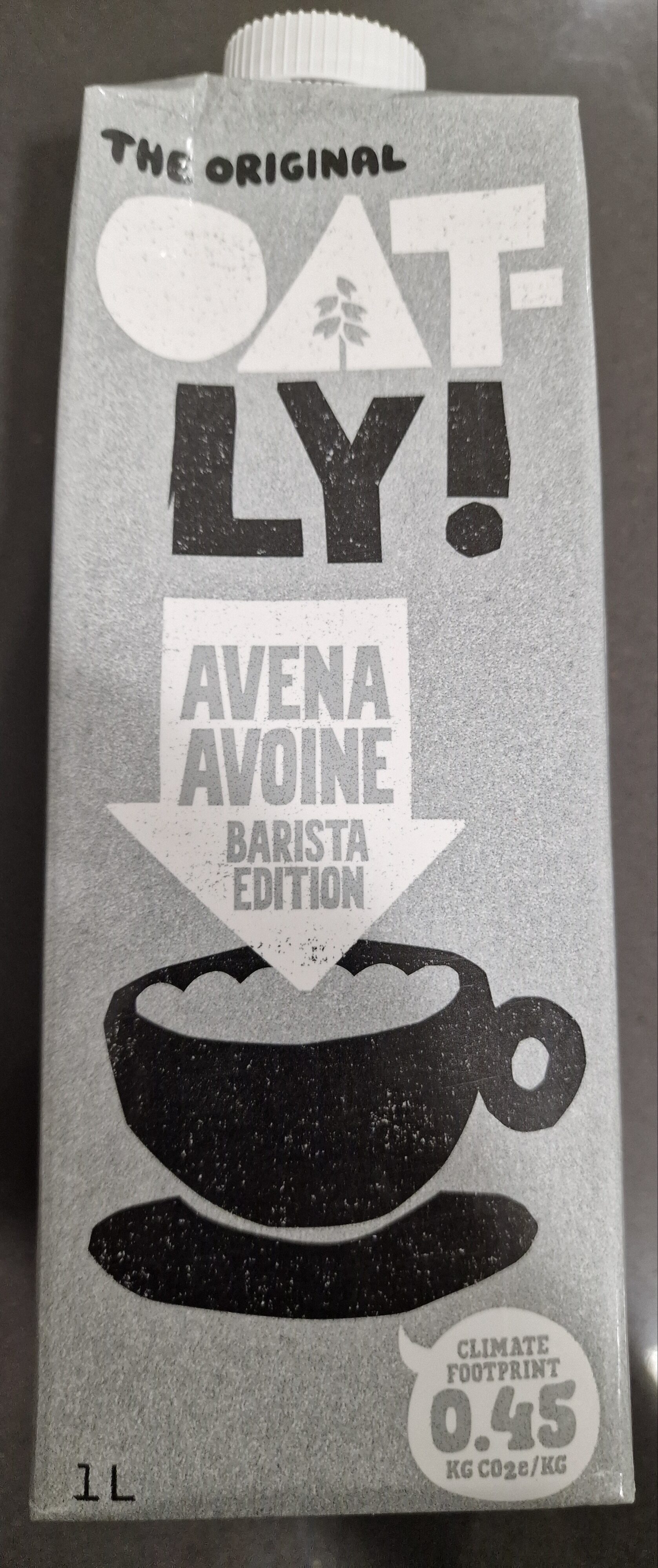


Oatly Avena Barista Edition
Analysis updated June 2026 · How Scout scores
At a glance
Summary
The product contains rapeseed oil, a seed oil that is highly processed and can contribute to inflammation, which significantly impacts its health rating. Despite this, the beverage is fortified with beneficial nutrients like calcium and vitamins B2 and B12, which support bone health and energy production. The processing level and presence of additives further limit the score, although the overall ingredient list is relatively clean.
Key ingredients 9
OatsVery Good
Oats are a good source of dietary fiber and can support heart health. They are minimally processed in this beverage, retaining most of their nutritional benefits. Oats also provide a small amount of protein and essential nutrients.
Benefits
Rich in beta-glucans, which can help lower cholesterol levels and improve heart health.
Calcium PhosphatesGood
Calcium phosphates are added to enhance the calcium content of the beverage. They are important for bone health and metabolic functions. The ingredient is generally well-tolerated and effective in fortification.
Benefits
Contributes to bone strength and overall calcium intake.
Vitamin B2Good
Vitamin B2, also known as riboflavin, is essential for energy production and cellular function. It is added to fortify the beverage and support overall health. Riboflavin is water-soluble and generally well-absorbed.
Benefits
Supports energy metabolism and helps maintain healthy skin and eyes.
Vitamin B12Good
Vitamin B12 is crucial for nerve function and the production of red blood cells. It is added to the beverage to prevent deficiency, especially in plant-based diets. The vitamin is essential for DNA synthesis and neurological health.
Benefits
Essential for maintaining healthy nerve cells and preventing anemia.
WaterNeutral
Water is a neutral ingredient that serves as a base for the beverage. It is essential for hydration but does not provide additional nutritional benefits. The quality of water can vary based on source and treatment, but no significant health risks are associated with it.
See more about Water →Calcium CarbonateNeutral
Standard formulation ingredient — neither beneficial nor harmful at typical use.
Risks
Excessive intake may lead to hypercalcemia, but this is unlikely in moderate consumption.
Benefits
Provides a source of calcium, essential for maintaining strong bones and teeth.
Dipotassium PhosphateNeutral
Dipotassium phosphate is used as an acidity regulator and stabilizer in beverages. It is generally recognized as safe when used in moderation. The ingredient does not provide significant nutritional benefits.
Risks
Excessive consumption may lead to imbalances in phosphate levels, but this is rare.
Iodized SaltNeutral
Iodized salt is used to enhance flavor and provide iodine, an essential nutrient. It is important for thyroid function but should be consumed in moderation to avoid excessive sodium intake. The iodization process ensures adequate iodine intake in diets lacking this nutrient.
Risks
Excessive sodium intake can lead to hypertension and cardiovascular issues.
Benefits
Provides iodine, which is essential for thyroid health and metabolic regulation.
Rapeseed OilVery Bad
Rapeseed oil is classified as a seed oil, which is high in omega-6 fatty acids and can promote inflammation when consumed in excess. It is highly processed, which can lead to the formation of trans fats. The use of rapeseed oil is generally discouraged in health-conscious diets.
Risks
High omega-6 content may promote inflammation when consumed in excess.
Processing
Processed Foods
Get the full breakdown in the Scout appTake Scout shopping
Scan any product to see lab results, healthy alternatives, and your personalized analysis.
Download on theApp Store GET IT ONGoogle PlayAmazon pricing & content
Amazon price as of . Product prices and availability are accurate as of the date/time indicated and are subject to change. Any price and availability information displayed on Amazon.com at the time of purchase will apply to the purchase of this product.
CERTAIN CONTENT THAT APPEARS ON THIS SITE COMES FROM AMAZON. THIS CONTENT IS PROVIDED “AS IS” AND IS SUBJECT TO CHANGE OR REMOVAL AT ANY TIME.