
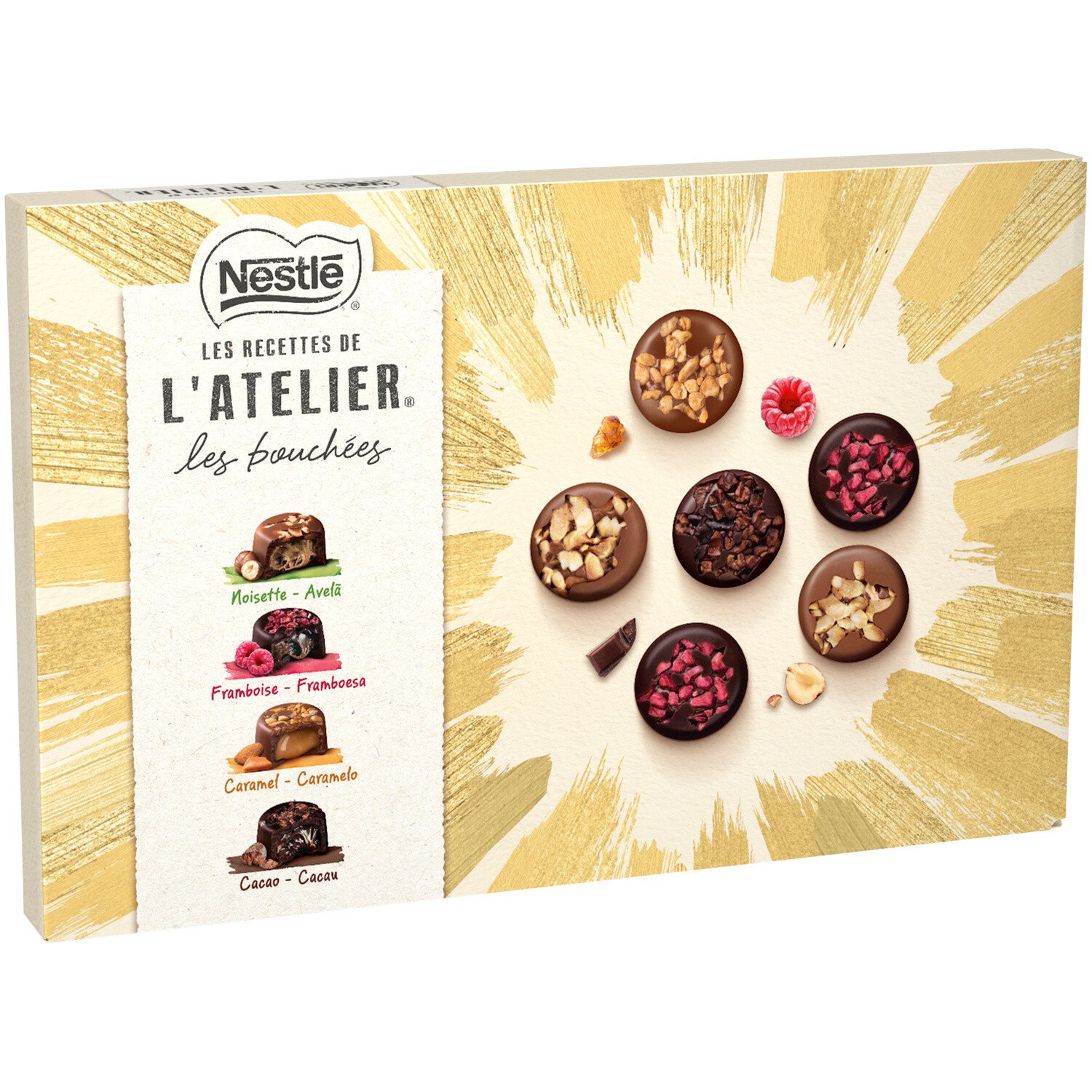



RECETTES DE L'ATELIER Bouchées de chocolat x 32
Analysis updated May 2026 · How Scout scores
At a glance
Summary
This chocolate product is heavily processed, containing multiple additives and high levels of refined sugars, which contribute to its ultra-processed nature. While it includes some beneficial ingredients like cocoa mass and dried raspberries, the presence of glucose syrup and refined sugar significantly impacts its healthiness. The overall ingredient quality is mixed, with both natural and processed components, leading to a moderate score.
Key ingredients 14
Cocoa massGood
Cocoa mass is rich in flavonoids, which are antioxidants that can improve heart health. It contains minerals like magnesium and iron. The processing of cocoa can affect its antioxidant levels.
Risks
May contain caffeine and theobromine, which can cause sensitivity in some individuals.
Benefits
Contains antioxidants that may reduce inflammation and improve cardiovascular health.
Cocoa butterGood
Natural traditional fat pressed from cacao.
Risks
High in calories and saturated fats, which should be consumed in moderation.
Benefits
Provides a creamy texture and is a source of stearic acid, which may have a neutral effect on cholesterol levels.
Whole milkGood
Whole milk is a source of high-quality protein and essential nutrients like calcium and vitamin D. It supports bone health and muscle function. The fat content can vary based on processing.
Risks
May cause lactose intolerance symptoms in sensitive individuals.
Benefits
Rich in calcium and vitamin D, supporting bone health and providing essential nutrients.
Roasted cocoa nibsGood
Roasted cocoa nibs are rich in antioxidants and provide a crunchy texture. They contain fiber and minerals like magnesium. The roasting process enhances flavor but may reduce some antioxidant content.
Risks
Contains caffeine and theobromine, which may cause sensitivity in some individuals.
Benefits
Rich in antioxidants and fiber, supporting heart health and digestion.
Dried raspberriesGood
Dried raspberries are a source of dietary fiber and antioxidants. They provide natural sweetness and flavor. The drying process concentrates nutrients but may reduce vitamin C content.
Benefits
Rich in antioxidants and fiber, supporting immune function and digestive health.
Anhydrous milk fatNeutral
Anhydrous milk fat is a concentrated form of milk fat used to enhance flavor and texture. It is high in saturated fats. The quality depends on the source and processing of the milk.
Risks
High in saturated fats, which should be consumed in moderation.
Benefits
Provides a rich flavor and texture to food products.
Hazelnut pasteNeutral
Hazelnut paste is made from ground hazelnuts and is a source of healthy fats and vitamin E. It adds flavor and creaminess to products. The nutritional value depends on the proportion of nuts used.
Risks
May cause allergic reactions in individuals with nut allergies.
Benefits
Contains healthy fats and vitamin E, which support heart health and skin health.
SorbitolNeutral
Sorbitol is a sugar alcohol used as a sweetener and humectant. It has a lower glycemic index than sugar. Excessive consumption can cause digestive issues.
Risks
May cause gastrointestinal discomfort and laxative effects when consumed in large amounts.
Benefits
Provides sweetness with fewer calories than sugar, suitable for sugar-reduced products.
Sunflower lecithinNeutral
Sunflower lecithin is an emulsifier used to improve texture and consistency. It is derived from sunflower seeds and is a natural alternative to soy lecithin. It is generally considered safe for consumption.
Benefits
Helps maintain product consistency and is a source of phospholipids.
SaltNeutral
Salt is used to enhance flavor and preserve food. It is essential for maintaining fluid balance and nerve function. Excessive intake can lead to hypertension.
Risks
High sodium intake can increase the risk of high blood pressure and cardiovascular disease.
Benefits
Essential for fluid balance and nerve function in the body.
InvertaseNeutral
Invertase is an enzyme used to break down sucrose into glucose and fructose. It helps maintain the softness of confectionery products. It is generally recognized as safe for consumption.
Benefits
Improves texture and shelf-life of confectionery products.
Natural vanilla flavorNeutral
Natural vanilla flavor is derived from vanilla beans and used to enhance flavor. It is considered a natural alternative to artificial flavors. The quality can vary based on extraction methods.
Benefits
Provides a natural and aromatic flavor to food products.
SugarBad
Refined sugar is a high-calorie ingredient with no essential nutrients. It can contribute to weight gain and increase the risk of chronic diseases. Excessive consumption is linked to metabolic syndrome and dental cavities.
Risks
High intake of sugar can lead to obesity, type 2 diabetes, and heart disease.
Glucose syrupBad
Glucose syrup is a highly processed sweetener with a high glycemic index. It can cause rapid spikes in blood sugar levels. Often used in processed foods to enhance sweetness and texture.
Risks
May contribute to insulin resistance and increased risk of type 2 diabetes.
Processing
Ultra-Processed Foods
Get the full breakdown in the Scout appTake Scout shopping
Scan any product to see lab results, healthy alternatives, and your personalized analysis.
Download on theApp Store GET IT ONGoogle Play