
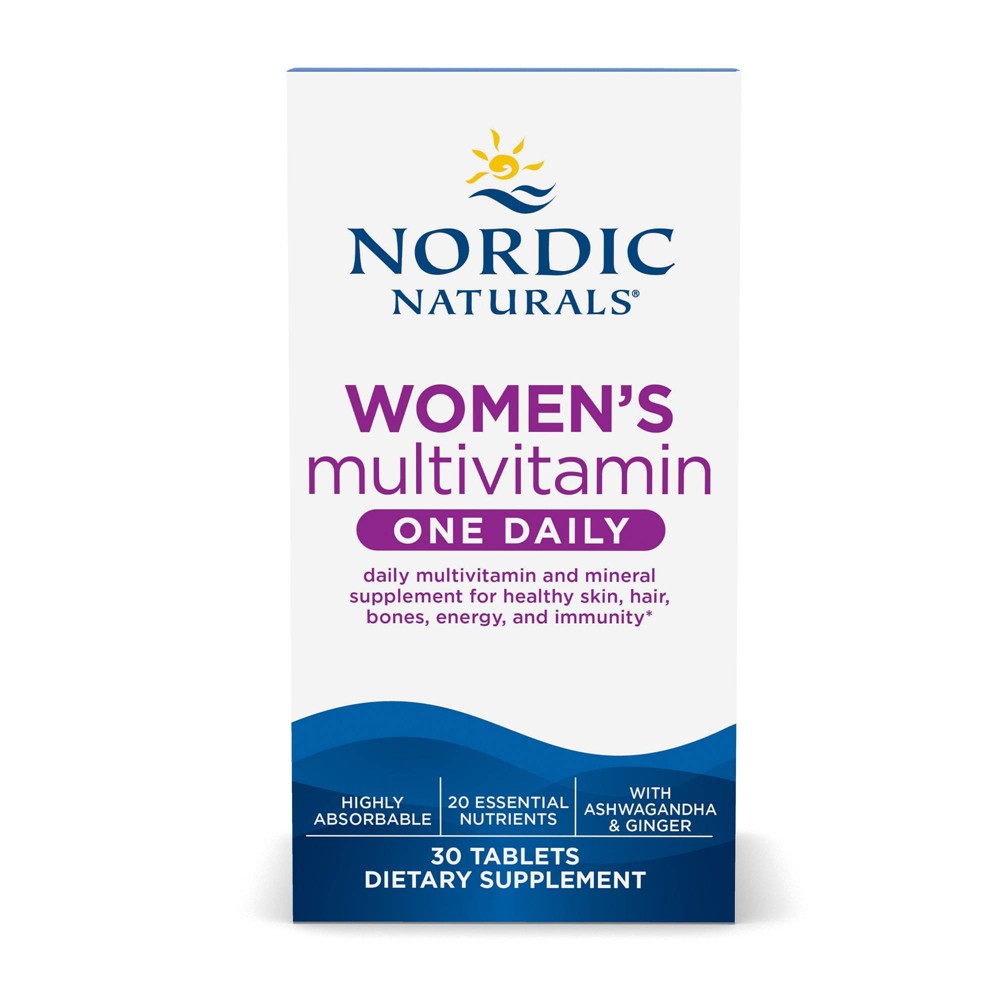

Nordic Naturals Women's One Daily Multivitamin Tablets - Unflavored - 30ct
Analysis updated June 2026 · How Scout scores
At a glance
Summary
This multivitamin contains a range of essential vitamins and minerals in bioavailable forms, which are beneficial for overall health. However, the presence of microcrystalline cellulose and magnesium stearate, both used as fillers and flow agents, indicates a moderate level of processing and reliance on additives. While these additives are common in supplements, they detract slightly from the formulation's overall quality.
Key ingredients 16
Vitamin AVery Good
Vitamin A is essential for vision, immune function, and skin health. It is a high-quality active ingredient in multivitamins. Adequate intake supports overall health and well-being.
Risks
Excessive intake can lead to toxicity, particularly in supplement form.
Benefits
Supports vision, immune function, and skin health.
Vitamin CVery Good
Vitamin C is a powerful antioxidant that supports immune function and skin health. It is a high-quality active ingredient in multivitamins. It also aids in the absorption of iron from plant-based foods.
Risks
High doses may cause gastrointestinal discomfort.
Benefits
Boosts immune function and acts as an antioxidant.
Vitamin EVery Good
Vitamin E is an antioxidant that protects cells from oxidative damage. It is a beneficial component of multivitamins. It also supports immune function and skin health.
Risks
Excessive intake may interfere with blood clotting.
Benefits
Protects cells from oxidative damage and supports immune health.
Vitamin B6Very Good
Vitamin B6 is important for brain health and metabolism. It is a beneficial component of multivitamins. It also plays a role in the production of neurotransmitters and red blood cells.
Risks
High doses may cause nerve damage over time.
Benefits
Supports brain health and metabolic processes.
SeleniumVery Good
Selenium is a trace mineral that acts as an antioxidant and supports thyroid function. It is a beneficial component of multivitamins. Adequate intake is important for immune health and metabolism.
Risks
Excessive intake can lead to toxicity, causing symptoms like hair loss and gastrointestinal upset.
Benefits
Acts as an antioxidant and supports thyroid function.
ManganeseVery Good
Manganese is a trace mineral important for bone health and metabolism. It is a beneficial component of multivitamins. It also plays a role in the formation of connective tissue and blood clotting factors.
Risks
Excessive intake may lead to neurological issues.
Benefits
Supports bone health and metabolic processes.
ChromiumVery Good
Chromium is a trace mineral that enhances insulin action and glucose metabolism. It is a beneficial component of multivitamins. Adequate intake supports blood sugar regulation.
Benefits
Enhances insulin action and supports glucose metabolism.
MolybdenumVery Good
Molybdenum is a trace mineral that acts as a cofactor for enzymes involved in detoxification. It is a beneficial component of multivitamins. Adequate intake supports metabolic processes and detoxification pathways.
Benefits
Supports enzyme function and detoxification processes.
Vitamin D3Good
Vitamin D3 is crucial for bone health and immune function. It is a high-quality active ingredient in multivitamins. Adequate levels are essential for calcium absorption and bone maintenance.
Risks
Excessive intake can lead to toxicity, affecting calcium balance.
Benefits
Supports bone health and immune function.
Vitamin B12Good
Vitamin B12 is essential for nerve function and the production of DNA and red blood cells. It is a high-quality active ingredient in multivitamins. It is particularly important for vegetarians and vegans who may have limited dietary sources.
Benefits
Supports nerve function and red blood cell production.
Microcrystalline CelluloseNeutral
Standard formulation ingredient — neither beneficial nor harmful at typical use.
Risks
Excessive consumption may lead to digestive issues such as bloating or constipation.
Hydroxypropyl CelluloseNeutral
Hydroxypropyl cellulose is a derivative of cellulose used as a thickener and stabilizer. It is generally considered safe and inert in small quantities. It does not contribute to the nutritional value of the product.
See more about Hydroxypropyl Cellulose →Croscarmellose SodiumNeutral
Croscarmellose sodium is a disintegrant that helps tablets dissolve in the digestive tract. It is considered safe and effective for its intended purpose. It does not provide any nutritional benefits.
See more about Croscarmellose Sodium →SilicaNeutral
Silica is used as an anti-caking agent to prevent clumping in supplements. It is naturally occurring and generally recognized as safe. It does not contribute to the nutritional profile of the product.
See more about Silica →Sodium Stearyl FumarateNeutral
Sodium stearyl fumarate is a lubricant used in tablet manufacturing to prevent sticking. It is considered safe and effective for its purpose. It does not add nutritional value to the product.
See more about Sodium Stearyl Fumarate →Magnesium StearateNeutral
Standard formulation ingredient — neither beneficial nor harmful at typical use.
Risks
May interfere with the absorption of nutrients and cause digestive issues in sensitive individuals.
Processing
Processed Foods
Get the full breakdown in the Scout appTake Scout shopping
Scan any product to see lab results, healthy alternatives, and your personalized analysis.
Download on theApp Store GET IT ONGoogle PlayAmazon pricing & content
Amazon price as of . Product prices and availability are accurate as of the date/time indicated and are subject to change. Any price and availability information displayed on Amazon.com at the time of purchase will apply to the purchase of this product.
CERTAIN CONTENT THAT APPEARS ON THIS SITE COMES FROM AMAZON. THIS CONTENT IS PROVIDED “AS IS” AND IS SUBJECT TO CHANGE OR REMOVAL AT ANY TIME.