
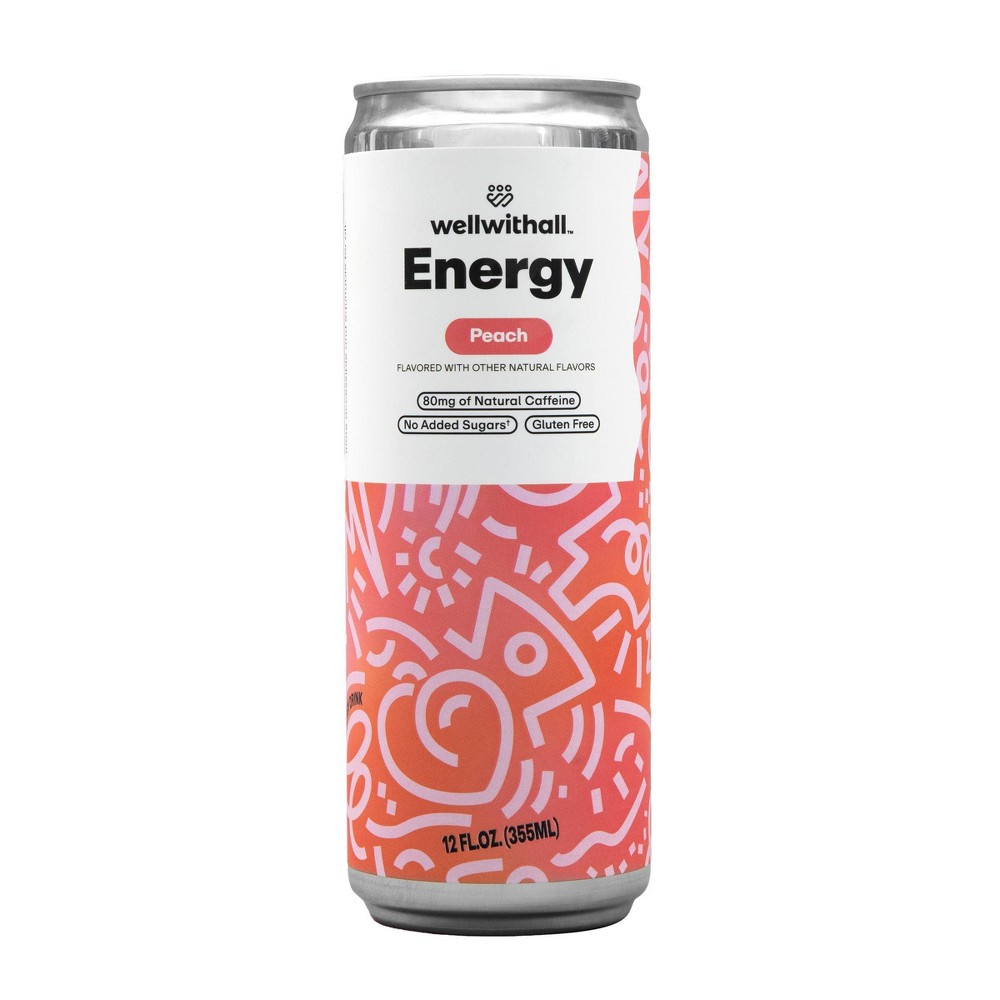


WellWithAll Energy Peach Energy Drink - 12 fl oz
Analysis updated July 2026 · How Scout scores
At a glance
Summary
This energy drink features a relatively clean ingredient list with natural caffeine sources from black and green tea, which are less processed and provide antioxidants. The use of stevia as a sweetener is a positive aspect, avoiding artificial sweeteners. However, the presence of 'natural flavors' introduces some uncertainty due to the lack of transparency, and the product's processing level limits its maximum potential score.
Key ingredients 8
vegetable juiceGood
Vegetable juice adds natural nutrients and flavor, making the drink more wholesome and nutritious.
See more about vegetable juice →fruit juiceGood
Fruit juice provides natural sweetness and vitamins, enhancing flavor while offering some nutritional benefits.
See more about fruit juice →malic acidGood
Malic acid is a natural compound found in fruits that helps enhance flavor and preserve freshness.
See more about malic acid →natural caffeine from black teaGood
Caffeine from black tea offers a natural stimulant to boost alertness without synthetic additives.
carbonated waterNeutral
Carbonated water is simply water infused with carbon dioxide, providing the fizz without added calories or sugars.
See more about carbonated water →citric acidNeutral
Common acidulant and preservative — safe at typical use levels, neither beneficial nor harmful.
See more about citric acid →stevia sweetenerNeutral
Stevia is a plant-based sweetener that provides sweetness without added sugars or calories.
See more about stevia sweetener →natural flavorBad
Umbrella term that can hide dozens of undisclosed synthetic constituents.
See more about natural flavor →Processing
Processed Foods
Get the full breakdown in the Scout appTake Scout shopping
Scan any product to see lab results, healthy alternatives, and your personalized analysis.
Download on theApp Store GET IT ONGoogle PlayAmazon pricing & content
Amazon price as of . Product prices and availability are accurate as of the date/time indicated and are subject to change. Any price and availability information displayed on Amazon.com at the time of purchase will apply to the purchase of this product.
CERTAIN CONTENT THAT APPEARS ON THIS SITE COMES FROM AMAZON. THIS CONTENT IS PROVIDED “AS IS” AND IS SUBJECT TO CHANGE OR REMOVAL AT ANY TIME.