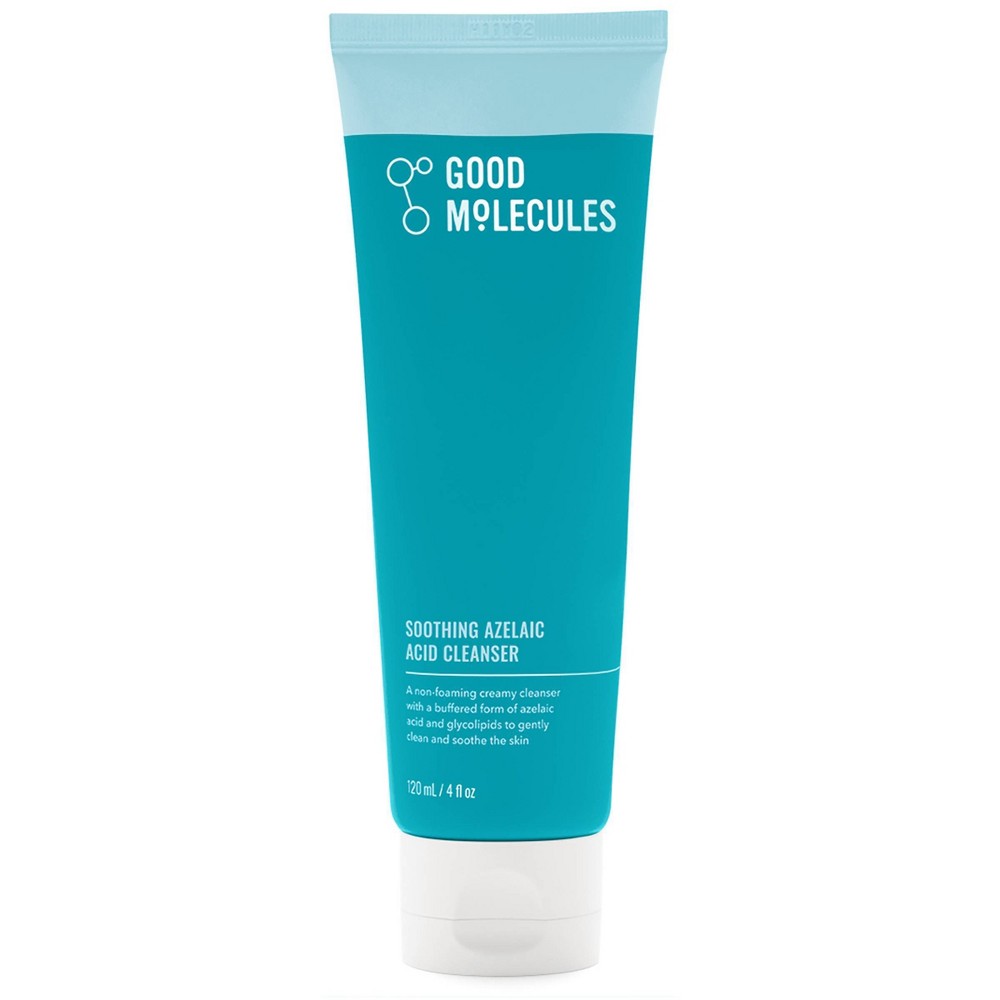
Good Molecules Soothing Azelaic Acid Face Cleanser - 120ml: Liquid Formula, Sensitive & Acne-Prone Skin
At a glance
Summary
This face cleanser features a gentle formula with beneficial ingredients like decyl glucoside, glycerin, and potassium azeloyl diglycinate, which are known for their skin-soothing and hydrating properties. The inclusion of natural oils and antioxidants such as passion fruit seed oil and tocopherol further enhances its appeal, providing nourishment and protection for sensitive and acne-prone skin. The product avoids harsh chemicals and synthetic additives, resulting in a clean label with minimal processing. Its plastic packaging can shed microplastics into the product and lowers its score.
Key ingredients 23
Passiflora Edulis Seed OilVery Good
Passiflora Edulis Seed Oil, also known as passion fruit seed oil, is rich in essential fatty acids and antioxidants. It nourishes and moisturizes the skin, improving its texture and elasticity. It is beneficial for dry and sensitive skin.
Risks
There are minimal risks, though it may cause allergic reactions in sensitive individuals.
Benefits
It provides deep hydration and antioxidant protection.
TocopherolVery Good
Tocopherol, also known as Vitamin E, is a powerful antioxidant used in cosmetics to protect the skin from free radical damage. It helps to improve skin health and appearance. It is beneficial for all skin types.
Risks
There are minimal risks, though it may cause irritation in sensitive individuals.
Benefits
It provides antioxidant protection and improves skin texture.
Decyl GlucosideGood
Decyl Glucoside is a mild non-ionic surfactant derived from glucose and coconut oil. It is gentle on the skin and suitable for sensitive skin types. It effectively cleanses without stripping natural oils.
Risks
There are minimal risks, though some individuals may experience mild irritation.
Benefits
It provides gentle cleansing and is biodegradable, making it environmentally friendly.
GlycerinGood
Glycerin is a humectant that attracts moisture to the skin, helping to keep it hydrated. It is a common ingredient in skincare due to its moisturizing properties. It is safe and effective for all skin types.
Risks
There are minimal risks, though excessive use can lead to a sticky feeling.
Benefits
It improves skin hydration and barrier function.
Potassium Azeloyl DiglycinateGood
Potassium Azeloyl Diglycinate is a derivative of azelaic acid known for its skin-soothing and brightening properties. It helps to reduce redness and improve skin tone. It is suitable for sensitive and acne-prone skin.
Risks
There are minimal risks, though some individuals may experience mild irritation.
Benefits
It helps to calm the skin and reduce hyperpigmentation.
Aqua/Water/EauNeutral
Water is a universal solvent used in cosmetics to dissolve other ingredients. It is essential for the formulation but does not provide direct skin benefits. It is generally considered safe and non-irritating.
Risks
There are no significant risks associated with water in cosmetic formulations.
Benefits
Water helps to hydrate the skin by providing moisture.
Xylityl CocoateNeutral
Xylityl Cocoate is an ester of xylitol and coconut fatty acids used as an emollient. It helps to soften and smooth the skin. It is generally considered safe for use in cosmetics.
Risks
There are no significant risks associated with this ingredient.
Benefits
It enhances skin hydration and provides a smooth texture.
GlycolipidsNeutral
Glycolipids are natural lipids that help to maintain the skin's barrier function. They are used in cosmetics for their moisturizing properties. They are generally considered safe and non-irritating.
Risks
There are no significant risks associated with glycolipids.
Benefits
They help to strengthen the skin barrier and retain moisture.
PropanediolNeutral
Propanediol is a glycol used as a solvent and humectant in cosmetics. It helps to improve the texture and spreadability of products. It is generally considered safe for use in skincare.
Risks
There are minimal risks, though it may cause irritation in sensitive individuals.
Benefits
It enhances product absorption and provides moisture.
Glycol DistearateNeutral
Glycol Distearate is an ester used as an opacifying agent and emollient in cosmetics. It gives products a pearlescent appearance and improves texture. It is generally considered safe for use in skincare.
Risks
There are no significant risks associated with this ingredient.
Benefits
It provides a creamy texture and enhances the appearance of products.
XylitylglucosideNeutral
Xylitylglucoside is a sugar-derived ingredient used for its moisturizing properties. It helps to improve skin hydration and barrier function. It is generally considered safe for use in cosmetics.
Risks
There are no significant risks associated with this ingredient.
Benefits
It enhances skin moisture retention and barrier integrity.
Xanthan GumNeutral
Xanthan Gum is a natural thickening agent used to stabilize and thicken cosmetic formulations. It is derived from fermented sugars and is safe for use in skincare. It does not provide direct skin benefits.
Risks
There are no significant risks associated with xanthan gum.
Benefits
It improves product texture and stability.
Caprylyl Glyceryl EtherNeutral
Caprylyl Glyceryl Ether is used as an emollient and skin conditioning agent in cosmetics. It helps to improve skin feel and texture. It is generally considered safe for use in skincare.
Risks
There are no significant risks associated with this ingredient.
Benefits
It provides a smooth and soft skin feel.
1, 2-HexanediolNeutral
1, 2-Hexanediol is a synthetic preservative and humectant used in cosmetics. It helps to improve product shelf life and moisture retention. It is generally considered safe for use in skincare.
Risks
There are minimal risks, though it may cause irritation in sensitive individuals.
Benefits
It enhances product preservation and moisture content.
AnhydroxylitolNeutral
Anhydroxylitol is a sugar-derived ingredient used for its moisturizing properties. It helps to improve skin hydration and barrier function. It is generally considered safe for use in cosmetics.
Risks
There are no significant risks associated with this ingredient.
Benefits
It enhances skin moisture retention and barrier integrity.
HydroxyacetophenoneNeutral
Hydroxyacetophenone is an antioxidant and preservative used in cosmetics to enhance product stability. It helps to protect formulations from degradation. It is generally considered safe for use in skincare.
Risks
There are minimal risks, though it may cause irritation in sensitive individuals.
Benefits
It provides antioxidant protection and improves product longevity.
Citric AcidNeutral
Citric Acid is used in cosmetics to adjust pH levels and as an exfoliant. It helps to maintain product stability and improve skin texture. It is generally considered safe for use in skincare.
Risks
There are minimal risks, though it may cause irritation in sensitive individuals.
Benefits
It helps to balance pH and provides mild exfoliation.
XylitolNeutral
Xylitol is a sugar alcohol used for its moisturizing properties in cosmetics. It helps to improve skin hydration and barrier function. It is generally considered safe for use in skincare.
Risks
There are no significant risks associated with this ingredient.
Benefits
It enhances skin moisture retention and barrier integrity.
Caprylhydroxamic AcidNeutral
Caprylhydroxamic Acid is a preservative used in cosmetics to prevent microbial growth. It helps to enhance product safety and shelf life. It is generally considered safe for use in skincare.
Risks
There are minimal risks, though it may cause irritation in sensitive individuals.
Benefits
It provides effective preservation and extends product shelf life.
EthylhexylglycerinNeutral
Ethylhexylglycerin is used as a preservative and skin conditioning agent in cosmetics. It helps to enhance product preservation and improve skin feel. It is generally considered safe for use in skincare.
Risks
There are minimal risks, though it may cause irritation in sensitive individuals.
Benefits
It provides effective preservation and enhances skin texture.
Sodium GluconateNeutral
Sodium Gluconate is a chelating agent used in cosmetics to improve product stability. It helps to prevent the degradation of formulations. It is generally considered safe for use in skincare.
Risks
There are no significant risks associated with sodium gluconate.
Benefits
It enhances product stability and longevity.
CarrageenanBad
Processed additive flagged under Scout's ingredient doctrine.
Risks
There are minimal risks, though it may cause irritation in sensitive individuals.
Benefits
It enhances product consistency and stability.
GlucoseBad
Processed additive flagged under Scout's ingredient doctrine.
Risks
There are no significant risks associated with glucose.
Benefits
It enhances skin hydration and moisture retention.
Processing
Processed Foods
Get the full breakdown in the Scout appTake Scout shopping
Scan any product to see lab results, healthy alternatives, and your personalized analysis.
Are you Good Molecules? Fix an error Get the badge Get tested
Amazon pricing & content
Amazon price as of . Product prices and availability are accurate as of the date/time indicated and are subject to change. Any price and availability information displayed on Amazon.com at the time of purchase will apply to the purchase of this product.
CERTAIN CONTENT THAT APPEARS ON THIS SITE COMES FROM AMAZON. THIS CONTENT IS PROVIDED “AS IS” AND IS SUBJECT TO CHANGE OR REMOVAL AT ANY TIME.