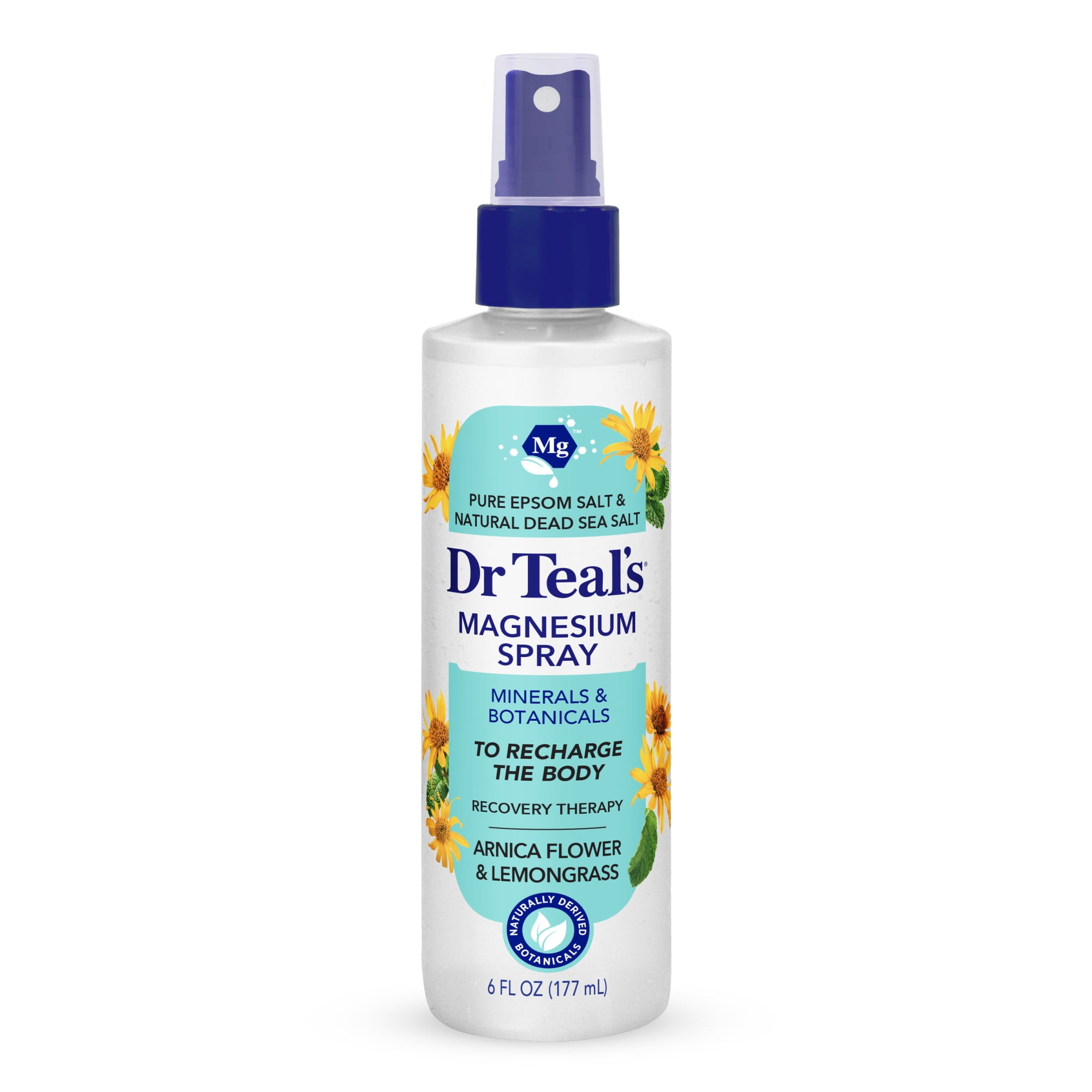
Dr Teal s Recovery Therapy Magnesium Spray with Arnica & Natural Dead Sea Salt 6 fl oz
At a glance
Summary
This body lotion contains beneficial ingredients such as magnesium sulfate, arnica montana flower extract, and various essential oils, which offer soothing and anti-inflammatory properties. However, the presence of alcohol, which can be drying and irritating to the skin, slightly detracts from its overall safety profile. The product is mostly composed of natural ingredients, but the inclusion of alcohol prevents it from achieving a higher score. Its plastic packaging can shed microplastics into the product and lowers its score.
Key ingredients 23
LAVANDULA ANGUSTIFOLIA (LAVENDER) FLOWER/LEAF/STEM EXTRACTVery Good
Lavender extract is renowned for its calming and healing properties. It is widely used in cosmetics for its soothing effects on the skin.
Risks
Rarely, it may cause irritation or allergic reactions.
Benefits
It can help reduce redness and promote skin healing.
ROSA DAMASCENA FLOWER OILVery Good
Rosa damascena oil, or rose oil, is highly valued for its moisturizing and anti-inflammatory properties. It is often used in cosmetics for its luxurious scent and skin benefits.
Risks
Rarely, it may cause irritation or allergic reactions.
Benefits
It can help hydrate the skin and reduce signs of aging.
ARNICA MONTANA FLOWER EXTRACTGood
Arnica montana flower extract is known for its anti-inflammatory and healing properties. It is often used to soothe bruises and muscle pain.
Risks
May cause allergic reactions or irritation if used in high concentrations.
Benefits
It can reduce swelling and promote healing of minor injuries.
GLYCERINGood
Glycerin is a natural humectant that attracts moisture to the skin. It is widely used in cosmetics for its moisturizing properties.
Risks
Generally considered safe with minimal risk of irritation.
Benefits
It helps maintain skin hydration and improves skin barrier function.
MAGNESIUM CHLORIDE (DEAD SEA SALT)Good
Magnesium chloride from Dead Sea salt is rich in minerals beneficial for skin health. It is known for its soothing and detoxifying effects.
Risks
Excessive use may lead to skin dryness.
Benefits
It can improve skin texture and provide relaxation benefits.
CYMBOPOGON FLEXUOSUS LEAF/STEM OILGood
Cymbopogon flexuosus oil, also known as lemongrass oil, has antimicrobial and anti-inflammatory properties. It is often used for its refreshing scent and skin benefits.
Risks
May cause irritation or allergic reactions in sensitive individuals.
Benefits
It can help reduce skin inflammation and provide a pleasant aroma.
CANANGA ODORATA FLOWER OILGood
Cananga odorata flower oil, or ylang-ylang oil, is known for its calming and balancing effects on the skin. It is often used for its fragrance and skin-soothing properties.
Risks
Potential for skin irritation or allergic reactions.
Benefits
It can help balance oil production and improve skin health.
CITRUS AURANTIUM AMARA (BITTER ORANGE) LEAF/TWIG EXTRACTGood
Bitter orange extract is known for its antioxidant and antimicrobial properties. It is used in cosmetics for its skin-refreshing benefits.
Risks
May cause photosensitivity or irritation in some individuals.
Benefits
It can help protect the skin from environmental damage and improve skin tone.
CITRUS AURANTIUM BERGAMIA (BERGAMOT) FRUIT OILGood
Bergamot oil is valued for its antiseptic and calming properties. It is often used in skincare for its soothing effects and pleasant aroma.
Risks
Can cause photosensitivity if not properly diluted.
Benefits
It can help reduce skin irritation and provide a calming effect.
FUSANUS SPICATUS WOOD OILGood
Fusanus spicatus wood oil, also known as sandalwood oil, is known for its anti-inflammatory and moisturizing properties. It is used for its calming scent and skin benefits.
Risks
May cause allergic reactions in sensitive individuals.
Benefits
It can help soothe irritated skin and improve moisture retention.
MENTHA PIPERITA (PEPPERMINT) LEAF EXTRACTGood
Peppermint extract is known for its cooling and invigorating properties. It is used in cosmetics for its refreshing scent and skin benefits.
Risks
May cause irritation or allergic reactions in sensitive skin.
Benefits
It can provide a cooling sensation and help soothe irritated skin.
PELARGONIUM GRAVEOLENS FLOWER OILGood
Pelargonium graveolens oil, or geranium oil, is known for its balancing and astringent properties. It is used in skincare for its ability to improve skin texture.
Risks
Potential for skin irritation or allergic reactions.
Benefits
It can help balance oil production and improve skin elasticity.
CITRUS LIMON (LEMON) PEEL OILGood
Lemon peel oil is known for its astringent and brightening properties. It is used in cosmetics for its refreshing scent and skin benefits.
Risks
Can cause photosensitivity if not properly diluted.
Benefits
It can help improve skin tone and provide a refreshing aroma.
LEMONGRASS OILGood
Lemongrass oil is known for its antimicrobial and astringent properties. It is used in cosmetics for its refreshing scent and skin benefits.
Risks
May cause irritation or allergic reactions in sensitive skin.
Benefits
It can help cleanse the skin and provide a refreshing aroma.
WATER/AQUA/EAUNeutral
Water is a common solvent used in cosmetic formulations. It helps dissolve other ingredients and provides a base for the product. It is generally considered safe and non-irritating.
Risks
There are no significant risks associated with water in cosmetic products.
Benefits
Water hydrates the skin and helps in the application of the product.
MAGNESIUM SULFATE (EPSOM SALT)Neutral
Standard formulation ingredient — neither beneficial nor harmful at typical use.
Risks
Overuse may lead to skin dryness or irritation in sensitive individuals.
Benefits
It can help relax muscles and reduce inflammation, providing a calming effect.
PENTYLENE GLYCOLNeutral
Pentylene glycol is a synthetic humectant and solvent. It helps retain moisture in the skin and enhances the texture of the product.
Risks
It may cause mild irritation in sensitive skin types.
Benefits
It improves skin hydration and product spreadability.
CAPRYLYL/CAPRYL GLUCOSIDENeutral
Caprylyl/capryl glucoside is a mild surfactant derived from sugar and fatty alcohols. It is used to enhance the cleansing properties of the product.
Risks
May cause mild irritation in sensitive individuals.
Benefits
It is biodegradable and gentle on the skin.
CITRIC ACIDNeutral
Citric acid is used to adjust the pH of cosmetic products. It also acts as a mild exfoliant and antioxidant.
Risks
Can cause irritation if used in high concentrations.
Benefits
Helps maintain product stability and improve skin texture.
ALCOHOLNeutral
Standard formulation ingredient — neither beneficial nor harmful at typical use.
Risks
May cause skin dryness and irritation, particularly in sensitive skin.
Benefits
It helps dissolve other ingredients and enhances product penetration.
SODIUM BENZOATEBad
Synthetic preservative that can form benzene in the presence of vitamin C.
Risks
In rare cases, it may cause skin irritation or allergic reactions.
Benefits
It extends the shelf life of the product by preventing spoilage.
LIMONENEBad
Processed additive flagged under Scout's ingredient doctrine.
Risks
May cause skin irritation or allergic reactions in sensitive individuals.
Benefits
It provides a pleasant citrus scent and may offer antioxidant benefits.
CITRALBad
Processed additive flagged under Scout's ingredient doctrine.
Risks
Can cause skin irritation or allergic reactions in sensitive individuals.
Benefits
It provides a fresh scent and may help preserve the product.
Processing
Processed Foods
Get the full breakdown in the Scout appTake Scout shopping
Scan any product to see lab results, healthy alternatives, and your personalized analysis.