
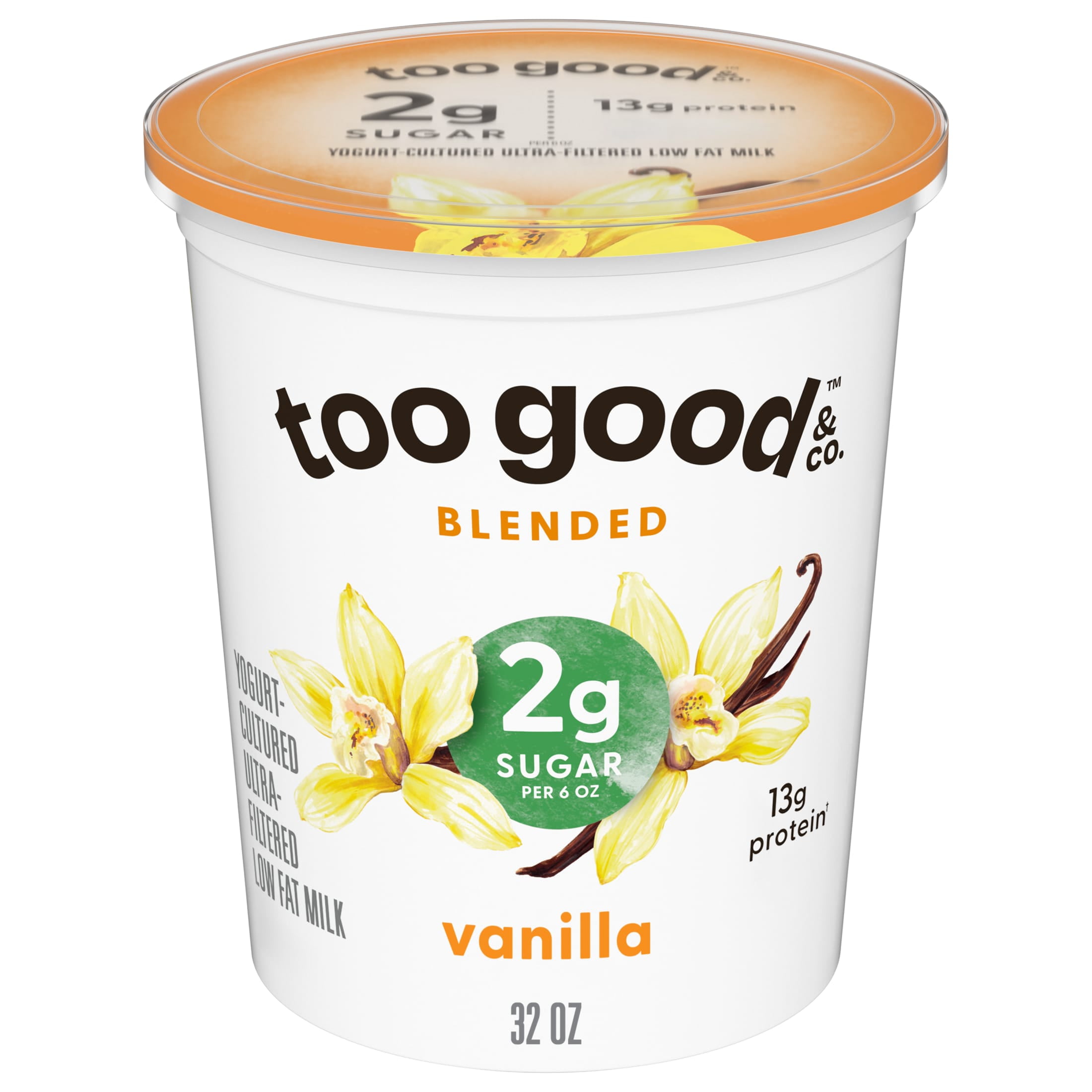


Lowfat Greek Yogurt Vanilla
Summary
This lowfat Greek yogurt contains beneficial ingredients like cultured lowfat milk and vanilla extract, which contribute to its nutritional value. However, the presence of natural flavors and multiple gums, along with its classification as an ultra-processed product, limits its healthiness. Despite good protein content, the processing level and use of additives prevent it from being rated higher.
At a glance
Key ingredients 11
Cultured lowfat milkGood
Cultured lowfat milk is a primary source of protein and calcium, essential for bone health. The fermentation process enhances digestibility and provides beneficial probiotics. It is a staple in yogurt, contributing to its creamy texture and nutritional profile.
Benefits
Provides high-quality protein and calcium, supporting bone health and muscle maintenance. Contains probiotics that may improve gut health.
Vanilla extractGood
Vanilla extract is a natural flavoring derived from vanilla beans, adding a pleasant aroma and taste. It is minimally processed, retaining some antioxidant properties. Its use in yogurt enhances flavor without the need for artificial additives.
Benefits
Adds natural flavor and aroma, enhancing the sensory experience of the product. Contains trace antioxidants that may contribute to overall health.
Chicory root fiberNeutral
Chicory root fiber is a prebiotic fiber that supports digestive health. It is extracted from the chicory root and used to increase fiber content in foods. While beneficial for gut health, excessive consumption may cause digestive discomfort.
Risks
May cause bloating or gas if consumed in large amounts.
Benefits
Acts as a prebiotic, promoting the growth of beneficial gut bacteria and improving digestive health.
Natural flavorsBad
Natural flavors are a catch-all term for flavoring agents derived from natural sources but processed in a lab. They lack transparency, making it difficult to assess their true nature and health impact. Their inclusion often compensates for the lack of real ingredients.
Risks
Potential for undisclosed allergens or sensitivities due to lack of transparency.
LactaseNeutral
Lactase is an enzyme added to break down lactose, making the product more digestible for lactose-intolerant individuals. It is produced through fermentation processes and is generally considered safe. Its presence allows a wider audience to enjoy dairy products.
Benefits
Facilitates lactose digestion, making dairy products accessible to those with lactose intolerance.
Fruit pectinNeutral
Fruit pectin is a natural gelling agent derived from fruits, used to thicken and stabilize yogurt. It is minimally processed and generally recognized as safe. Its use helps achieve the desired texture without synthetic additives.
Benefits
Contributes to the texture and stability of the product, enhancing its mouthfeel.
Sea saltGood
Unrefined sea salt — a minimally processed, natural source of sodium and essential trace minerals, and a legitimate whole-food seasoning. Treated as a positive ingredient.
Risks
Excessive consumption of salt can lead to increased blood pressure.
Benefits
Provides essential minerals and enhances the overall flavor profile of the product.
Stevia extractNeutral
Stevia extract is a natural, zero-calorie sweetener derived from the stevia plant. It is used to provide sweetness without adding sugar or calories. Its natural origin makes it a preferable alternative to artificial sweeteners.
Benefits
Offers sweetness without calories, making it suitable for calorie-conscious consumers.
Guar gumNeutral
Guar gum is a thickening agent derived from guar beans, used to improve texture and stability. It is widely used in food processing and is generally considered safe. Its inclusion helps maintain the desired consistency of the yogurt.
Risks
Excessive consumption may lead to digestive issues such as bloating or gas.
Benefits
Enhances texture and stability, contributing to a smooth and consistent product.
Lemon juice concentrateNeutral
Lemon juice concentrate is used for flavor enhancement and as a natural preservative. It is derived from lemons and retains some vitamin C content. Its acidic nature helps maintain the product's freshness.
Benefits
Adds a natural citrus flavor and acts as a preservative, extending shelf life.
Locust bean gumNeutral
Locust bean gum is a natural thickening agent derived from carob tree seeds. It is used to stabilize and thicken food products. Its natural origin and minimal processing make it a common choice in food manufacturing.
Risks
May cause digestive discomfort if consumed in large quantities.
Benefits
Improves texture and stability, contributing to a desirable consistency in the product.
Processing
Ultra-Processed Foods
Get the full breakdown in the Scout app
Scan any product to see lab results, healthy alternatives, and your personalized analysis.
Download on theApp Store