
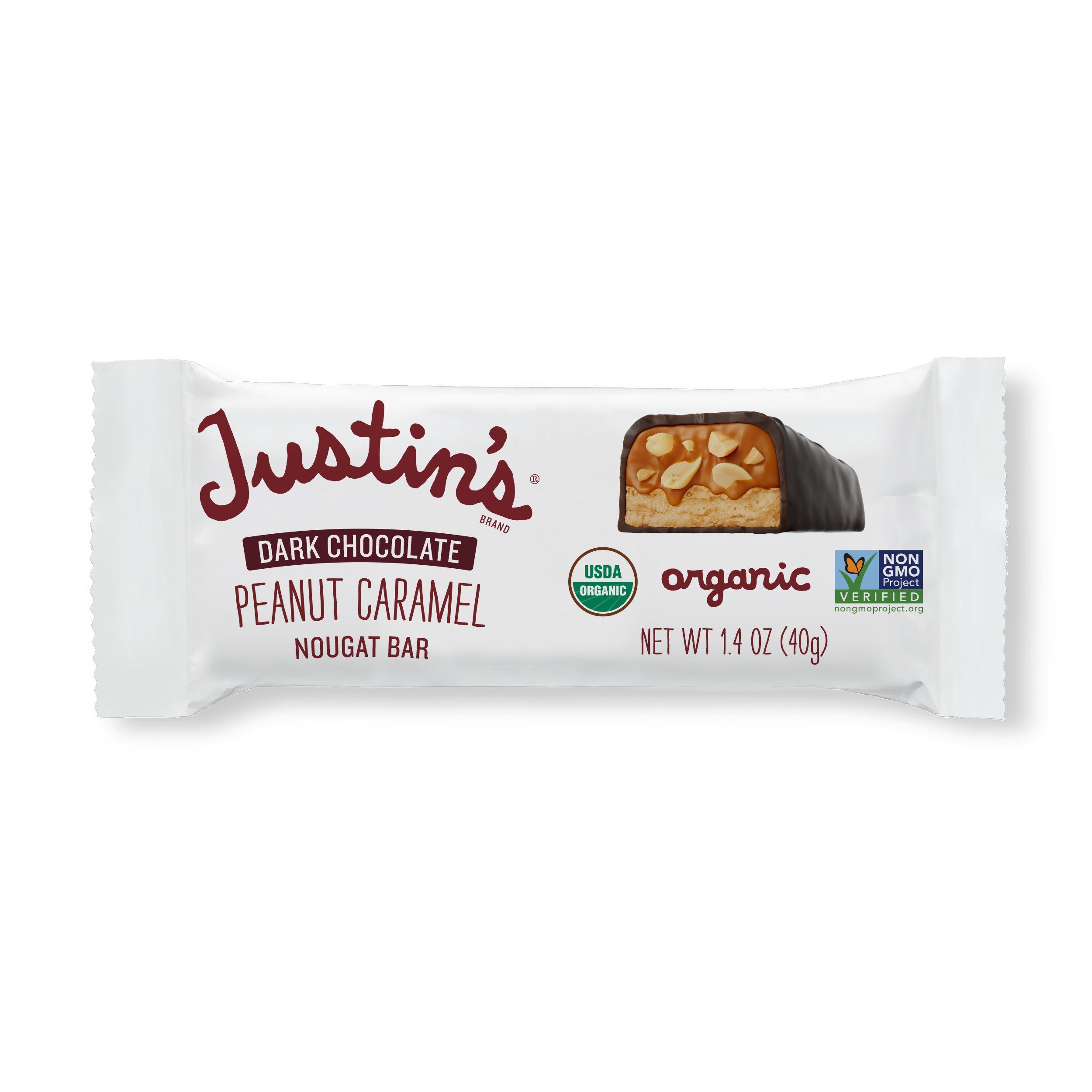

Justin's Peanut Caramel Nougat Bar
Analysis updated August 2026 · How Scout scores
At a glance
Summary
This product contains a mix of beneficial ingredients like organic cacao beans and whey protein concentrate, which are minimally processed and provide nutritional benefits. However, it is heavily processed and includes ingredients such as organic palm oil and emulsifiers like sunflower and soy lecithin, which are less desirable. The high sugar content and ultra-processed nature of the product further limit its healthiness, despite the use of organic ingredients.
Key ingredients 17
Organic cacao beansVery Good
Organic cacao beans are rich in antioxidants and flavonoids, which support heart health. They are minimally processed, preserving their nutritional benefits. Cacao is also a good source of magnesium and iron.
Benefits
Rich in antioxidants and minerals, supporting cardiovascular health and providing anti-inflammatory benefits.
Organic dry roasted peanutsVery Good
Organic dry roasted peanuts are a good source of protein, healthy fats, and fiber. They are minimally processed, retaining their nutritional benefits. Peanuts also provide essential vitamins and minerals.
Risks
Allergy risk for individuals with peanut allergies.
Benefits
Rich in protein, healthy fats, and fiber, supporting heart health and providing sustained energy.
Organic whey protein concentrateVery Good
Organic whey protein concentrate is a high-quality protein source with a complete amino acid profile. It is minimally processed and derived from milk. Whey protein supports muscle growth and recovery.
Risks
May cause digestive issues for lactose-intolerant individuals.
Benefits
Supports muscle growth and recovery with a complete amino acid profile.
Organic cocoa butterGood
Organic cocoa butter is a natural fat extracted from cacao beans, providing healthy saturated fats. It is minimally processed and retains beneficial compounds. Cocoa butter is known for its moisturizing properties.
Benefits
Provides healthy fats and contributes to the creamy texture of chocolate products.
Organic tapioca fiberGood
Organic tapioca fiber is a prebiotic fiber that supports digestive health. It is derived from cassava root and is minimally processed. Tapioca fiber can help maintain healthy blood sugar levels.
Benefits
Supports digestive health and helps maintain healthy blood sugar levels.
Organic peanut flourGood
Organic peanut flour is a high-protein, low-fat ingredient made from roasted peanuts. It is minimally processed and retains the nutritional benefits of peanuts. Peanut flour is a versatile ingredient used to enhance protein content.
Risks
Allergy risk for individuals with peanut allergies.
Benefits
High in protein and low in fat, supporting muscle health and providing a rich source of nutrients.
Organic whole milk powderGood
Organic whole milk powder is a source of protein, calcium, and healthy fats. It is minimally processed to retain essential nutrients. Whole milk powder supports bone health and provides a rich, creamy texture.
Risks
May cause digestive issues for lactose-intolerant individuals.
Benefits
Rich in protein, calcium, and healthy fats, supporting bone health and providing a creamy texture.
Organic vanilla extractGood
Organic vanilla extract is a natural flavoring derived from vanilla beans. It is minimally processed and adds a rich, aromatic flavor to foods. Vanilla extract contains antioxidants that may provide health benefits.
Benefits
Adds natural flavor and contains antioxidants that may provide health benefits.
Organic evaporated cane sugarNeutral
Organic evaporated cane sugar is a less refined form of sugar. It retains some molasses content, which provides minimal additional nutrients compared to refined sugar. However, it still contributes to high sugar intake.
Risks
Excessive consumption can lead to health issues such as obesity and diabetes.
Benefits
Provides a natural source of sweetness with slightly more nutrients than refined sugar.
Organic non fat dry milkNeutral
Organic non fat dry milk is a source of protein and calcium. It is processed to remove fat and water, retaining essential nutrients. However, it lacks the healthy fats found in whole milk.
Risks
May cause digestive issues for lactose-intolerant individuals.
Benefits
Provides protein and calcium, supporting bone health.
Organic peanut oilNeutral
Organic peanut oil is a monounsaturated fat that is stable at high temperatures. It is extracted from peanuts and retains some beneficial compounds. However, it lacks the omega-3 fatty acids found in other oils.
Risks
Allergy risk for individuals with peanut allergies.
Benefits
Provides a stable cooking oil with a high smoke point.
SaltNeutral
Salt is used to enhance flavor and preserve food. It is a natural mineral that is essential for various bodily functions. However, excessive intake can lead to health issues.
Risks
High sodium intake can contribute to hypertension and cardiovascular disease.
Benefits
Essential for maintaining fluid balance and nerve function.
Organic sunflower lecithinBad
Organic sunflower lecithin is used as an emulsifier to improve texture and consistency. It is a processed ingredient, which may not offer significant nutritional benefits. However, it is a better alternative to synthetic emulsifiers.
Risks
May cause digestive issues in sensitive individuals.
Benefits
Helps maintain product consistency and is a natural alternative to synthetic emulsifiers.
Organic cane sugarBad
Processed additive flagged under Scout's ingredient doctrine.
Risks
Excessive consumption can lead to health issues such as obesity and diabetes.
Benefits
Provides a natural source of sweetness with slightly more nutrients than refined sugar.
Organic tapioca syrupBad
Processed additive flagged under Scout's ingredient doctrine.
Risks
High consumption can contribute to increased blood sugar levels.
Benefits
Acts as a natural sweetener and binding agent, providing a smooth texture.
Organic palm oilBad
Organic palm oil is a saturated fat that is often criticized for its environmental impact. It is processed to remove impurities, but its high saturated fat content can be a concern. However, it is a stable cooking oil with a long shelf life.
Risks
High saturated fat content may contribute to heart disease if consumed in excess.
Benefits
Provides a stable cooking oil with a long shelf life.
Organic soy lecithinBad
Organic soy lecithin is used as an emulsifier to improve texture and consistency. It is a processed ingredient, which may not offer significant nutritional benefits. However, it is a better alternative to synthetic emulsifiers.
Risks
May cause digestive issues in sensitive individuals.
Benefits
Helps maintain product consistency and is a natural alternative to synthetic emulsifiers.
Processing
Ultra-Processed Foods
Get the full breakdown in the Scout appTake Scout shopping
Scan any product to see lab results, healthy alternatives, and your personalized analysis.
Download on theApp Store GET IT ONGoogle PlayAmazon pricing & content
Amazon price as of . Product prices and availability are accurate as of the date/time indicated and are subject to change. Any price and availability information displayed on Amazon.com at the time of purchase will apply to the purchase of this product.
CERTAIN CONTENT THAT APPEARS ON THIS SITE COMES FROM AMAZON. THIS CONTENT IS PROVIDED “AS IS” AND IS SUBJECT TO CHANGE OR REMOVAL AT ANY TIME.