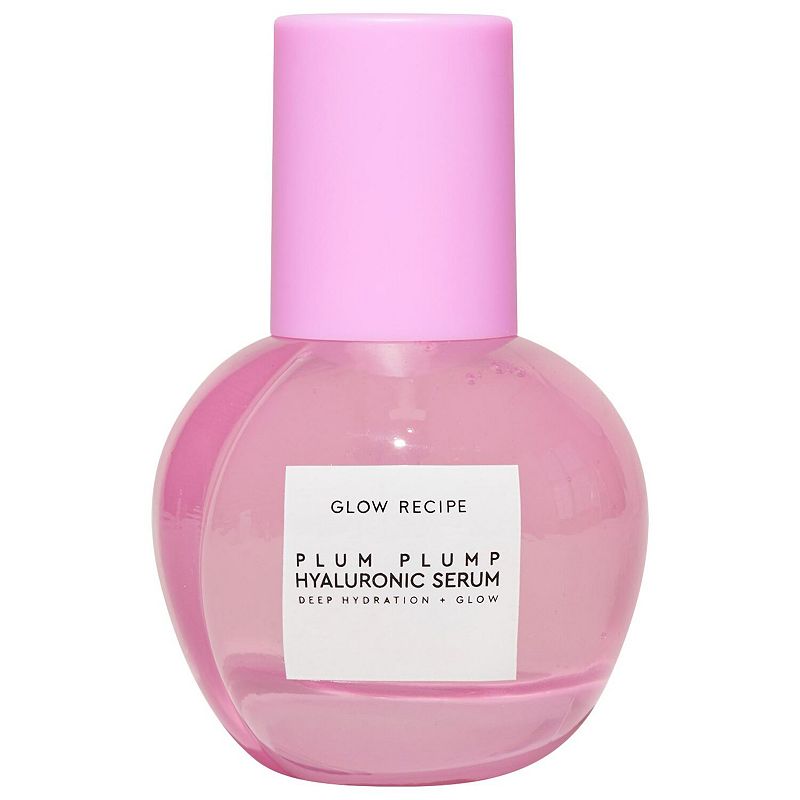
Glow Recipe Plum Plump Serum - Hydrating Hyaluronic Acid Facial Serum - Brightening Serum for Plump Firm Skin and Youthful Looking Glow (30ml / 1oz)
At a glance
Summary
This serum contains a variety of beneficial ingredients such as glycerin, hyaluronic acid, and several fruit extracts that provide hydration, antioxidant protection, and skin brightening effects. However, the presence of fragrance, which can cause irritation and allergic reactions, slightly detracts from its overall safety profile. The product is mostly composed of safe and effective ingredients, but the inclusion of fragrance prevents it from achieving a higher score.
Key ingredients 35
Terminalia Ferdinandiana Fruit ExtractVery Good
Known as Kakadu Plum, this extract is extremely rich in Vitamin C, providing strong antioxidant protection and brightening effects. It supports collagen production and reduces signs of aging.
Risks
May cause irritation in sensitive skin due to high Vitamin C content.
Benefits
Enhances skin brightness, reduces wrinkles, and protects against environmental damage.
Sodium Acetylated HyaluronateVery Good
A form of hyaluronic acid that provides intense hydration and plumping effects. It penetrates deeper into the skin for long-lasting moisture.
Risks
Generally safe with minimal risk of irritation.
Benefits
Deeply hydrates and plumps the skin, improving texture and elasticity.
Tremella Fuciformis PolysaccharideVery Good
Also known as Snow Mushroom, it is a natural alternative to hyaluronic acid with superior moisture retention. It forms a flexible hydration film on the skin.
Risks
Minimal risk of irritation, though rare allergic reactions can occur.
Benefits
Enhances skin hydration and provides a plumping effect.
GlycerinGood
Glycerin is a humectant that attracts moisture to the skin, helping to keep it hydrated. It is well-tolerated by most skin types and enhances skin barrier function.
Risks
There are minimal risks associated with glycerin, though it may cause irritation in very sensitive skin.
Benefits
Glycerin helps maintain skin hydration and improves skin resilience.
PropanediolGood
Propanediol is used as a solvent and skin-conditioning agent. It enhances the absorption of other ingredients and provides a smooth application.
Risks
Propanediol is generally safe but can cause irritation in sensitive individuals.
Benefits
It improves the texture of formulations and aids in ingredient penetration.
Pleiogynium Timorense Fruit ExtractGood
This fruit extract is rich in antioxidants, which help protect the skin from environmental damage. It also has moisturizing properties.
Risks
There is limited research on this specific extract, so potential allergies should be monitored.
Benefits
It provides antioxidant protection and hydration to the skin.
Podocarpus Elatus Fruit ExtractGood
This extract is known for its antioxidant properties, which help in protecting the skin from oxidative stress. It also contributes to skin hydration.
Risks
Potential for allergic reactions exists, though it is generally considered safe.
Benefits
Offers antioxidant benefits and supports skin hydration.
Sodium HyaluronateGood
Sodium Hyaluronate is a salt form of hyaluronic acid, known for its ability to retain moisture and improve skin hydration. It helps reduce the appearance of fine lines.
Risks
Rarely causes irritation, but sensitive skin should be cautious.
Benefits
Provides excellent hydration and reduces signs of aging.
Pantothenic AcidGood
Also known as Vitamin B5, it is a moisturizing and healing agent that helps to soothe and repair the skin. It enhances skin barrier function.
Risks
Rarely causes irritation, but sensitive skin should be cautious.
Benefits
Promotes skin healing and improves hydration.
PhospholipidsGood
Phospholipids are natural components of cell membranes that help to hydrate and protect the skin. They enhance the delivery of active ingredients.
Risks
Generally safe with minimal risk of irritation.
Benefits
Improves skin hydration and enhances ingredient absorption.
Spirulina Platensis ExtractGood
Rich in nutrients and antioxidants, Spirulina extract helps to protect the skin from environmental damage and improve overall skin health.
Risks
Generally safe, but potential for allergic reactions exists.
Benefits
Provides antioxidant protection and supports skin health.
Leuconostoc/Radish Root Ferment FiltrateGood
A natural preservative derived from fermented radish root, it provides antimicrobial benefits and helps to extend product shelf life.
Risks
Generally safe, but potential for allergic reactions exists.
Benefits
Acts as a natural preservative and provides antimicrobial benefits.
Aqua/Water/EauNeutral
Water is a common solvent used in cosmetics to dissolve other ingredients. It does not provide direct benefits or risks in skincare formulations.
Risks
There are no direct risks associated with water in skincare products.
Benefits
Water helps in the application and absorption of other active ingredients.
Pentylene GlycolNeutral
Standard formulation ingredient — neither beneficial nor harmful at typical use.
Risks
It may cause mild irritation in sensitive skin types.
Benefits
Pentylene Glycol enhances skin hydration and extends product shelf life.
Acacia Seyal Gum ExtractNeutral
Used as a thickening agent and film-former in cosmetics. It helps improve the texture and stability of formulations.
Risks
Generally safe, but may cause mild irritation in sensitive individuals.
Benefits
Improves product texture and stability.
sr-Spider Polypeptide-1Neutral
A synthetic peptide that mimics the properties of spider silk, providing a smooth texture and film-forming benefits. It is used for its potential anti-aging properties.
Risks
Limited research on long-term effects, but generally considered safe.
Benefits
May improve skin texture and provide anti-aging benefits.
Sodium HydroxideNeutral
Used to adjust the pH of cosmetic formulations. It is present in very low concentrations to ensure product stability.
Risks
In high concentrations, it can be irritating, but it is typically used in safe amounts.
Benefits
Ensures the stability and effectiveness of the product by maintaining optimal pH.
Raphanus Sativus Root ExtractNeutral
Derived from radish root, it is used for its antimicrobial properties and as a natural preservative. It helps to extend the shelf life of products.
Risks
May cause irritation in sensitive skin types.
Benefits
Acts as a natural preservative and provides antimicrobial benefits.
Caprylyl GlycolNeutral
Standard formulation ingredient — neither beneficial nor harmful at typical use.
Risks
Generally safe, but can cause irritation in sensitive individuals.
Benefits
Enhances skin hydration and extends product shelf life.
ChlorphenesinNeutral
Chlorphenesin is a preservative used to prevent the growth of bacteria and fungi in cosmetic products. It helps to ensure product safety.
Risks
May cause irritation or allergic reactions in some individuals.
Benefits
Prevents microbial contamination and extends product shelf life.
Tetrasodium Glutamate DiacetateNeutral
A chelating agent that helps to stabilize cosmetic formulations by binding metal ions. It enhances the effectiveness of preservatives.
Risks
Generally considered safe, but can cause irritation in sensitive skin.
Benefits
Improves product stability and preservative efficacy.
Polyglyceryl-6 CaprylateNeutral
An emulsifier that helps to blend oil and water-based ingredients in formulations. It contributes to the smooth texture of products.
Risks
Generally safe with minimal risk of irritation.
Benefits
Improves product texture and stability.
Polyglyceryl-4 CaprateNeutral
Used as an emulsifier and skin-conditioning agent in cosmetics. It helps to improve the texture and application of products.
Risks
Generally safe, but may cause irritation in sensitive skin.
Benefits
Enhances product texture and skin feel.
1,2-HexanediolNeutral
A solvent and preservative booster used in cosmetics to improve texture and stability. It helps to enhance the efficacy of preservatives.
Risks
Generally safe, but can cause irritation in sensitive individuals.
Benefits
Improves product texture and extends shelf life.
Citric AcidNeutral
Used to adjust the pH of cosmetic formulations and as a mild exfoliant. It helps to maintain product stability and improve skin texture.
Risks
Can cause irritation in sensitive skin, especially in high concentrations.
Benefits
Improves product stability and provides mild exfoliation.
EthylhexylglycerinNeutral
A skin-conditioning agent and preservative booster used in cosmetics. It helps to improve skin feel and extend product shelf life.
Risks
Generally safe, but can cause irritation in sensitive individuals.
Benefits
Enhances skin feel and extends product shelf life.
HydroxyacetophenoneNeutral
An antioxidant and preservative booster used in cosmetics to enhance product stability. It helps to protect formulations from degradation.
Risks
Generally safe, but potential for irritation exists.
Benefits
Improves product stability and provides antioxidant benefits.
Xanthan GumNeutral
A natural thickening agent used to improve the texture and stability of cosmetic formulations. It helps to create a smooth application.
Risks
Generally safe, but can cause irritation in sensitive skin.
Benefits
Enhances product texture and stability.
Sodium GlycolateNeutral
Used as a buffering agent in cosmetics to maintain pH stability. It helps to ensure product effectiveness.
Risks
Generally safe, but can cause irritation in sensitive skin.
Benefits
Maintains product stability and effectiveness.
Sodium FormateNeutral
A buffering agent used to maintain pH stability in cosmetic formulations. It helps to ensure product effectiveness.
Risks
Generally safe, but can cause irritation in sensitive skin.
Benefits
Maintains product stability and effectiveness.
Potassium SorbateBad
Synthetic preservative — flagged in daily-use products.
Risks
May cause irritation or allergic reactions in some individuals.
Benefits
Prevents microbial contamination and extends product shelf life.
Propylene GlycolBad
Processed additive flagged under Scout's ingredient doctrine.
Risks
Can cause irritation in sensitive skin types.
Benefits
Improves skin hydration and enhances ingredient penetration.
CarrageenanBad
Processed additive flagged under Scout's ingredient doctrine.
Risks
Generally safe, but can cause irritation in sensitive skin.
Benefits
Improves product texture and stability.
PhenoxyethanolBad
Processed additive flagged under Scout's ingredient doctrine.
Risks
Can cause irritation or allergic reactions in some individuals.
Benefits
Prevents microbial contamination and extends product shelf life.
Fragrance/ParfumVery Bad
Fragrance is used to impart scent to cosmetic products but can be a common cause of skin irritation and allergic reactions. It often contains undisclosed chemicals.
Risks
High potential for irritation and allergic reactions, especially in sensitive skin.
Benefits
Provides a pleasant scent to the product.
Get the full breakdown in the Scout appTake Scout shopping
Scan any product to see lab results, healthy alternatives, and your personalized analysis.
Are you Glow Recipe? Fix an error Get the badge Get tested
Amazon pricing & content
Amazon price as of . Product prices and availability are accurate as of the date/time indicated and are subject to change. Any price and availability information displayed on Amazon.com at the time of purchase will apply to the purchase of this product.
CERTAIN CONTENT THAT APPEARS ON THIS SITE COMES FROM AMAZON. THIS CONTENT IS PROVIDED “AS IS” AND IS SUBJECT TO CHANGE OR REMOVAL AT ANY TIME.