
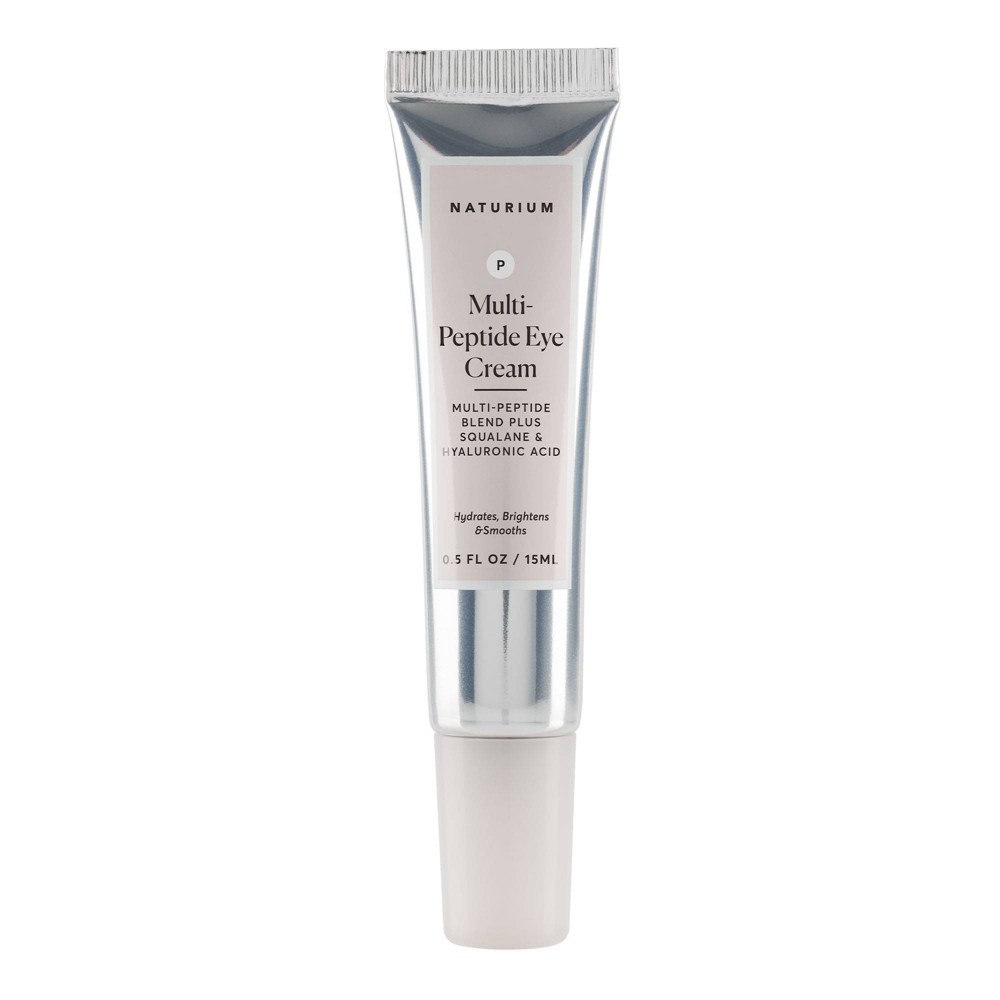
Naturium Multi-Peptide Eye Cream - 0.5 fl oz: Paraben-Free, Vegan, Contains Hyaluronic Acid, Dark Circle Reduction
Analysis updated August 2026 · How Scout scores
At a glance
Summary
This eye cream contains beneficial ingredients such as jojoba oil, squalane, and multiple peptides that support skin hydration and anti-aging. However, the presence of synthetic polymers and phenoxyethanol, which can be irritating or pose contamination risks, slightly lowers its overall safety profile. The product is moderately processed, which also impacts its score.
Key ingredients 39
Simmondsia Chinensis Seed OilVery Good
Simmondsia Chinensis Seed Oil, or jojoba oil, is a natural oil that mimics the skin's natural sebum. It is non-comedogenic and helps to moisturize and protect the skin. It is rich in vitamins and minerals that nourish the skin.
Risks
There are minimal risks, though some individuals may experience mild irritation.
Benefits
Jojoba oil provides deep hydration and helps balance oil production.
SqualaneVery Good
Squalane is a highly effective emollient and natural antioxidant. It mimics the skin's natural oils, making it an excellent moisturizer. It is non-irritating and suitable for all skin types.
Risks
There are minimal risks associated with squalane.
Benefits
Squalane provides deep hydration and helps to protect the skin from environmental damage.
Acetyl Hexapeptide-8Very Good
Acetyl Hexapeptide-8 is a peptide that helps to reduce the appearance of wrinkles and fine lines. It is often used in anti-aging formulations for its skin-smoothing properties. It is considered safe and effective for most skin types.
Risks
There are minimal risks associated with Acetyl Hexapeptide-8.
Benefits
Acetyl Hexapeptide-8 helps to reduce the appearance of fine lines and improve skin texture.
Palmitoyl Tetrapeptide-7Very Good
Palmitoyl Tetrapeptide-7 is a peptide that helps to reduce inflammation and improve skin elasticity. It is often used in anti-aging formulations for its skin-rejuvenating properties. It is considered safe and effective for most skin types.
Risks
There are minimal risks associated with Palmitoyl Tetrapeptide-7.
Benefits
Palmitoyl Tetrapeptide-7 helps to reduce inflammation and improve skin firmness.
Palmitoyl Tripeptide-1Very Good
Palmitoyl Tripeptide-1 is a peptide that helps to stimulate collagen production and improve skin texture. It is often used in anti-aging formulations for its skin-firming properties. It is considered safe and effective for most skin types.
Risks
There are minimal risks associated with Palmitoyl Tripeptide-1.
Benefits
Palmitoyl Tripeptide-1 helps to improve skin elasticity and reduce the appearance of wrinkles.
Palmitoyl Tripeptide-5Very Good
Palmitoyl Tripeptide-5 is a peptide that helps to stimulate collagen production and improve skin texture. It is often used in anti-aging formulations for its skin-firming properties. It is considered safe and effective for most skin types.
Risks
There are minimal risks associated with Palmitoyl Tripeptide-5.
Benefits
Palmitoyl Tripeptide-5 helps to improve skin elasticity and reduce the appearance of wrinkles.
PanthenolVery Good
Panthenol, also known as provitamin B5, is a humectant that helps to hydrate and soothe the skin. It is widely used in skincare for its moisturizing and healing properties. It is considered safe and beneficial for most skin types.
Risks
There are minimal risks associated with Panthenol.
Benefits
Panthenol helps to improve skin hydration and reduce irritation.
GlycerinGood
Glycerin is a humectant that attracts moisture to the skin, helping to keep it hydrated. It is widely used in skincare for its moisturizing properties. It is considered safe and beneficial for most skin types.
Risks
There are minimal risks, though it can be sticky in high concentrations.
Benefits
Glycerin helps maintain skin hydration and improves skin barrier function.
Dunaliella Salina ExtractGood
Dunaliella Salina Extract is a natural extract rich in beta-carotene and antioxidants. It helps to protect the skin from environmental damage and improve skin health. It is considered safe and beneficial for most skin types.
Risks
There are minimal risks associated with Dunaliella Salina Extract.
Benefits
Dunaliella Salina Extract provides antioxidant protection and helps to improve skin radiance.
Sodium HyaluronateGood
Sodium Hyaluronate is a form of hyaluronic acid that helps to attract and retain moisture in the skin. It is highly effective in hydrating and plumping the skin. It is considered safe and beneficial for most skin types.
Risks
There are minimal risks associated with Sodium Hyaluronate.
Benefits
Sodium Hyaluronate provides intense hydration and helps to improve skin elasticity.
Tocopheryl AcetateGood
Tocopheryl Acetate is a form of Vitamin E used as an antioxidant in cosmetics. It helps to protect the skin from environmental damage and improve skin health. It is considered safe and beneficial for most skin types.
Risks
There are minimal risks associated with Tocopheryl Acetate.
Benefits
Tocopheryl Acetate provides antioxidant protection and helps to improve skin texture.
AquaNeutral
Aqua, or water, is a common solvent used in cosmetics to dissolve other ingredients. It is essential for the formulation but does not provide direct skin benefits. It is generally considered safe and non-irritating.
Risks
There are no significant risks associated with water in cosmetic formulations.
Benefits
Water helps to hydrate the skin by providing moisture.
Stearic AcidNeutral
Stearic Acid is a fatty acid used as an emulsifier and thickener in cosmetics. It helps to stabilize formulations and improve texture. It is generally considered safe for use in skincare products.
Risks
There are minimal risks, though it may cause irritation in sensitive individuals.
Benefits
Stearic Acid helps to improve the texture and stability of cosmetic formulations.
Glyceryl StearateNeutral
Glyceryl Stearate is an emulsifier that helps to blend water and oil components in formulations. It improves the texture and consistency of products. It is generally considered safe for use in cosmetics.
Risks
There are minimal risks, though it may cause irritation in sensitive individuals.
Benefits
Glyceryl Stearate helps to stabilize and improve the texture of cosmetic formulations.
Cetyl AlcoholNeutral
Cetyl Alcohol is a fatty alcohol used as an emollient and thickener in cosmetics. It helps to soften and smooth the skin. It is generally considered safe and non-irritating.
Risks
There are minimal risks, though it may cause irritation in sensitive individuals.
Benefits
Cetyl Alcohol helps to improve the texture and moisturizing properties of skincare products.
Stearyl AlcoholNeutral
Stearyl Alcohol is a fatty alcohol used as an emollient and thickener in cosmetics. It helps to stabilize formulations and improve texture. It is generally considered safe for use in skincare products.
Risks
There are minimal risks, though it may cause irritation in sensitive individuals.
Benefits
Stearyl Alcohol helps to improve the texture and stability of cosmetic formulations.
Palmitic AcidNeutral
Palmitic Acid is a fatty acid used as an emollient and surfactant in cosmetics. It helps to soften and smooth the skin. It is generally considered safe for use in skincare products.
Risks
There are minimal risks, though it may cause irritation in sensitive individuals.
Benefits
Palmitic Acid helps to improve the texture and moisturizing properties of skincare products.
HydroxyacetophenoneNeutral
Hydroxyacetophenone is an antioxidant and preservative used in cosmetics to enhance product stability. It helps to protect formulations from degradation. It is generally considered safe for use in skincare products.
Risks
There are minimal risks, though it may cause irritation in sensitive individuals.
Benefits
Hydroxyacetophenone helps to stabilize formulations and provide antioxidant protection.
Sorbitan OleateNeutral
Sorbitan Oleate is an emulsifier used to blend oil and water components in formulations. It helps to improve the texture and consistency of products. It is generally considered safe for use in cosmetics.
Risks
There are minimal risks, though it may cause irritation in sensitive individuals.
Benefits
Sorbitan Oleate helps to stabilize and improve the texture of cosmetic formulations.
Aluminum Starch OctenylsuccinateNeutral
Aluminum Starch Octenylsuccinate is a modified starch used as a thickener and absorbent in cosmetics. It helps to improve the texture and feel of products. It is generally considered safe for use in skincare products.
Risks
There are minimal risks, though it may cause irritation in sensitive individuals.
Benefits
Aluminum Starch Octenylsuccinate helps to improve the texture and absorbency of cosmetic formulations.
Butylene GlycolNeutral
Butylene Glycol is a humectant and solvent used in cosmetics to improve texture and moisture retention. It is generally considered safe for use in skincare products. It helps to enhance the penetration of other ingredients.
Risks
There are minimal risks, though it may cause irritation in sensitive individuals.
Benefits
Butylene Glycol helps to improve skin hydration and enhance product texture.
1, 2-HexanediolNeutral
1, 2-Hexanediol is a solvent and preservative used in cosmetics to enhance product stability. It helps to prevent microbial growth and improve texture. It is generally considered safe for use in skincare products.
Risks
There are minimal risks, though it may cause irritation in sensitive individuals.
Benefits
1, 2-Hexanediol helps to stabilize formulations and prevent microbial contamination.
Boron NitrideNeutral
Boron Nitride is a mineral used in cosmetics to improve texture and provide a soft-focus effect. It helps to enhance the feel and appearance of products. It is generally considered safe for use in skincare products.
Risks
There are minimal risks, though it may cause irritation in sensitive individuals.
Benefits
Boron Nitride helps to improve product texture and provide a smooth finish.
Caprylyl GlycolNeutral
Caprylyl Glycol is a humectant and preservative used in cosmetics to enhance moisture retention and product stability. It helps to improve the texture and feel of products. It is generally considered safe for use in skincare products.
Risks
There are minimal risks, though it may cause irritation in sensitive individuals.
Benefits
Caprylyl Glycol helps to improve skin hydration and preserve formulations.
IsohexadecaneNeutral
Isohexadecane is a synthetic emollient used in cosmetics to improve texture and spreadability. It helps to enhance the feel and application of products. It is generally considered safe for use in skincare products.
Risks
There are minimal risks, though it may cause irritation in sensitive individuals.
Benefits
Isohexadecane helps to improve product texture and application.
ChlorphenesinNeutral
Chlorphenesin is a preservative used in cosmetics to prevent microbial growth. It helps to extend the shelf life of products. It is generally considered safe for use in low concentrations.
Risks
There are minimal risks, though it may cause irritation in sensitive individuals.
Benefits
Chlorphenesin helps to preserve the product and prevent contamination.
Sodium HydroxideNeutral
Sodium Hydroxide is used to adjust the pH of cosmetic formulations. It helps to ensure product stability and effectiveness. It is generally considered safe in low concentrations.
Risks
There are minimal risks, though it may cause irritation in sensitive individuals.
Benefits
Sodium Hydroxide helps to maintain the pH balance of formulations.
CarbomerNeutral
Carbomer is a synthetic polymer used as a thickener and stabilizer in cosmetics. It helps to improve the texture and consistency of products. It is generally considered safe for use in skincare products.
Risks
There are minimal risks, though it may cause irritation in sensitive individuals.
Benefits
Carbomer helps to stabilize formulations and improve texture.
Sodium LactateNeutral
Sodium Lactate is a humectant used in cosmetics to enhance moisture retention. It helps to improve skin hydration and texture. It is generally considered safe for use in skincare products.
Risks
There are minimal risks, though it may cause irritation in sensitive individuals.
Benefits
Sodium Lactate helps to improve skin hydration and texture.
Polysorbate 20Neutral
Polysorbate 20 is an emulsifier used to blend oil and water components in formulations. It helps to improve the texture and consistency of products. It is generally considered safe for use in cosmetics.
Risks
There are minimal risks, though it may cause irritation in sensitive individuals.
Benefits
Polysorbate 20 helps to stabilize and improve the texture of cosmetic formulations.
Citric AcidNeutral
Citric Acid is used to adjust the pH of cosmetic formulations. It helps to ensure product stability and effectiveness. It is generally considered safe in low concentrations.
Risks
There are minimal risks, though it may cause irritation in sensitive individuals.
Benefits
Citric Acid helps to maintain the pH balance of formulations.
EthylhexylglycerinNeutral
Ethylhexylglycerin is a preservative and skin conditioning agent used in cosmetics. It helps to enhance product stability and improve skin feel. It is generally considered safe for use in skincare products.
Risks
There are minimal risks, though it may cause irritation in sensitive individuals.
Benefits
Ethylhexylglycerin helps to preserve formulations and improve skin texture.
PantolactoneNeutral
Pantolactone is a humectant used in cosmetics to enhance moisture retention. It helps to improve skin hydration and texture. It is generally considered safe for use in skincare products.
Risks
There are minimal risks, though it may cause irritation in sensitive individuals.
Benefits
Pantolactone helps to improve skin hydration and texture.
Acrylamide/Sodium Acryloyldimethyltaurate CopolymerBad
Acrylamide/Sodium Acryloyldimethyltaurate Copolymer is a synthetic polymer used as a thickener and film-former in cosmetics. It may pose a risk due to potential acrylamide contamination, which is a known neurotoxin. It is generally considered safe in low concentrations, but caution is advised.
Risks
Potential acrylamide contamination poses a neurotoxic risk.
Benefits
It helps to improve the texture and stability of formulations.
PhenoxyethanolBad
Phenoxyethanol is a preservative used to prevent microbial growth in cosmetics. It can cause skin irritation and allergic reactions in some individuals. It is generally considered safe in low concentrations, but caution is advised.
Risks
It may cause skin irritation and allergic reactions.
Benefits
Phenoxyethanol helps to preserve the product and extend its shelf life.
Acrylates/C10-30 Alkyl Acrylate CrosspolymerBad
Processed additive flagged under Scout's ingredient doctrine.
Risks
There are minimal risks, though it may cause irritation in sensitive individuals.
Benefits
Acrylates/C10-30 Alkyl Acrylate Crosspolymer helps to stabilize formulations and improve texture.
Polysorbate 80Bad
Processed additive flagged under Scout's ingredient doctrine.
Risks
There are minimal risks, though it may cause irritation in sensitive individuals.
Benefits
Polysorbate 80 helps to stabilize and improve the texture of cosmetic formulations.
Sodium BenzoateBad
Synthetic preservative that can form benzene in the presence of vitamin C.
Risks
There are minimal risks, though it may cause irritation in sensitive individuals.
Benefits
Sodium Benzoate helps to preserve the product and prevent contamination.
Potassium SorbateBad
Synthetic preservative — flagged in daily-use products.
Risks
There are minimal risks, though it may cause irritation in sensitive individuals.
Benefits
Potassium Sorbate helps to preserve the product and prevent contamination.
Processing
Processed Foods
Get the full breakdown in the Scout appTake Scout shopping
Scan any product to see lab results, healthy alternatives, and your personalized analysis.
Download on theApp Store GET IT ONGoogle PlayAmazon pricing & content
Amazon price as of . Product prices and availability are accurate as of the date/time indicated and are subject to change. Any price and availability information displayed on Amazon.com at the time of purchase will apply to the purchase of this product.
CERTAIN CONTENT THAT APPEARS ON THIS SITE COMES FROM AMAZON. THIS CONTENT IS PROVIDED “AS IS” AND IS SUBJECT TO CHANGE OR REMOVAL AT ANY TIME.