
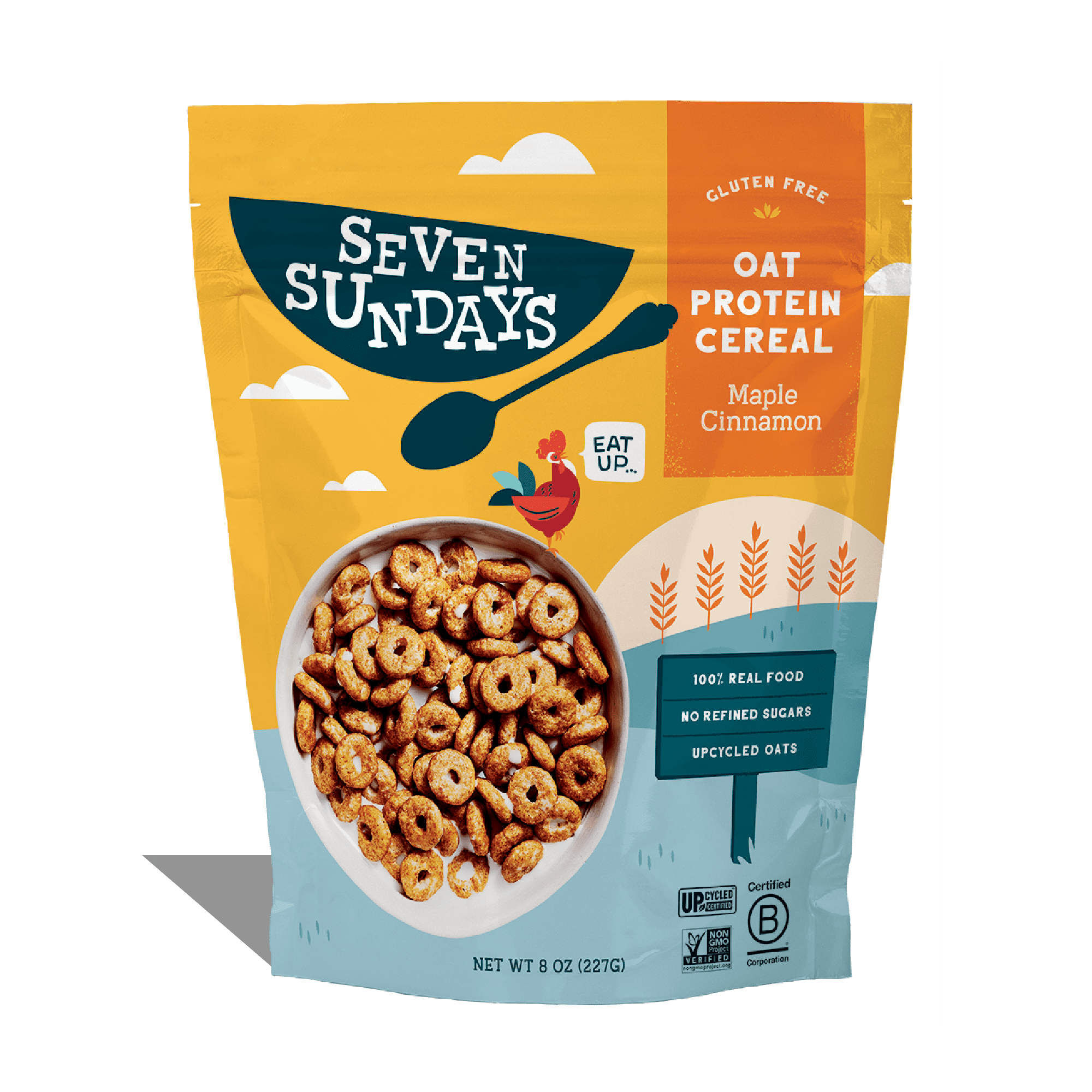



Maple Cinnamon Cereal Snackies
Analysis updated September 2026 · How Scout scores
At a glance
Summary
This product features a clean ingredient list with natural sweeteners like maple syrup and coconut sugar, which are preferable to refined sugars. It includes beneficial ingredients such as upcycled oat protein and non-GMO corn, supporting sustainability and providing essential nutrients. The absence of seed oils and artificial additives contributes to a healthier profile, although its processing level limits the maximum score.
Key ingredients 9
Upcycled oat proteinGood
Upcycled oat protein is a sustainable source of plant-based protein. It provides essential amino acids and is minimally processed. This ingredient supports environmental sustainability by reducing food waste.
Benefits
Provides a good source of protein and supports sustainability by utilizing food by-products.
Upcycled non-GMO cornGood
Upcycled non-GMO corn is a minimally processed ingredient that supports sustainability. It is free from genetic modifications and helps reduce food waste. This ingredient provides dietary fiber and essential nutrients.
Benefits
Rich in dietary fiber and supports sustainability by reducing food waste.
Maple syrupGood
Maple syrup is a natural sweetener with a lower glycemic index than refined sugar. It contains antioxidants and trace minerals like manganese and zinc. Its natural origin makes it a preferable sweetener compared to refined sugars.
Risks
Excessive consumption can contribute to high sugar intake.
Benefits
Contains antioxidants and trace minerals, offering a more natural sweetening option.
Coconut oilGood
Coconut oil is a source of medium-chain triglycerides (MCTs), which are easily metabolized for energy. It has antimicrobial properties and supports heart health. Its natural extraction process preserves beneficial compounds.
Risks
High in saturated fats, which should be consumed in moderation.
Benefits
Rich in MCTs that provide quick energy and support metabolic health.
CinnamonGood
Cinnamon is a spice with antioxidant properties and potential anti-inflammatory effects. It may help regulate blood sugar levels. Its natural origin and health benefits make it a valuable addition to foods.
Benefits
Contains antioxidants and may support blood sugar regulation.
Vanilla extractGood
Beneficial ingredient — whole-food or functional value in this product class.
Benefits
Enhances flavor without adding significant calories or sugars.
Sea saltGood
Sea salt is a natural source of sodium and trace minerals. It is less processed than table salt and retains beneficial minerals. Its use in moderation can enhance flavor and provide essential electrolytes.
Risks
Excessive sodium intake can lead to hypertension.
Benefits
Provides essential minerals and enhances flavor naturally.
TapiocaNeutral
Tapioca is a starch extracted from cassava root, used as a thickening agent. It is gluten-free and provides carbohydrates. However, it lacks significant nutritional benefits beyond energy provision.
Benefits
Provides a source of carbohydrates and is gluten-free.
Coconut sugarNeutral
Standard formulation ingredient — neither beneficial nor harmful at typical use.
Risks
Excessive consumption can contribute to high sugar intake.
Benefits
Provides trace minerals and has a lower glycemic index compared to refined sugar.
Processing
Processed Foods
Get the full breakdown in the Scout appTake Scout shopping
Scan any product to see lab results, healthy alternatives, and your personalized analysis.
Download on theApp Store GET IT ONGoogle Play