
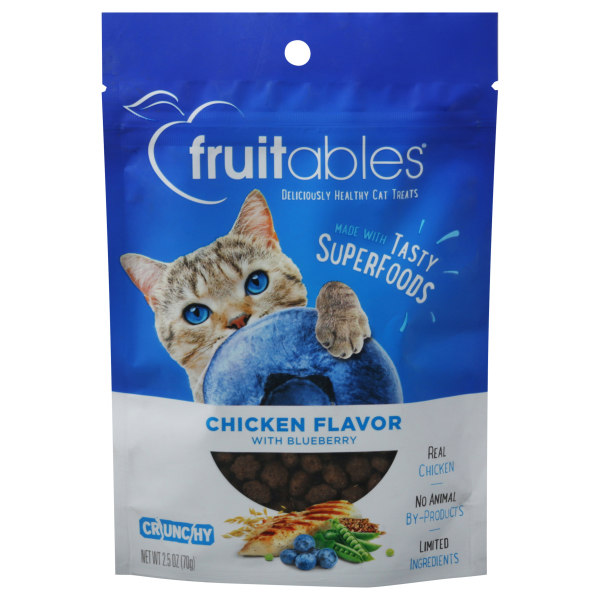
Fruitables Limited Ingredient Crunchy Cat Treats Chicken w/Blueberry 2.5 oz
Analysis updated September 2026 · How Scout scores
At a glance
Summary
This product contains beneficial ingredients like chicken meal, blueberries, and flaxseed, which provide essential nutrients and antioxidants. However, it also includes processed components such as natural flavors and sunflower lecithin, which offer no significant nutritional benefits. The overall processing level limits the score, despite the presence of some high-quality ingredients.
Key ingredients 14
BlueberriesVery Good
Blueberries are rich in antioxidants, vitamins, and fiber, supporting overall health and immune function. They are minimally processed and retain their natural nutrients. Compared to other fruits, they offer a high antioxidant content with low sugar levels.
Benefits
High in antioxidants that help reduce oxidative stress and support immune health.
FlaxseedVery Good
Flaxseed is a source of omega-3 fatty acids and fiber, promoting heart health and digestion. It is minimally processed, retaining its natural nutrients. Compared to other seeds, it offers a higher omega-3 content, beneficial for pets.
Benefits
Rich in omega-3 fatty acids that support heart health and provide anti-inflammatory benefits.
Chicken MealGood
Chicken meal is a concentrated source of protein, providing essential amino acids for muscle maintenance and growth. It is made by rendering chicken to remove water and fat, resulting in a nutrient-dense ingredient. Compared to fresh chicken, it offers more protein per gram.
Benefits
Rich in high-quality protein that supports muscle health and overall growth in pets.
Poultry FatGood
Poultry fat is a source of essential fatty acids and energy, enhancing the palatability of pet foods. It is rendered from poultry, providing a concentrated source of fat. Compared to plant-based oils, it offers a more balanced fatty acid profile for pets.
Risks
Excessive consumption may lead to weight gain due to high caloric content.
Benefits
Provides essential fatty acids that support skin and coat health in pets.
Brewers Dried YeastGood
Brewers dried yeast is a source of B vitamins and protein, supporting energy metabolism and immune health. It is a byproduct of beer production, providing nutrients without significant processing. Compared to synthetic vitamins, it offers a natural source of nutrients.
Benefits
Provides B vitamins that support energy metabolism and overall health.
Rosemary ExtractGood
Rosemary extract is a natural antioxidant used to preserve freshness and prevent spoilage. It is derived from rosemary leaves, retaining beneficial compounds. Compared to synthetic preservatives, it offers a natural alternative with antioxidant properties.
Benefits
Provides natural antioxidant properties that help preserve food quality.
Rice FlourNeutral
Rice flour is a gluten-free carbohydrate source often used as a filler in pet foods. It provides energy but lacks significant nutritional benefits beyond carbohydrates. It is less allergenic compared to wheat flour.
Risks
Excessive consumption may contribute to weight gain due to its carbohydrate content.
Benefits
Provides a source of energy and is suitable for pets with gluten sensitivities.
BarleyNeutral
Barley is a whole grain that provides fiber and some vitamins and minerals. It is less processed than refined grains, retaining more nutrients. However, it is primarily a carbohydrate source with limited protein content.
Risks
May cause digestive issues in pets sensitive to grains.
Benefits
Offers dietary fiber that can aid in digestion and provide a feeling of fullness.
Pea FiberNeutral
Pea fiber is a source of dietary fiber derived from peas, used to improve stool quality and promote digestive health. It is minimally processed and retains some nutrients from the whole pea. It is often used in pet foods to increase fiber content without adding calories.
Benefits
Supports digestive health by providing fiber that aids in regular bowel movements.
Citric AcidNeutral
Citric acid is used as a preservative and flavor enhancer, naturally occurring in citrus fruits. It is produced through fermentation, making it a common additive in foods. It helps maintain freshness but offers no nutritional benefits.
Benefits
Helps preserve freshness and enhance flavor without significant nutritional impact.
VinegarNeutral
Vinegar is used as a natural preservative and flavoring agent, derived from the fermentation of ethanol. It is minimally processed and retains some acetic acid, which can act as a preservative. It offers no significant nutritional benefits.
Benefits
Acts as a natural preservative and flavor enhancer.
SaltNeutral
Salt is used to enhance flavor and preserve food, providing essential sodium. It is a common additive in pet foods, but excessive consumption can lead to health issues. Compared to unrefined salts, it lacks trace minerals.
Risks
Excessive intake may lead to hypertension and other health issues.
Benefits
Provides essential sodium necessary for various bodily functions.
Natural FlavorsBad
Natural flavors are added to enhance taste but lack nutritional value. They are often derived from complex processing methods, which may include undisclosed ingredients. Compared to whole food ingredients, they offer no health benefits.
Risks
May contain undisclosed allergens or additives that could cause sensitivities.
Sunflower LecithinBad
Sunflower lecithin is used as an emulsifier, derived from sunflower seeds. It is processed to extract lecithin, which helps blend ingredients. Compared to whole sunflower seeds, it offers no significant nutritional benefits.
Risks
May cause digestive issues in sensitive individuals.
Processing
Processed Foods
Get the full breakdown in the Scout appTake Scout shopping
Scan any product to see lab results, healthy alternatives, and your personalized analysis.
Download on theApp Store GET IT ONGoogle Play