
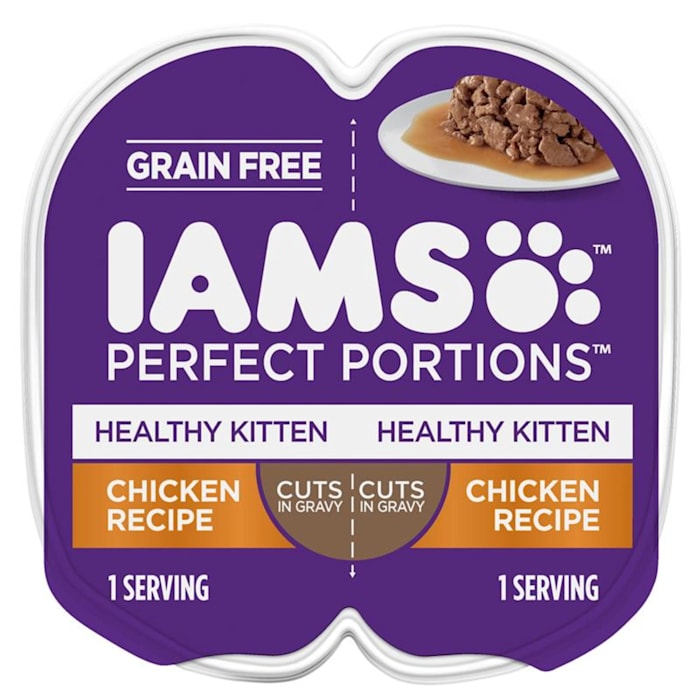
Iams Perfect Portions Healthy Kitten Wet Cat Food Cuts In Gravy Grain Free Chicken 2.6 Oz Twin-Pack Trays
Analysis updated July 2026 · How Scout scores
At a glance
Summary
This cat food contains several high-quality ingredients such as chicken, chicken liver, and fish oil, which provide essential nutrients and support overall health in kittens. However, it also includes synthetic additives like sodium tripolyphosphate and caramel color, which are less desirable. The product is considered ultra-processed, which limits its score despite the presence of beneficial ingredients.
Key ingredients 16
ChickenVery Good
Chicken is a high-quality source of protein and essential amino acids. It supports muscle development and overall health in kittens. As a whole food ingredient, it is minimally processed and nutrient-dense.
Benefits
Rich in protein and essential amino acids, supporting muscle development and overall health.
Chicken LiverVery Good
Chicken liver is a nutrient-rich organ meat providing vitamins A, B, and iron. It supports healthy vision, immune function, and energy metabolism. As a whole food, it is minimally processed and highly nutritious.
Benefits
Provides essential vitamins and minerals, supporting vision, immune function, and energy metabolism.
Fish OilVery Good
Fish oil is a rich source of omega-3 fatty acids, which support brain development and a healthy coat. It is beneficial for reducing inflammation and promoting cardiovascular health. It is a high-quality, minimally processed ingredient.
Benefits
Provides omega-3 fatty acids that support brain development and a healthy coat.
Chicken BrothGood
Chicken broth is a flavorful liquid made by simmering chicken meat and bones. It provides hydration and some nutrients like collagen and amino acids. It is minimally processed and adds natural flavor to pet food.
Benefits
Provides hydration and essential nutrients like collagen and amino acids.
Dried Egg ProductGood
Dried egg product is a concentrated source of protein and essential nutrients. It supports muscle development and overall health in kittens. It is a high-quality ingredient with good digestibility.
Benefits
Rich in protein and essential nutrients, supporting muscle development and health.
GlycineGood
Beneficial ingredient — whole-food or functional value in this product class.
Benefits
Supports collagen production and joint health.
Choline ChlorideGood
Choline chloride is a source of choline, essential for liver function and brain development. It is a beneficial nutrient added to ensure adequate intake in pet diets. It supports cognitive health and metabolic processes.
Benefits
Supports liver function and brain development.
Meat By-ProductsNeutral
Meat by-products include non-muscle parts of animals, which can provide nutrients but vary in quality. They are a common ingredient in pet foods, offering a cost-effective protein source. The nutritional value depends on the specific parts used.
Risks
Quality and nutritional content can vary significantly, depending on the source.
Benefits
Can provide additional nutrients and protein at a lower cost.
Tapioca StarchNeutral
Tapioca starch is a carbohydrate extracted from cassava root, used as a thickener. It is gluten-free and provides energy but lacks significant nutritional value. It is minimally processed and commonly used in grain-free pet foods.
Benefits
Provides a gluten-free source of carbohydrates and energy.
Potassium ChlorideNeutral
Potassium chloride is a mineral used to provide potassium, an essential electrolyte. It helps maintain fluid balance and supports nerve and muscle function. It is a common additive in pet foods to ensure adequate mineral intake.
Risks
Excessive intake can lead to hyperkalemia, but this is unlikely in balanced pet foods.
Benefits
Provides essential potassium, supporting fluid balance and muscle function.
SaltNeutral
Salt is used to enhance flavor and provide sodium, an essential electrolyte. It is necessary for maintaining fluid balance and nerve function. In moderation, it is safe and beneficial, but excessive intake should be avoided.
Risks
Excessive salt intake can lead to health issues like hypertension.
Benefits
Provides sodium, essential for fluid balance and nerve function.
Magnesium SulfateNeutral
Magnesium sulfate is a mineral supplement providing magnesium, essential for bone health and enzyme function. It is used to ensure adequate mineral intake in pet foods. Generally safe in appropriate amounts, but excessive intake should be avoided.
Risks
Excessive intake can lead to digestive issues.
Benefits
Provides magnesium, supporting bone health and enzyme function.
Xanthan GumNeutral
Xanthan gum is a thickening agent used to improve texture in wet foods. It is derived from fermented sugars and is generally considered safe. It provides no nutritional benefits but enhances product consistency.
Risks
Excessive consumption may cause digestive discomfort.
Benefits
Improves texture and consistency of wet foods.
Sodium TripolyphosphateBad
Sodium tripolyphosphate is a preservative and texturizer used in processed foods. It can improve texture and shelf life but is a synthetic additive. Overconsumption may lead to health concerns, including kidney issues.
Risks
Potential health concerns include kidney issues with excessive intake.
Benefits
Improves texture and shelf life of processed foods.
Natural FlavorBad
Natural flavor is a catch-all term for flavoring agents derived from natural sources. It lacks transparency, making it difficult to assess quality and potential allergens. It is often used to enhance taste without providing nutritional benefits.
Risks
Lack of transparency can pose allergen risks and quality concerns.
Benefits
Enhances taste without providing nutritional benefits.
Caramel ColorBad
Caramel color is a food coloring used to enhance the appearance of pet foods. It is a synthetic additive with no nutritional value. Some forms may contain contaminants that pose health risks.
Risks
Potential contaminants may pose health risks.
Benefits
Enhances appearance but provides no nutritional benefits.
Processing
Ultra-Processed Foods
Get the full breakdown in the Scout appTake Scout shopping
Scan any product to see lab results, healthy alternatives, and your personalized analysis.
Download on theApp Store GET IT ONGoogle PlayAmazon pricing & content
Amazon price as of . Product prices and availability are accurate as of the date/time indicated and are subject to change. Any price and availability information displayed on Amazon.com at the time of purchase will apply to the purchase of this product.
CERTAIN CONTENT THAT APPEARS ON THIS SITE COMES FROM AMAZON. THIS CONTENT IS PROVIDED “AS IS” AND IS SUBJECT TO CHANGE OR REMOVAL AT ANY TIME.