
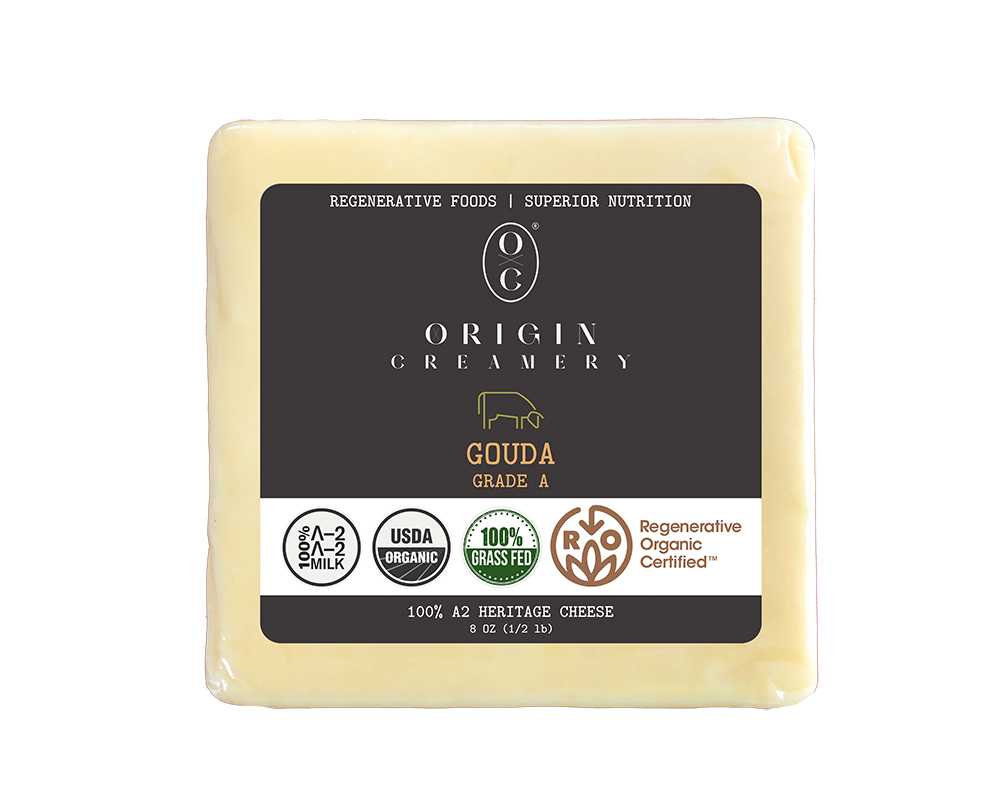


Regenerative Organic Gouda
Analysis updated August 2026 · How Scout scores
At a glance
Summary
This Gouda cheese is made from raw organic milk and cream, which are high-quality ingredients that provide essential nutrients and healthy fats. The product's clean ingredient list, free from synthetic additives and hormones, enhances its nutritional profile. Despite being processed, the use of raw and organic components supports a high score within the processing level cap.
Key ingredients 4
Raw organic milkVery Good
Raw organic milk is a high-quality source of protein and essential nutrients. Being organic, it is free from synthetic pesticides and hormones, enhancing its nutritional profile. The raw form retains beneficial enzymes and probiotics that are often lost in pasteurization.
Risks
Potential risks include the presence of harmful bacteria if not handled properly.
Benefits
Rich in calcium, vitamin D, and beneficial fats, supporting bone health and overall nutrition.
Raw organic creamGood
Raw organic cream provides healthy fats and fat-soluble vitamins. The organic certification ensures it is free from synthetic additives and hormones. Its raw state preserves natural enzymes and beneficial bacteria.
Risks
As with raw milk, there is a risk of bacterial contamination if not properly managed.
Benefits
Contains healthy fats and vitamins A, D, E, and K, which are essential for various bodily functions.
SaltNeutral
Salt is used for flavor and preservation in cheese. It is a common ingredient in cheese-making, providing essential sodium. However, it does not offer additional nutritional benefits beyond sodium content.
Risks
Excessive consumption of salt can lead to high blood pressure and cardiovascular issues.
EnzymesNeutral
Enzymes are crucial for the cheese-making process, aiding in the coagulation of milk. They are typically derived from microbial or animal sources and are essential for texture and flavor development. Enzymes themselves do not provide direct nutritional benefits.
Benefits
Facilitate the cheese-making process, contributing to the development of flavor and texture.
Processing
Processed Foods
Get the full breakdown in the Scout appTake Scout shopping
Scan any product to see lab results, healthy alternatives, and your personalized analysis.
Download on theApp Store GET IT ONGoogle Play