
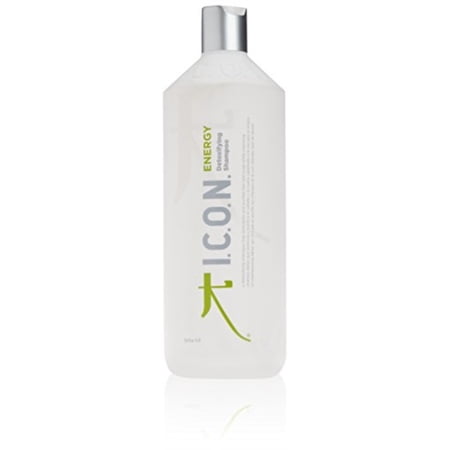

Icon Energy Detoxifying Shampoo
Analysis updated August 2026 · How Scout scores
At a glance
Summary
This shampoo contains a mix of beneficial and potentially harmful ingredients. It includes gentle surfactants like sodium lauroyl methyl isethionate and aloe vera for moisturizing, but also contains sodium C14-16 olefin sulfonate, which can be harsh, and trimethylsiloxyamodimethicone, a non-water-soluble silicone that may cause buildup. The presence of synthetic fragrance and phenoxyethanol, which can cause irritation, further impacts its overall rating.
Key ingredients 39
Sodium Lauroyl Methyl IsethionateGood
A gentle surfactant derived from coconut oil, known for its mildness and ability to cleanse without stripping natural oils. It is suitable for sensitive skin and hair.
Risks
Generally considered safe with minimal risk of irritation.
Benefits
Provides gentle cleansing and is suitable for sensitive skin.
Aloe Barbadensis Leaf JuiceGood
Aloe vera is known for its soothing and moisturizing properties. It helps to hydrate the scalp and hair, reducing dryness and irritation.
Risks
Rarely, it may cause allergic reactions in sensitive individuals.
Benefits
Provides hydration and soothing benefits to the scalp and hair.
Ascorbyl PalmitateGood
Beneficial ingredient — whole-food or functional value in this product class.
Risks
Generally considered safe with no significant risks.
Benefits
Acts as an antioxidant to stabilize the product.
GlycerinGood
Glycerin is a humectant that attracts moisture to the hair and scalp. It helps to keep the hair hydrated and reduces dryness. It is widely used for its moisturizing properties.
Risks
Generally considered safe with minimal risk of irritation.
Benefits
Provides hydration and helps to maintain moisture balance in the hair.
Lauryl GlucosideGood
A mild, non-ionic surfactant derived from glucose and coconut oil. It is gentle on the skin and hair, making it suitable for sensitive scalps. It is biodegradable and environmentally friendly.
Risks
Generally considered safe with minimal risk of irritation.
Benefits
Provides gentle cleansing and is environmentally friendly.
PanthenolGood
Panthenol is a form of vitamin B5 that helps to moisturize and strengthen the hair. It improves hair elasticity and reduces breakage. It is widely used for its conditioning properties.
Risks
Generally considered safe with minimal risk of irritation.
Benefits
Moisturizes and strengthens the hair, improving elasticity.
Sodium Cocoyl GlutamateGood
A gentle surfactant derived from coconut oil and glutamic acid. It is known for its mildness and ability to cleanse without stripping natural oils. It is suitable for sensitive skin and hair.
Risks
Generally considered safe with minimal risk of irritation.
Benefits
Provides gentle cleansing and is suitable for sensitive skin.
Tocopheryl AcetateGood
Beneficial ingredient — whole-food or functional value in this product class.
Risks
Generally considered safe with no significant risks.
Benefits
Acts as an antioxidant to stabilize the product.
Wheat Amino AcidsGood
Wheat amino acids are used for their conditioning and strengthening properties. They help to improve hair elasticity and reduce breakage. They are beneficial for maintaining healthy hair.
Risks
Generally considered safe with minimal risk of irritation.
Benefits
Strengthens and conditions the hair, improving elasticity.
Aqua (water/eau)Neutral
Water is a common solvent used in cosmetic formulations. It helps to dissolve other ingredients and provides a base for the product. It does not have any direct benefits or risks.
Risks
There are no known risks associated with water in cosmetic formulations.
Benefits
Water acts as a solvent and helps in the application of the product.
Cocamidopropyl BetaineNeutral
This is a mild surfactant derived from coconut oil. It is used to reduce irritation potential of other surfactants. It is generally considered safe and non-irritating.
Risks
In rare cases, it may cause allergic reactions.
Benefits
Helps to create a rich lather and improve the mildness of the formula.
Citric AcidNeutral
Citric acid is used to adjust the pH of cosmetic products. It helps to maintain the stability and effectiveness of the formula. It does not have direct benefits for hair.
Risks
In high concentrations, it may cause irritation.
Benefits
Helps to maintain the pH balance of the product.
MentholNeutral
Menthol provides a cooling sensation and is often used for its refreshing properties. It can help to soothe the scalp. It does not have significant benefits for hair health.
Risks
May cause irritation in sensitive individuals.
Benefits
Provides a cooling and refreshing sensation to the scalp.
PEG-120 Methyl Glucose DioleateNeutral
This is an emulsifier and thickening agent used to stabilize formulations. It helps to improve the texture and consistency of the product. It does not have direct benefits for hair.
Risks
Generally considered safe, but may cause irritation in sensitive individuals.
Benefits
Improves the texture and consistency of the product.
PEG-150 Pentaerythrityl TetrastearateNeutral
This is a thickening agent used to enhance the viscosity of the product. It helps to improve the application and spreadability. It does not have direct benefits for hair.
Risks
Generally considered safe, but may cause irritation in sensitive individuals.
Benefits
Enhances the viscosity and spreadability of the product.
PEG-200 Hydrogenated Glyceryl PalmateNeutral
This is an emulsifier used to stabilize formulations. It helps to blend oil and water components. It does not have direct benefits for hair.
Risks
Generally considered safe, but may cause irritation in sensitive individuals.
Benefits
Stabilizes formulations by blending oil and water components.
PEG-40 Hydrogenated Castor OilNeutral
This is an emulsifier and solubilizer used to blend ingredients. It helps to improve the texture and consistency of the product. It does not have direct benefits for hair.
Risks
Generally considered safe, but may cause irritation in sensitive individuals.
Benefits
Improves the texture and consistency of the product.
PEG-6 Caprylic/Capric GlyceridesNeutral
This is an emulsifier and solubilizer used to blend ingredients. It helps to improve the texture and consistency of the product. It does not have direct benefits for hair.
Risks
Generally considered safe, but may cause irritation in sensitive individuals.
Benefits
Improves the texture and consistency of the product.
PEG-7 Glyceryl CocoateNeutral
This is an emulsifier and solubilizer used to blend ingredients. It helps to improve the texture and consistency of the product. It does not have direct benefits for hair.
Risks
Generally considered safe, but may cause irritation in sensitive individuals.
Benefits
Improves the texture and consistency of the product.
PhospholipidsNeutral
Phospholipids are used for their emulsifying properties and ability to improve moisture retention. They help to enhance the texture and feel of the product. They do not have direct benefits for hair.
Risks
Generally considered safe with no significant risks.
Benefits
Enhances moisture retention and improves product texture.
Polyquaternium-10Neutral
This is a conditioning agent used to improve hair manageability and reduce static. It forms a film on the hair surface, enhancing smoothness. It does not have significant benefits for hair health.
Risks
Generally considered safe with no significant risks.
Benefits
Improves hair manageability and reduces static.
PropanediolNeutral
Propanediol is used as a solvent and humectant in cosmetic formulations. It helps to improve the texture and moisture retention of the product. It does not have direct benefits for hair.
Risks
Generally considered safe with no significant risks.
Benefits
Improves texture and moisture retention of the product.
Quaternium-95Neutral
This is a conditioning agent used to improve hair manageability and reduce static. It forms a film on the hair surface, enhancing smoothness. It does not have significant benefits for hair health.
Risks
Generally considered safe with no significant risks.
Benefits
Improves hair manageability and reduces static.
Retinyl PalmitateNeutral
Retinyl Palmitate is a form of vitamin A used for its antioxidant properties. It helps to protect the product from oxidation. It does not have direct benefits for hair.
Risks
Generally considered safe with no significant risks.
Benefits
Acts as an antioxidant to stabilize the product.
Sodium CocoamphoacetateNeutral
This is a mild surfactant derived from coconut oil. It is used to reduce irritation potential of other surfactants. It is generally considered safe and non-irritating.
Risks
In rare cases, it may cause allergic reactions.
Benefits
Helps to create a rich lather and improve the mildness of the formula.
Sodium Lauryl Glucose CarboxylateNeutral
This is a mild surfactant used for its cleansing properties. It is derived from glucose and is considered gentle on the skin and hair. It does not have significant benefits for hair health.
Risks
Generally considered safe with no significant risks.
Benefits
Provides gentle cleansing without significant irritation.
Sodium Benzotriazolyl Butylphenol SulfonateNeutral
This is a UV absorber used to protect the product from degradation. It helps to maintain the stability and effectiveness of the formula. It does not have direct benefits for hair.
Risks
Generally considered safe with no significant risks.
Benefits
Protects the product from UV degradation.
Sodium Polystyrene SulfonateNeutral
This is a film-forming agent used to improve hair manageability and reduce static. It forms a film on the hair surface, enhancing smoothness. It does not have significant benefits for hair health.
Risks
Generally considered safe with no significant risks.
Benefits
Improves hair manageability and reduces static.
Tributyl CitrateNeutral
This is a plasticizer used to improve the flexibility and spreadability of the product. It helps to enhance the texture and feel of the product. It does not have direct benefits for hair.
Risks
Generally considered safe with no significant risks.
Benefits
Improves the flexibility and spreadability of the product.
Trideceth-12Neutral
This is an emulsifier and surfactant used to blend ingredients. It helps to improve the texture and consistency of the product. It does not have direct benefits for hair.
Risks
Generally considered safe, but may cause irritation in sensitive individuals.
Benefits
Improves the texture and consistency of the product.
EthylhexylglycerinNeutral
This is a preservative and skin-conditioning agent used to enhance the efficacy of other preservatives. It helps to improve the texture and feel of the product. It does not have direct benefits for hair.
Risks
Generally considered safe with no significant risks.
Benefits
Enhances the efficacy of preservatives and improves product texture.
Yellow 6 (CI 15985)Neutral
Yellow 6 is a synthetic dye used to impart color to cosmetic products. It is approved for use in cosmetics but may cause allergic reactions in some individuals. It does not have direct benefits for hair.
Risks
May cause allergic reactions in sensitive individuals.
Benefits
Provides color to the product.
Sodium C14-16 Olefin SulfonateBad
This is a surfactant used for its cleansing properties. It can be harsh and strip natural oils from the hair and scalp. It is not as gentle as other surfactants.
Risks
May cause dryness and irritation to the scalp and hair.
Benefits
Provides effective cleansing and foaming properties.
Disodium EDTABad
Processed additive flagged under Scout's ingredient doctrine.
Risks
Generally considered safe, but may cause irritation in sensitive individuals.
Benefits
Improves product stability by binding metal ions.
TrimethylsiloxyamodimethiconeBad
This is a silicone used for its conditioning properties. It can cause buildup on the hair over time, leading to dullness and brittleness. It is not water-soluble and can be difficult to remove.
Risks
May cause buildup on the hair, leading to dullness and brittleness.
Benefits
Provides conditioning and smoothness to the hair.
PhenoxyethanolBad
Phenoxyethanol is a preservative used to prevent microbial growth. It can cause irritation and allergic reactions in some individuals. It is not considered a natural ingredient.
Risks
May cause irritation and allergic reactions in sensitive individuals.
Benefits
Prevents microbial growth and extends the shelf life of the product.
Sodium BenzoateBad
Synthetic preservative that can form benzene in the presence of vitamin C.
Risks
Generally considered safe with no significant risks.
Benefits
Prevents microbial growth and extends the shelf life of the product.
Parfum (fragrance)Very Bad
Synthetic fragrances are used to impart scent to cosmetic products. They can cause allergic reactions and irritation in sensitive individuals. The exact composition is often undisclosed, leading to concerns about safety.
Risks
May cause allergic reactions and irritation in sensitive individuals.
Benefits
Provides a pleasant scent to the product.
Yellow 5 (CI 19140)Very Bad
Heavily flagged ingredient class under Scout's doctrine.
Risks
May cause allergic reactions in sensitive individuals.
Benefits
Provides color to the product.
Get the full breakdown in the Scout appTake Scout shopping
Scan any product to see lab results, healthy alternatives, and your personalized analysis.
Download on theApp Store GET IT ONGoogle PlayAmazon pricing & content
Amazon price as of . Product prices and availability are accurate as of the date/time indicated and are subject to change. Any price and availability information displayed on Amazon.com at the time of purchase will apply to the purchase of this product.
CERTAIN CONTENT THAT APPEARS ON THIS SITE COMES FROM AMAZON. THIS CONTENT IS PROVIDED “AS IS” AND IS SUBJECT TO CHANGE OR REMOVAL AT ANY TIME.