



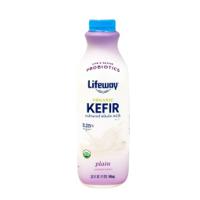
Lifeway STRAWBERRY KEFIR CULTURED LOWFAT MILK
At a glance
Summary
This strawberry kefir is ultra-processed, which limits its potential health score despite containing beneficial ingredients like live cultures and natural coloring from beet juice. The presence of cane sugar adds unnecessary calories and contributes to a higher glycemic index, which can impact metabolic health. However, the product does include essential nutrients like vitamin D3 and probiotics, which support bone and gut health.
Key ingredients 10
Live and active culturesVery Good
Live and active cultures are beneficial probiotics that support gut health. They are naturally present in fermented products like kefir. Regular consumption can improve digestion and boost the immune system.
Benefits
Enhances gut microbiota and supports digestive health.
Pasteurized lowfat milkGood
Pasteurized lowfat milk is a good source of protein and calcium, essential for bone health. The pasteurization process ensures safety by eliminating harmful bacteria. It provides a balanced nutritional profile with reduced fat content.
Benefits
Provides essential nutrients like calcium and protein, supporting bone health and muscle function.
Red beet juiceGood
Red beet juice is a natural coloring agent that adds color without artificial dyes. It is minimally processed and retains some nutrients from beets. It is a healthier alternative to synthetic colorings.
Benefits
Provides natural color and may offer antioxidant benefits.
Vitamin D3Good
Vitamin D3 is essential for calcium absorption and bone health. It is often added to dairy products to enhance nutritional value. It supports immune function and overall health.
Benefits
Promotes bone health and supports immune function.
Nonfat milkNeutral
Standard formulation ingredient — neither beneficial nor harmful at typical use.
Benefits
Offers a low-calorie option for obtaining calcium and protein, supporting bone and muscle health.
PectinNeutral
Pectin is a natural thickening agent derived from fruits, used to improve texture. It is minimally processed and generally considered safe. It does not significantly impact the nutritional profile of the product.
Benefits
May aid in digestion and improve the texture of food products.
Vitamin A palmitateNeutral
Vitamin A palmitate is a synthetic form of vitamin A used to fortify foods. It is added to enhance nutritional value, especially in low-fat products. Overconsumption can lead to toxicity, but it is generally safe in regulated amounts.
Risks
Excessive intake can lead to vitamin A toxicity.
Benefits
Supports vision and immune function when consumed in appropriate amounts.
Cane sugarBad
Cane sugar is a refined sugar that can contribute to increased calorie intake and potential weight gain. It is processed to remove impurities, resulting in a high glycemic index. Excessive consumption may lead to metabolic issues.
Risks
High intake of refined sugars can lead to obesity, insulin resistance, and dental problems.
Benefits
Provides quick energy but lacks significant nutritional benefits.
Natural strawberry flavorBad
Processed additive flagged under Scout's ingredient doctrine.
Risks
Potential for allergic reactions in sensitive individuals.
Benefits
Enhances flavor without adding significant calories.
Natural flavorsBad
Umbrella term that can hide dozens of undisclosed synthetic constituents.
Risks
Potential for allergic reactions or sensitivities in some individuals.
Benefits
Improves taste without adding calories.
Processing
Ultra-Processed Foods
Get the full breakdown in the Scout appTake Scout shopping
Scan any product to see lab results, healthy alternatives, and your personalized analysis.
Download on theApp Store GET IT ONGoogle PlayAmazon pricing & content
Amazon price as of . Product prices and availability are accurate as of the date/time indicated and are subject to change. Any price and availability information displayed on Amazon.com at the time of purchase will apply to the purchase of this product.
CERTAIN CONTENT THAT APPEARS ON THIS SITE COMES FROM AMAZON. THIS CONTENT IS PROVIDED “AS IS” AND IS SUBJECT TO CHANGE OR REMOVAL AT ANY TIME.