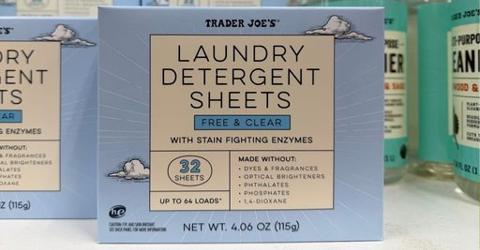
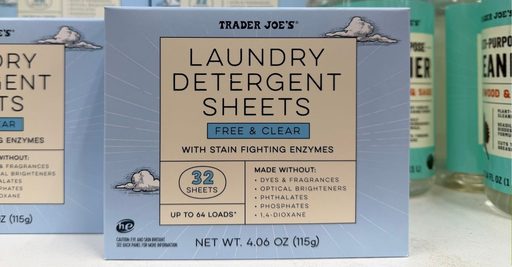
Trader Joe's Laundry Detergent Sheets
Trader Joe'sNear you
Trader Joe's is carried at Trader Joe stores. Find one within 25 miles.
At a glance
Summary
This product contains a mix of beneficial and harmful ingredients. While it includes plant-derived surfactants like Caprylyl/Capryl Glucoside and biodegradable components such as Sodium Citrate and Protease Enzyme Blend, it also contains Sodium Coco-Sulfate, which can be harsh on the skin, and Dimethicone, which is flagged under clean-beauty standards. The presence of Phenoxyethanol, a processed additive, further impacts its safety profile, resulting in a moderate processing level.
Key ingredients 13
Caprylyl/Capryl GlucosideGood
Caprylyl/Capryl Glucoside is a mild, plant-derived surfactant. It is known for being gentle on the skin and biodegradable. It is considered a safer alternative to harsher surfactants.
Risks
Minimal risks, though excessive use may lead to mild irritation.
Benefits
Provides effective cleaning while being gentle and environmentally friendly.
GlycerinGood
Glycerin is a humectant that helps retain moisture. It is often used to improve the texture and feel of cleaning products. It is considered safe and non-toxic.
Risks
Generally safe with minimal risks.
Benefits
Helps maintain moisture and improves product texture.
Sodium CitrateGood
Sodium Citrate is a salt of citric acid used as a water softener. It helps enhance the cleaning efficiency of detergents. It is biodegradable and considered safe for use.
Risks
Minimal risks, generally considered safe.
Benefits
Improves cleaning efficiency by softening water.
Protease Enzyme BlendGood
Protease enzymes are used to break down protein-based stains. They enhance the cleaning power of detergents. They are biodegradable and considered safe for use.
Risks
Minimal risks, though may cause irritation if inhaled in powder form.
Benefits
Effectively breaks down protein stains, improving cleaning performance.
WaterNeutral
Water is a universal solvent used in many formulations. It helps dissolve other ingredients and facilitates the cleaning process. It is generally considered safe and non-toxic.
Risks
There are no significant risks associated with water in cleaning products.
Benefits
Water is essential for dissolving and distributing other ingredients effectively.
Polyvinyl AlcoholNeutral
Polyvinyl Alcohol is a synthetic polymer used as a film-forming agent. It helps in the formation of detergent sheets. It is generally considered safe for use in cleaning products.
Risks
May cause environmental concerns if not properly disposed of.
Benefits
Contributes to the structural integrity of detergent sheets.
SilicaNeutral
Silica is used as an abrasive and thickening agent in cleaning products. It helps improve the texture and stability of the formulation. It is generally considered safe for use in household products.
Risks
Inhalation of fine silica particles can pose respiratory risks.
Benefits
Enhances the texture and stability of the product.
Cocamidopropyl BetaineNeutral
Cocamidopropyl Betaine is a surfactant derived from coconut oil. It is used to enhance foam and improve cleaning efficacy. It is generally considered mild and safe for use in cleaning products.
Risks
May cause mild skin irritation in some individuals.
Benefits
Improves foam and cleaning performance while being relatively mild.
Cocamidopropylamine OxideNeutral
Cocamidopropylamine Oxide is a surfactant used to enhance cleaning and foaming. It is derived from coconut oil and is considered mild. It is generally safe for use in cleaning products.
Risks
May cause mild irritation in sensitive individuals.
Benefits
Enhances cleaning and foaming properties.
Citric AcidNeutral
Common acidulant and preservative — safe at typical use levels, neither beneficial nor harmful.
Risks
Generally safe with minimal risks.
Benefits
Enhances cleaning by removing mineral deposits and adjusting pH.
Sodium Coco-SulfateBad
Sodium Coco-Sulfate is a surfactant derived from coconut oil. It is similar to Sodium Lauryl Sulfate and can be harsh on the skin. It may cause irritation in sensitive individuals.
Risks
Potential skin irritation and dryness, especially for sensitive skin types.
Benefits
Effective at removing dirt and oils due to its surfactant properties.
DimethiconeBad
Occlusive silicone film-former — flagged under clean-beauty doctrine.
Risks
May cause environmental concerns due to its non-biodegradable nature.
Benefits
Improves product texture and reduces excessive foaming.
PhenoxyethanolBad
Processed additive flagged under Scout's ingredient doctrine.
Risks
Potential skin irritation and allergic reactions in some individuals.
Benefits
Prevents microbial growth, extending product shelf life.
Get the full breakdown in the Scout appTake Scout shopping
Scan any product to see lab results, healthy alternatives, and your personalized analysis.
Are you Trader Joe's? Fix an error Get the badge Get tested