
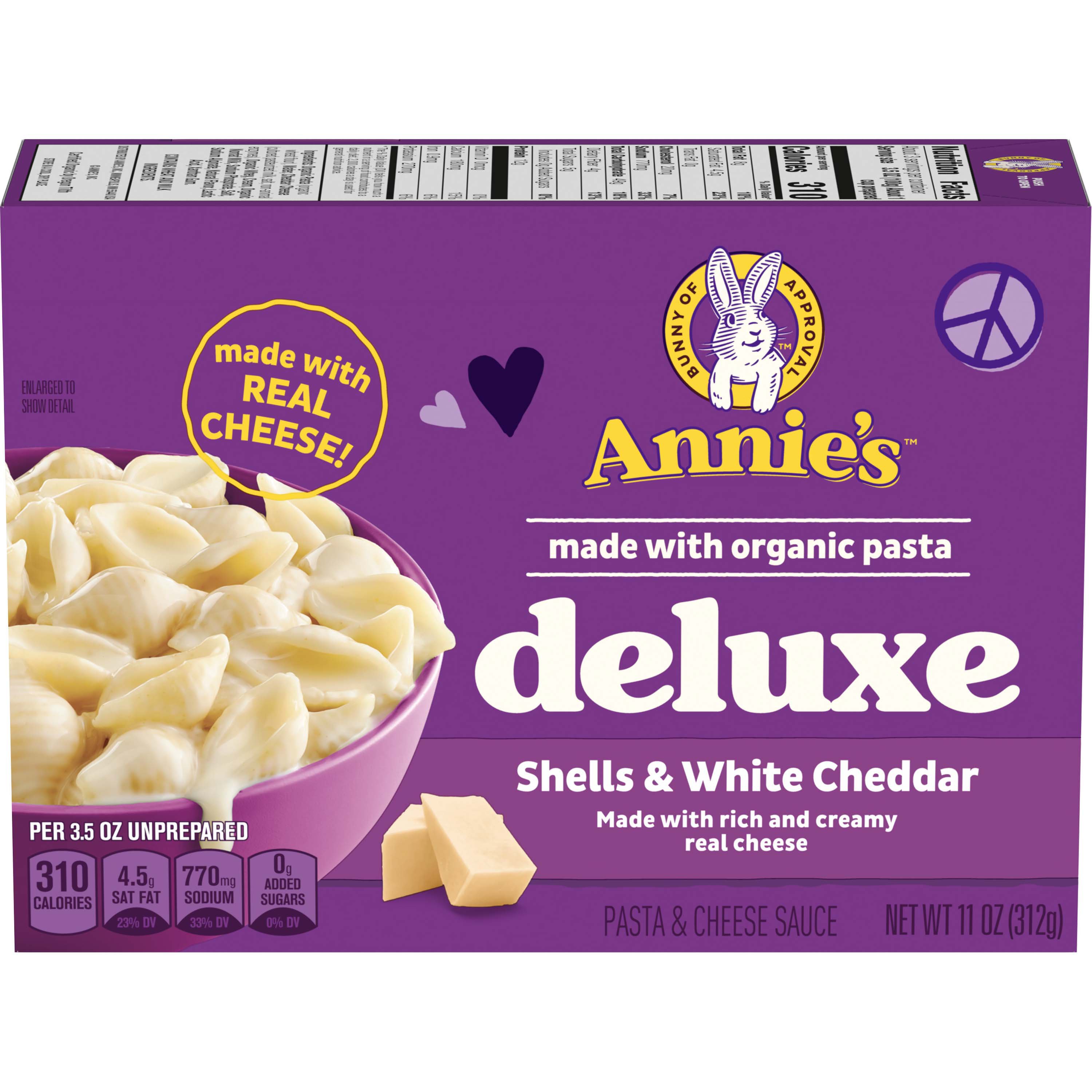


Annie's Deluxe White Cheddar Macaroni & Cheese Made with Organic Pasta
Analysis updated April 2026 · How Scout scores
At a glance
Summary
This product contains beneficial ingredients like organic pasta and cheddar cheese, which provide essential nutrients. However, it is heavily processed and includes additives such as sodium phosphate and natural flavors, which can be concerning for health. The high level of processing and presence of these additives limit its overall healthiness despite some positive nutritional aspects.
Key ingredients 11
Organic pastaGood
Organic pasta is made from organic wheat flour, which is free from synthetic pesticides and fertilizers. This ensures a cleaner ingredient with fewer chemical residues. Organic certification also supports sustainable farming practices.
Benefits
Provides a source of carbohydrates for energy and is made from organic wheat, supporting sustainable agriculture.
Cheddar cheeseGood
Cheddar cheese is made from pasteurized milk, cheese cultures, salt, and non-animal enzymes, providing a rich source of calcium and protein. The use of non-animal enzymes makes it suitable for vegetarians. It is a traditional dairy product with beneficial nutrients.
Risks
High in saturated fats, which may contribute to heart disease if consumed in excess.
Benefits
Rich in calcium and protein, supporting bone health and muscle maintenance.
CreamGood
Traditional whole-fat dairy ingredient.
Risks
High in saturated fats, which may contribute to heart disease if consumed in excess.
Benefits
Adds richness and flavor to foods, enhancing palatability.
Skim milkNeutral
Standard formulation ingredient — neither beneficial nor harmful at typical use.
Benefits
Provides calcium and vitamin D, essential for bone health, with reduced fat content.
WheyNeutral
Whey is a byproduct of cheese production, rich in protein and amino acids. It is often used to enhance the protein content of foods. While beneficial for muscle repair, it may cause allergies in lactose-intolerant individuals.
Risks
May cause digestive issues in individuals with lactose intolerance.
Benefits
Rich in protein, supporting muscle repair and growth.
SaltNeutral
Salt is used to enhance flavor and preserve food. While necessary for bodily functions, excessive consumption can lead to hypertension. It is a common ingredient in processed foods.
Risks
Excessive intake can lead to high blood pressure and cardiovascular issues.
Benefits
Essential for maintaining fluid balance and nerve function.
Sodium alginateNeutral
Sodium alginate is a natural polysaccharide derived from brown seaweed, used as a thickener and stabilizer. It is generally considered safe and is minimally processed. It helps improve texture in food products.
Benefits
Improves texture and stability of food products.
Lactic acidNeutral
Lactic acid is a naturally occurring organic acid used as a preservative and flavoring agent. It is produced through fermentation and is generally recognized as safe. It helps maintain the acidity and flavor profile of foods.
Benefits
Enhances flavor and acts as a preservative.
Xanthan gumNeutral
Xanthan gum is a polysaccharide used as a thickening and stabilizing agent in foods. It is produced through fermentation and is widely used in the food industry. While generally safe, it may cause digestive issues in some individuals.
Risks
May cause digestive discomfort in sensitive individuals.
Benefits
Improves texture and stability in food products.
Sodium phosphateBad
Sodium phosphate is an inorganic compound used as an emulsifier and preservative. It is heavily processed and can contribute to an imbalance in phosphate levels in the body. Excessive intake is linked to cardiovascular and kidney issues.
Risks
May lead to imbalanced phosphate levels, potentially affecting cardiovascular and kidney health.
Natural flavorBad
Natural flavor is a catch-all term for flavoring agents derived from natural sources. The lack of transparency in its composition can be concerning for those with allergies or sensitivities. It is often used to enhance taste without providing nutritional value.
Risks
Potential allergen risk due to undisclosed ingredients.
Processing
Ultra-Processed Foods
Get the full breakdown in the Scout appTake Scout shopping
Scan any product to see lab results, healthy alternatives, and your personalized analysis.
Download on theApp Store GET IT ONGoogle Play