
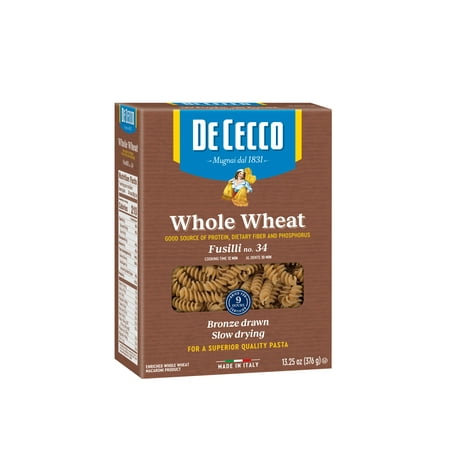



De Cecco 100% Whole Wheat Fusilli No.34 Pasta 13.25 oz
Analysis updated August 2026 · How Scout scores
At a glance
Summary
This pasta is made primarily from whole semolina wheat, which is a minimally processed whole grain providing fiber and essential nutrients. The presence of ferrous lactate as an additive is a minor concern, but it serves as an iron fortification agent. The product's processing level limits its score, but the clean ingredient list and nutritional benefits of whole grains contribute positively to its rating.
Key ingredients 7
Whole semolina from wheatGood
Whole semolina from wheat is a whole grain ingredient that provides dietary fiber and essential nutrients. It is minimally processed, retaining the bran and germ, which contribute to its nutritional profile. Whole grains are associated with various health benefits, including improved digestion and reduced risk of chronic diseases.
Benefits
Rich in dietary fiber, which supports digestive health and helps maintain stable blood sugar levels. Provides essential nutrients such as B vitamins and minerals.
NiacinGood
Beneficial ingredient — whole-food or functional value in this product class.
Risks
Excessive intake of niacin can cause flushing, liver damage, and other health issues.
Benefits
Supports energy metabolism and helps maintain healthy skin and nerves.
RiboflavinGood
Essential B vitamin — beneficial micronutrient.
Risks
Excessive intake may cause urine discoloration but is otherwise considered safe.
Benefits
Supports energy production and helps maintain healthy skin and eyes.
Ferrous lactateNeutral
Ferrous lactate is a form of iron used to fortify foods and prevent iron deficiency anemia. It is generally considered safe and effective for increasing iron intake. However, excessive iron consumption can lead to toxicity.
Risks
Excessive iron intake can cause gastrointestinal distress and, in severe cases, organ damage.
Benefits
Helps prevent iron deficiency anemia by providing a bioavailable form of iron.
Thiamine mononitrateNeutral
Thiamine mononitrate is a synthetic form of vitamin B1 used to fortify foods. It plays a crucial role in energy metabolism and nerve function. While beneficial, it is important to consume it in appropriate amounts to avoid potential side effects.
Benefits
Essential for energy metabolism and proper nerve function.
Folic acidNeutral
Folic acid is a synthetic form of folate, a B vitamin important for DNA synthesis and cell division. It is commonly added to foods to prevent neural tube defects during pregnancy. While beneficial, excessive intake can mask vitamin B12 deficiency.
Risks
High doses can mask vitamin B12 deficiency, potentially leading to neurological damage.
Benefits
Crucial for DNA synthesis and cell division, particularly important during pregnancy.
E585 (Ferrous lactate)Bad
E585, or ferrous lactate, is used as an iron fortification agent in foods. While it helps prevent iron deficiency, it is considered an additive and may not be suitable for everyone. Overconsumption can lead to iron overload and associated health issues.
Risks
Potential for iron overload, which can cause gastrointestinal issues and, in severe cases, organ damage.
Benefits
Provides a bioavailable form of iron to help prevent deficiency.
Processing
Processed Foods
Get the full breakdown in the Scout appTake Scout shopping
Scan any product to see lab results, healthy alternatives, and your personalized analysis.
Download on theApp Store GET IT ONGoogle Play