
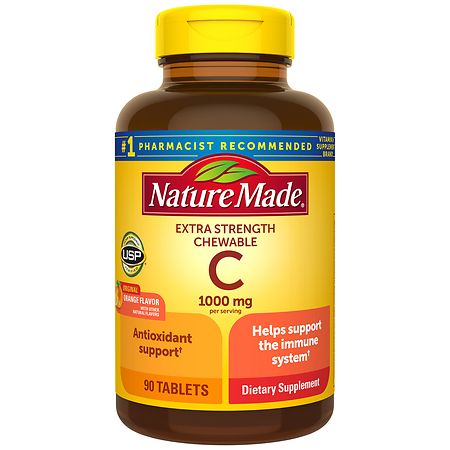



Nature Made Extra Strength Dosage Chewable Tablets Vitamin C 1000 mg per Serving - Orange, USP Verified - 90ct
Analysis updated October 2026 · How Scout scores
At a glance
Summary
This vitamin C supplement includes beneficial bioflavonoids, which enhance the absorption of vitamin C and provide antioxidant support. However, the presence of sugar and fructose as sweeteners raises concerns due to their potential negative health impacts, such as contributing to obesity and metabolic issues. Additionally, the use of natural flavors, which lack transparency, detracts from the overall quality of the formulation.
Key ingredients 10
BioflavonoidsGood
Bioflavonoids are beneficial compounds found in citrus fruits that enhance the absorption of vitamin C. They have antioxidant properties and support immune function. Their inclusion in supplements can improve the efficacy of vitamin C.
Benefits
Enhances vitamin C absorption and provides antioxidant benefits.
MilkGood
Whole dairy ingredient.
Risks
May cause digestive issues in lactose-intolerant individuals.
Benefits
Provides minimal nutritional benefits in small amounts.
Stearic AcidNeutral
Stearic acid is a saturated fatty acid used as a binder or lubricant in supplements. It is considered neutral as it does not raise cholesterol levels like other saturated fats. It is generally regarded as safe in moderate amounts.
See more about Stearic Acid →Silicon DioxideNeutral
Silicon dioxide is used as an anti-caking agent in supplements. It is considered neutral as it is generally recognized as safe and does not affect the nutritional profile of the product. It helps maintain the free-flowing properties of powdered ingredients.
See more about Silicon Dioxide →Magnesium StearateNeutral
Magnesium stearate is used as a lubricant in supplement manufacturing. It is considered neutral as it does not affect the nutritional value of the product. It helps ensure consistent quality and dosage in tablet form.
See more about Magnesium Stearate →StarchNeutral
Starch is used as a filler or binder in supplements. It is considered neutral as it provides no significant nutritional value but is safe for consumption. It helps in the formation and stability of tablets.
SugarBad
Sugar is classified as bad due to its contribution to increased calorie intake without providing essential nutrients. It can lead to health issues such as obesity and dental cavities when consumed in excess. In supplements, it is often used to improve taste but offers no nutritional benefits.
Risks
Excessive consumption of sugar can lead to weight gain, increased risk of type 2 diabetes, and dental problems.
FructoseBad
Fructose is considered bad due to its potential to contribute to metabolic issues when consumed in high amounts. It is often used as a sweetener in processed foods and can lead to insulin resistance. While naturally occurring in fruits, isolated fructose lacks the fiber and nutrients found in whole foods.
Risks
High intake of fructose can lead to insulin resistance, obesity, and liver fat accumulation.
MaltodextrinBad
Processed additive flagged under Scout's ingredient doctrine.
Risks
May cause blood sugar spikes, especially in individuals with insulin sensitivity.
Benefits
Provides a quick source of energy but lacks other nutritional benefits.
Natural FlavorsBad
Natural flavors are considered bad due to their vague labeling and potential to include a wide range of chemical compounds. They are used to enhance taste but do not contribute to nutritional value. The lack of transparency can be concerning for consumers seeking clean labels.
Risks
Potential for undisclosed additives and allergens.
Processing
Ultra-Processed Foods
Get the full breakdown in the Scout appTake Scout shopping
Scan any product to see lab results, healthy alternatives, and your personalized analysis.
Download on theApp Store GET IT ONGoogle Play