
MILD CHEDDAR THIN SLICED CHEESE, MILD CHEDDAR
At a glance
Summary
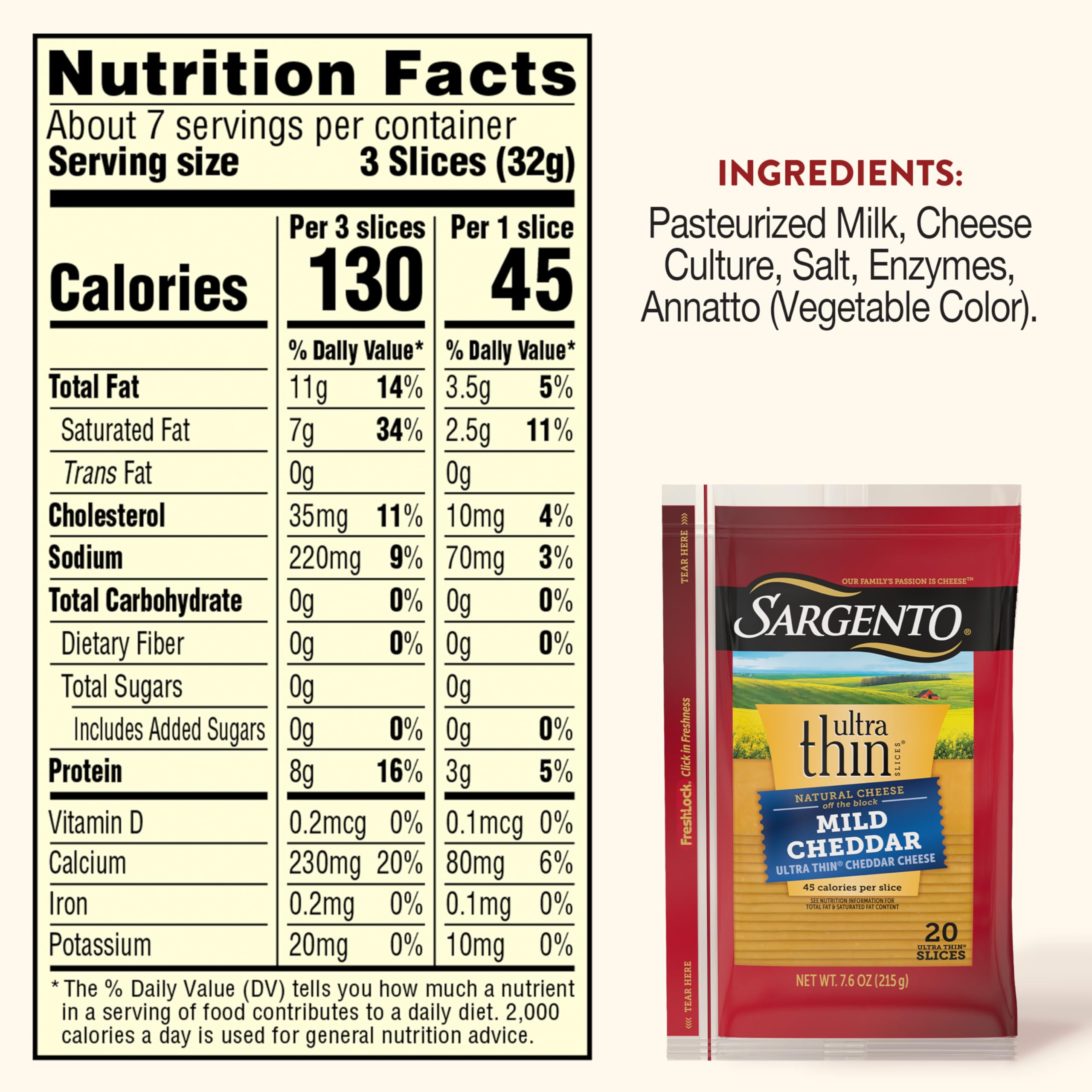
This cheese product is made from pasteurized milk, cheese culture, salt, enzymes, and annatto for coloring. While it contains a minimal number of additives and no harmful ingredients like seed oils or artificial sweeteners, it is classified as ultra-processed due to its processing level. The use of annatto is generally safe, but the ultra-processing nature of the product limits its score despite its otherwise clean ingredient list.
Key ingredients 6
Cheese cultureGood
Beneficial ingredient — whole-food or functional value in this product class.
Benefits
Contributes to the development of flavor and texture in cheese.
Pasteurized milkNeutral
Pasteurized milk is a common base for cheese production, providing essential proteins and fats. The pasteurization process kills harmful bacteria but may reduce some beneficial enzymes. It is a standard ingredient in cheese making with no significant health concerns.
Benefits
Provides essential proteins and fats necessary for cheese production.
SaltNeutral
Salt is used in cheese making to enhance flavor and act as a preservative. It is a common ingredient in many foods, but excessive consumption can lead to health issues. In cheese, it helps control moisture and texture.
Risks
Excessive salt intake can lead to high blood pressure and other cardiovascular issues.
Benefits
Enhances flavor and acts as a preservative in cheese.
EnzymesNeutral
Enzymes are used in cheese making to coagulate milk, forming curds. They are essential for the cheese production process and are typically derived from animal or microbial sources. Enzymes help in developing the cheese's texture and flavor.
Benefits
Essential for coagulating milk and forming curds in cheese production.
AnnattoNeutral
Annatto is a natural vegetable color used to give cheese its characteristic yellow-orange hue. It is derived from the seeds of the achiote tree and is considered safe for consumption. Annatto does not affect the flavor or nutritional value of the cheese.
Benefits
Provides natural coloring without affecting flavor or nutritional value.
E160bBad
E160b, also known as annatto, is used as a coloring agent in foods. While it is natural, some individuals may experience allergic reactions or intolerance. It is generally considered safe but can cause issues for sensitive individuals.
Risks
May cause allergic reactions or intolerance in sensitive individuals.
Benefits
Provides natural coloring to foods without synthetic additives.
Processing
Ultra-Processed Foods
Get the full breakdown in the Scout appTake Scout shopping
Scan any product to see lab results, healthy alternatives, and your personalized analysis.
Are you Food Club? Fix an error Get the badge Get tested


