


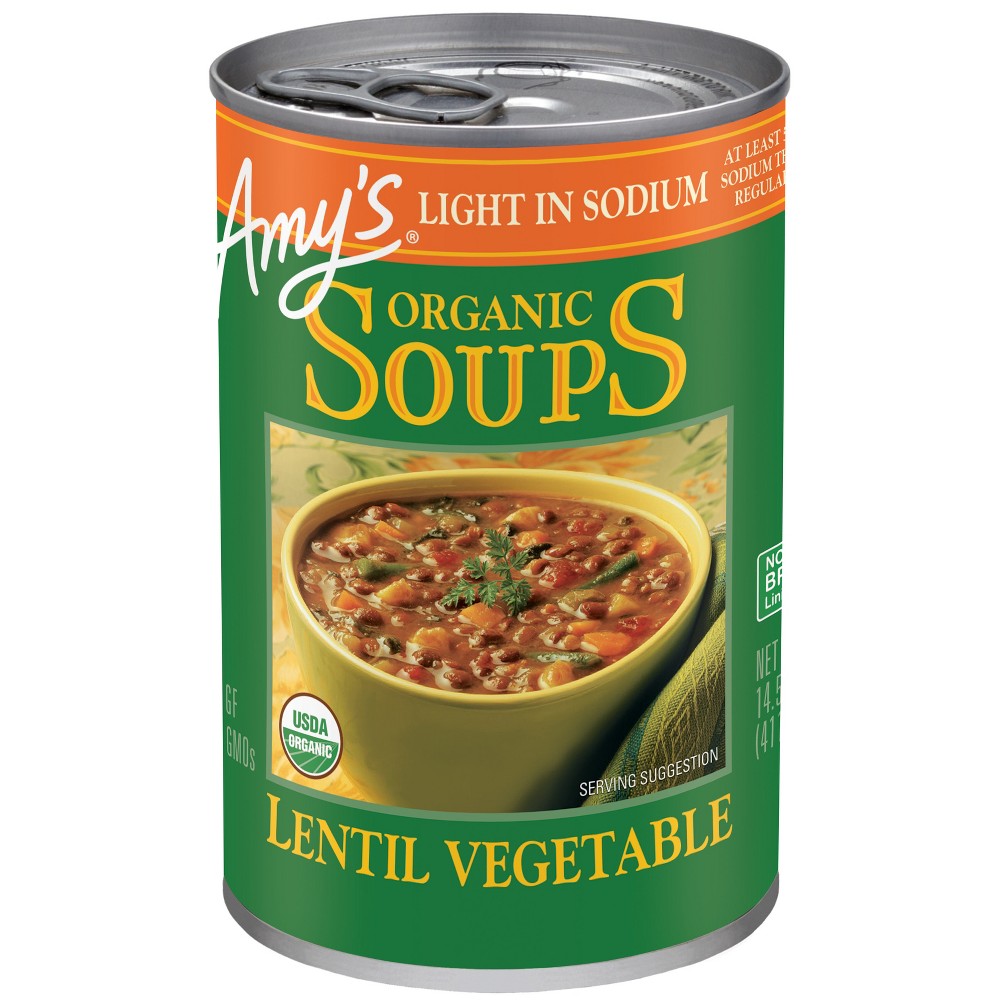
Amy's Organic Soups
Analysis updated June 2026 · How Scout scores
At a glance
Summary
This organic soup contains a variety of beneficial ingredients such as organic vegetables and legumes, which provide essential nutrients and antioxidants. However, the presence of organic high oleic safflower and/or sunflower oil, a seed oil, introduces a potential health concern due to its high omega-6 fatty acid content and processing level. Despite being organic, the soup is still a processed food, which limits its overall score.
Key ingredients 18
Organic onionsGood
Organic onions are a source of antioxidants and have anti-inflammatory properties. Being organic, they are free from synthetic pesticides and fertilizers. They add flavor and nutritional value to the soup.
Benefits
Rich in antioxidants and may support immune health.
Organic diced tomatoesGood
Organic diced tomatoes provide vitamins A and C and are rich in lycopene, an antioxidant. The organic certification ensures they are grown without synthetic chemicals. They enhance the flavor and nutritional profile of the soup.
Benefits
High in antioxidants and vitamins, supporting overall health.
Organic tomato pureeGood
Organic tomato puree is concentrated and provides a rich source of vitamins and antioxidants. The organic nature ensures minimal exposure to harmful chemicals. It adds depth and richness to the soup's flavor.
Benefits
Provides a concentrated source of nutrients and antioxidants.
Organic carrotsGood
Organic carrots are rich in beta-carotene, fiber, and vitamins. Being organic, they are grown without harmful pesticides. They contribute to the soup's nutritional value and sweetness.
Benefits
High in beta-carotene and fiber, supporting eye health and digestion.
Organic kidney beansGood
Organic kidney beans are a good source of plant-based protein and fiber. The organic certification ensures they are free from synthetic chemicals. They add protein and texture to the soup.
Benefits
Rich in protein and fiber, supporting muscle health and digestion.
Organic potatoesGood
Organic potatoes provide carbohydrates, vitamins, and minerals. The organic status ensures they are grown without synthetic pesticides. They add bulk and nutritional value to the soup.
Benefits
Source of energy and essential nutrients.
Organic celeryGood
Organic celery is low in calories and provides vitamins and antioxidants. Being organic, it is free from synthetic pesticides. It adds flavor and nutritional benefits to the soup.
Benefits
Contains antioxidants and vitamins, supporting overall health.
Organic green beansGood
Organic green beans are a source of vitamins, minerals, and fiber. The organic certification ensures they are grown without harmful chemicals. They contribute to the soup's nutritional profile.
Benefits
Rich in vitamins and fiber, supporting digestion and health.
Organic peasGood
Organic peas provide protein, fiber, and essential nutrients. Being organic, they are free from synthetic pesticides. They enhance the soup's nutritional content and texture.
Benefits
High in protein and fiber, supporting muscle health and digestion.
Organic leeksGood
Organic leeks are rich in vitamins and antioxidants. The organic certification ensures they are grown without synthetic pesticides. They add flavor and nutritional benefits to the soup.
Benefits
Contains antioxidants and vitamins, supporting overall health.
Sea saltGood
Unrefined sea salt — a minimally processed, natural source of sodium and essential trace minerals, and a legitimate whole-food seasoning. Treated as a positive ingredient.
Risks
Excessive consumption may lead to high blood pressure.
Benefits
Contains trace minerals and enhances flavor.
Organic spicesGood
Organic spices add flavor and may provide health benefits due to their antioxidant properties. Being organic, they are free from synthetic chemicals. They enhance the soup's taste and nutritional profile.
Benefits
May provide antioxidants and enhance flavor.
Organic garlicGood
Organic garlic is known for its antioxidant and anti-inflammatory properties. The organic certification ensures it is grown without synthetic pesticides. It adds flavor and potential health benefits to the soup.
Benefits
May support immune health and reduce inflammation.
Organic black pepperGood
Organic black pepper contains piperine, which may enhance nutrient absorption. Being organic, it is free from synthetic chemicals. It adds flavor and potential health benefits to the soup.
Benefits
May enhance nutrient absorption and adds flavor.
Filtered waterNeutral
Filtered water is used as a base for soups and helps in blending ingredients. It is free from impurities and contaminants. It does not contribute any nutritional value.
See more about Filtered water →Organic pastaNeutral
Organic pasta made from semolina flour provides carbohydrates and some protein. The organic status ensures minimal exposure to synthetic chemicals. It adds texture and substance to the soup.
Benefits
Provides carbohydrates for energy.
Bay leavesNeutral
Bay leaves are used to enhance flavor and have minimal nutritional impact. They are typically removed before consumption. They add aromatic qualities to the soup.
Benefits
Enhances flavor with aromatic qualities.
Organic high oleic safflower and/or sunflower oilVery Bad
High oleic safflower and sunflower oils are seed oils high in omega-6 fatty acids. These oils are highly processed and may contribute to inflammation when consumed in excess. Despite being organic, they are not recommended due to their omega-6 content.
Risks
High omega-6 content may promote inflammation when consumed in excess.
Processing
Processed Foods
Get the full breakdown in the Scout appTake Scout shopping
Scan any product to see lab results, healthy alternatives, and your personalized analysis.
Download on theApp Store GET IT ONGoogle PlayAmazon pricing & content
Amazon price as of . Product prices and availability are accurate as of the date/time indicated and are subject to change. Any price and availability information displayed on Amazon.com at the time of purchase will apply to the purchase of this product.
CERTAIN CONTENT THAT APPEARS ON THIS SITE COMES FROM AMAZON. THIS CONTENT IS PROVIDED “AS IS” AND IS SUBJECT TO CHANGE OR REMOVAL AT ANY TIME.