
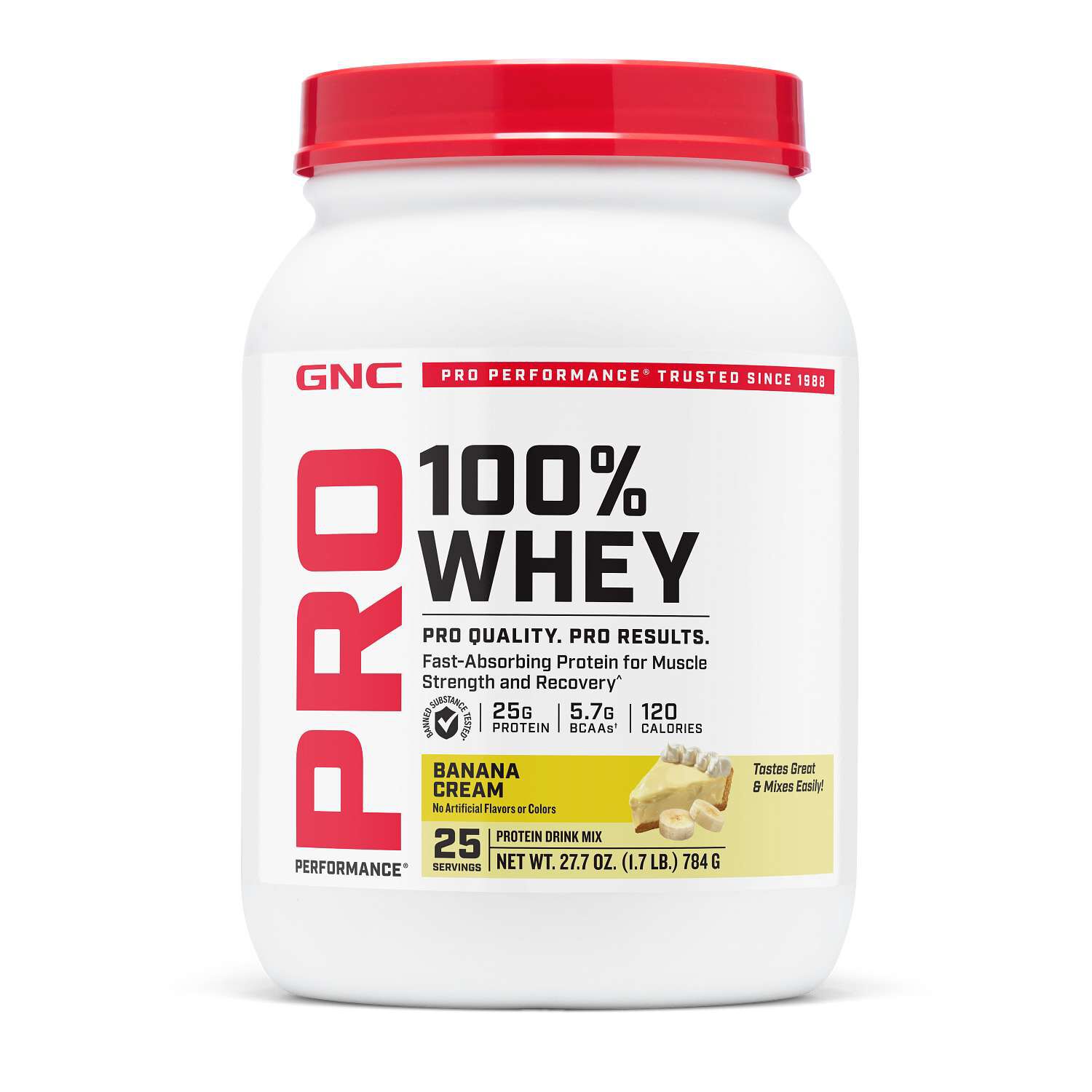

GNC 100% Whey Protein Banana Cream
Analysis updated September 2026 · How Scout scores
At a glance
Summary
This protein powder contains high-quality whey protein isolate and concentrate, which are beneficial for muscle growth and recovery. However, it includes sunflower creamer with sunflower oil and maltodextrin, which are highly processed and can promote inflammation. The presence of sucralose, an artificial sweetener, and multiple gums and emulsifiers further contribute to its processed nature, impacting the overall score.
Key ingredients 12
Whey Protein IsolateVery Good
Whey protein isolate is a high-quality protein source with a complete amino acid profile. It is highly bioavailable and supports muscle growth and recovery. It is minimally processed compared to other protein sources.
Benefits
Rich in essential amino acids, it supports muscle repair and growth.
Whey Protein ConcentrateGood
Whey protein concentrate is a high-quality protein with a slightly lower protein content than isolate. It retains more beneficial nutrients like immunoglobulins and lactoferrin. It is a cost-effective protein source with good bioavailability.
Risks
May contain lactose, which can be an issue for lactose-intolerant individuals.
Benefits
Supports muscle growth and provides additional nutrients like immunoglobulins.
MilkGood
Whole dairy ingredient.
Risks
May cause digestive issues for lactose-intolerant individuals.
Benefits
Provides protein, calcium, and other essential nutrients.
SaltNeutral
Salt is used to enhance flavor and preserve food. In moderate amounts, it is essential for maintaining fluid balance and nerve function. However, excessive intake can lead to hypertension.
Risks
Excessive consumption can contribute to high blood pressure.
Benefits
Essential for maintaining fluid balance and nerve function.
Xanthan GumNeutral
Xanthan gum is a common food additive used as a thickener and stabilizer. It is generally considered safe and is derived from natural fermentation processes. It can improve texture and consistency in food products.
Risks
Excessive consumption may cause digestive discomfort in sensitive individuals.
Benefits
Improves texture and consistency in food products.
Cellulose GumNeutral
Cellulose gum is a thickening agent derived from plant fibers. It is widely used in the food industry to improve texture and stability. It is generally recognized as safe and has no significant nutritional value.
Benefits
Improves texture and stability in food products.
Guar GumNeutral
Guar gum is a natural thickening agent derived from guar beans. It is used to improve texture and consistency in food products. It is generally considered safe and can aid in digestion by acting as a soluble fiber.
Risks
Excessive consumption may cause digestive discomfort.
Benefits
Acts as a soluble fiber and can aid in digestion.
Silicon DioxideNeutral
Silicon dioxide is used as an anti-caking agent to prevent clumping in powdered products. It is generally recognized as safe and is naturally found in many foods. It has no significant nutritional value.
Benefits
Prevents clumping and improves product stability.
Natural FlavorBad
Natural flavors are often used as a catch-all for various additives and can include a wide range of substances. They lack transparency and can mask the presence of less desirable ingredients. The term 'natural' does not guarantee health benefits.
Risks
Lack of transparency can lead to consumption of unknown additives.
Sunflower LecithinBad
Sunflower lecithin is used as an emulsifier in food products. While it is less processed than soy lecithin, it still involves chemical extraction processes. It is not as harmful as seed oils but still considered a processed additive.
Risks
May contain residues from chemical extraction processes.
Benefits
Helps improve texture and mixability in food products.
SucraloseBad
Sucralose is an artificial sweetener used to provide sweetness without calories. It is highly processed and may affect gut health by altering gut microbiota. It is a common sugar substitute but lacks nutritional benefits.
Risks
May alter gut microbiota and affect gut health.
Benefits
Provides sweetness without adding calories.
Sunflower CreamerVery Bad
Sunflower creamer contains sunflower oil, a seed oil high in omega-6 fatty acids, which can promote inflammation. It also includes maltodextrin, a high-glycemic filler. The combination of these ingredients makes it a highly processed additive.
Risks
High omega-6 content may promote inflammation when consumed in excess.
Processing
Ultra-Processed Foods
Get the full breakdown in the Scout appTake Scout shopping
Scan any product to see lab results, healthy alternatives, and your personalized analysis.
Download on theApp Store GET IT ONGoogle PlayAmazon pricing & content
Amazon price as of . Product prices and availability are accurate as of the date/time indicated and are subject to change. Any price and availability information displayed on Amazon.com at the time of purchase will apply to the purchase of this product.
CERTAIN CONTENT THAT APPEARS ON THIS SITE COMES FROM AMAZON. THIS CONTENT IS PROVIDED “AS IS” AND IS SUBJECT TO CHANGE OR REMOVAL AT ANY TIME.