
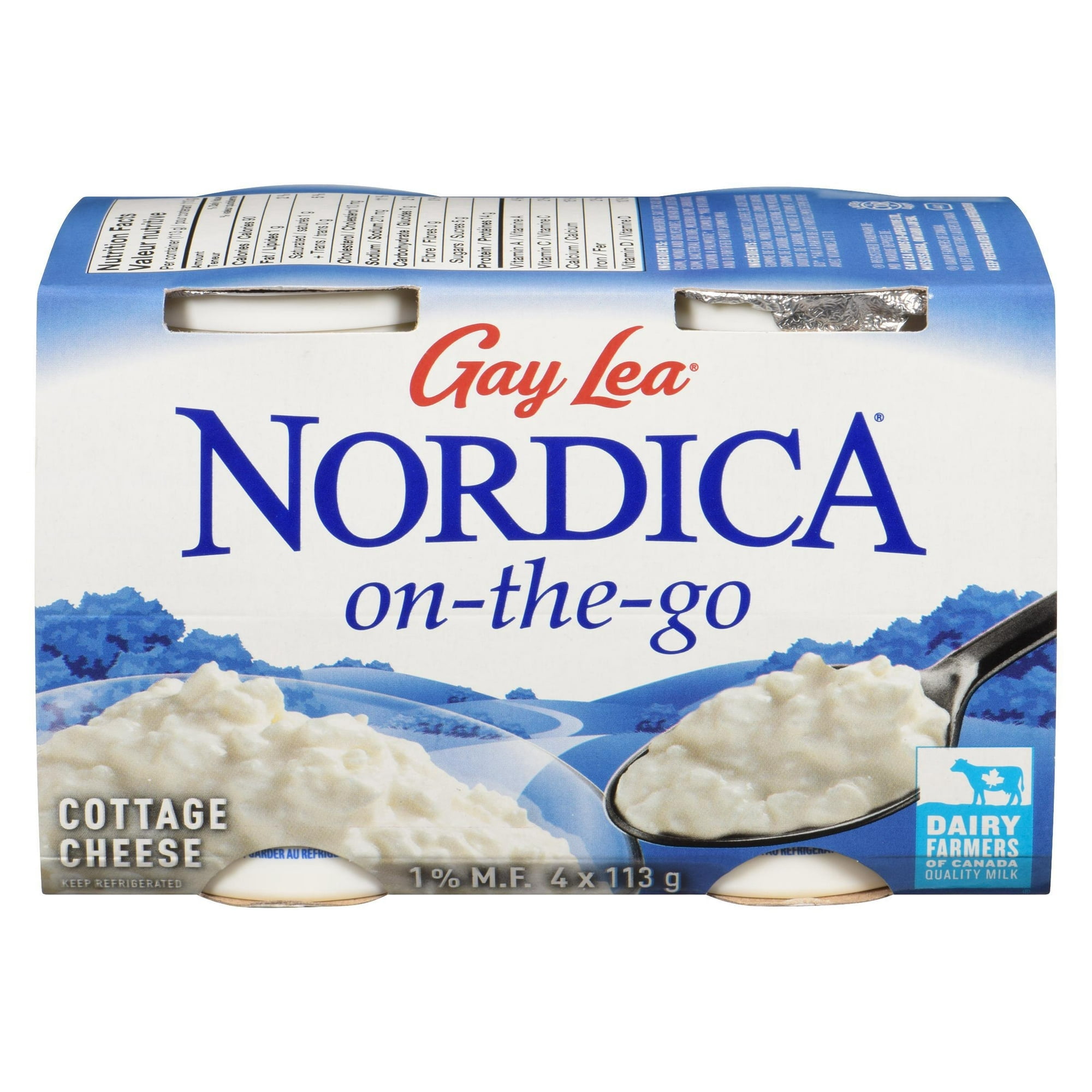


Nordica On-The-Go Single Serve Plain 1% M. F. Cottage Cheese 113 G
Analysis updated August 2026 · How Scout scores
At a glance
Summary
This cottage cheese product is ultra-processed, which limits its potential health score despite having beneficial ingredients like milk and bacterial cultures. The presence of emulsifiers such as mono- and diglycerides, along with multiple gums, contributes to its processing level and raises concerns about potential trans fats. While it offers a good protein content, the additives and processing level prevent it from scoring higher.
Key ingredients 9
Milk ingredientsGood
Milk ingredients provide a rich source of high-quality protein and essential nutrients. They are minimally processed and retain beneficial compounds like calcium and vitamin D. Compared to plant-based proteins, they offer a more complete amino acid profile.
Risks
Potential lactose intolerance or milk allergy concerns for sensitive individuals.
Benefits
Rich in protein, calcium, and vitamin D, supporting bone health and muscle maintenance.
Bacterial cultureGood
Bacterial cultures are essential for fermentation, contributing to the development of flavor and texture in cheese. They promote beneficial gut bacteria and improve digestion. Compared to non-fermented products, they offer probiotic benefits.
Benefits
Supports gut health and enhances flavor through fermentation.
SaltNeutral
Salt is used to enhance flavor and preserve the product. It is a common ingredient in cheese production. While necessary in small amounts, excessive consumption can lead to health issues.
Risks
High sodium intake can contribute to hypertension and cardiovascular disease.
Benefits
Essential for maintaining fluid balance and nerve function in the body.
Citric acidNeutral
Citric acid is used as a preservative and to add acidity to the product. It is naturally found in citrus fruits and is generally recognized as safe. It helps maintain the product's freshness and flavor.
Risks
Excessive consumption may cause dental erosion or gastrointestinal discomfort.
Benefits
Helps preserve the product and enhance its flavor without significant health risks.
Guar gumNeutral
Guar gum is used as a thickening agent to improve texture. It is derived from guar beans and is a common additive in processed foods. It is generally considered safe in moderate amounts.
Risks
May cause digestive issues like gas or bloating in sensitive individuals.
Benefits
Improves texture and consistency of the product without significant health risks.
Xanthan gumNeutral
Xanthan gum is a common thickening agent used to stabilize and improve texture. It is produced by fermenting sugars with bacteria. Generally recognized as safe, it is widely used in food products.
Risks
May cause digestive discomfort in large amounts for some individuals.
Benefits
Enhances texture and stability of the product without significant health risks.
Locust bean gumNeutral
Locust bean gum is a natural thickener derived from carob seeds. It is used to improve texture and stability in food products. It is generally considered safe and is a common additive in processed foods.
Risks
May cause digestive issues like gas or bloating in sensitive individuals.
Benefits
Improves texture and stability of the product without significant health risks.
Microbial enzymeNeutral
Microbial enzymes are used to aid in the cheese-making process, particularly in coagulation. They are an alternative to animal rennet and are suitable for vegetarians. They are generally recognized as safe and effective in cheese production.
Benefits
Facilitates cheese production and is suitable for vegetarian diets.
Mono- and diglyceridesBad
Mono- and diglycerides are emulsifiers used to improve texture and extend shelf life. They are derived from fats and can contain trans fats. Their processing and potential trans fat content raise health concerns.
Risks
May contain trans fats, which are linked to increased risk of heart disease.
Benefits
Help maintain product consistency and extend shelf life.
Processing
Ultra-Processed Foods
Get the full breakdown in the Scout appTake Scout shopping
Scan any product to see lab results, healthy alternatives, and your personalized analysis.
Download on theApp Store GET IT ONGoogle Play