
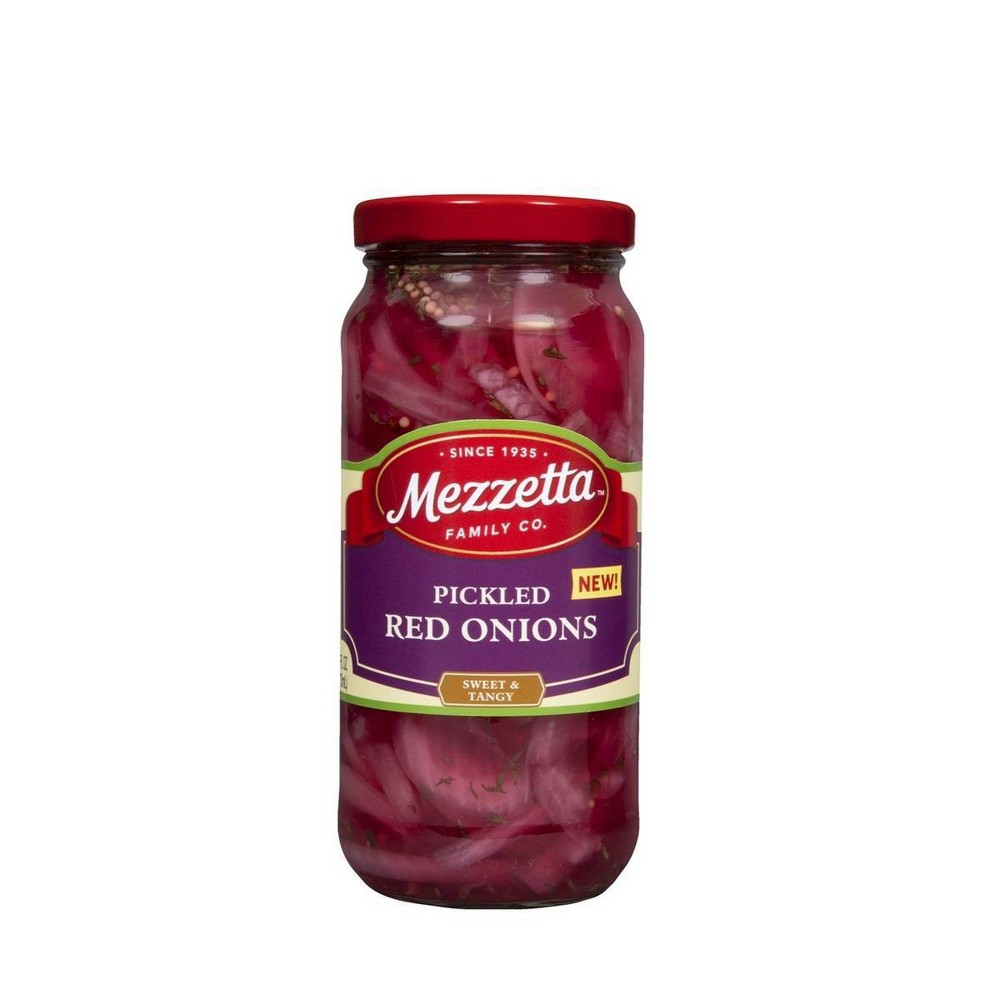

Mezzetta Pickled Red Onion - 16oz: Gluten-Free, No Artificial Colors, No Artificial Flavors
Analysis updated August 2026 · How Scout scores
At a glance
Summary
This product contains beneficial ingredients like red onions, spices, and rosemary extract, which contribute to its nutritional profile. However, it is processed and includes granulated sugar, which is a refined carbohydrate with limited nutritional value. The presence of sugar and the processing level limit its overall healthiness, despite the absence of artificial colors and flavors.
Key ingredients 10
Red onionsGood
Red onions are a natural source of vitamins, minerals, and antioxidants. They contain quercetin, which has anti-inflammatory properties. Being a whole food, they are minimally processed and retain their nutritional benefits.
Benefits
Rich in antioxidants and vitamins that support overall health and may reduce inflammation.
SpicesGood
Spices add flavor and may offer health benefits due to their antioxidant properties. They are minimally processed and can enhance the nutritional profile of foods. Different spices provide various health benefits, such as anti-inflammatory effects.
Benefits
May provide antioxidants and enhance flavor without adding calories.
Sea saltGood
Sea salt is a natural source of sodium and trace minerals. It is less processed than table salt and retains beneficial minerals. Used in moderation, it can enhance flavor and provide essential electrolytes.
Risks
Excessive intake can lead to high blood pressure and cardiovascular issues.
Benefits
Provides essential minerals and enhances flavor with minimal processing.
Rosemary extractGood
Rosemary extract is a natural antioxidant used to preserve freshness. It is derived from rosemary leaves and contains beneficial compounds like rosmarinic acid. It helps extend shelf life while providing potential health benefits.
Benefits
Acts as a natural preservative and provides antioxidant benefits.
WaterNeutral
Water is used as a solvent and carrier in food products. It is essential for hydration and does not contribute calories or nutrients. In this context, it serves as a medium for pickling.
See more about Water →Distilled vinegarNeutral
Distilled vinegar is used for its acidic properties in pickling. It acts as a preservative and flavor enhancer. The distillation process removes impurities, making it a clean ingredient.
Risks
Excessive consumption may lead to digestive discomfort.
Benefits
Acts as a preservative and enhances flavor without adding calories.
Citric acidNeutral
Citric acid is a natural preservative and flavor enhancer. It is commonly used in food processing to maintain acidity and freshness. It is generally recognized as safe when used in moderation.
Risks
Excessive consumption may cause digestive discomfort.
Benefits
Helps preserve food and enhance flavor without adding calories.
Calcium chlorideNeutral
Calcium chloride is used to maintain firmness in pickled products. It is a common food additive that is generally recognized as safe. It does not significantly alter the nutritional profile of the product.
Benefits
Helps maintain texture and firmness in pickled products.
Vegetable juice colorNeutral
Vegetable juice color is used as a natural coloring agent. It is derived from vegetables and is minimally processed. It provides color without the use of artificial dyes.
Benefits
Provides natural color without artificial additives.
Granulated sugarBad
Granulated sugar is a refined carbohydrate that can contribute to increased blood sugar levels. It is highly processed and lacks nutritional value. Excessive intake is linked to various health issues such as obesity and diabetes.
Risks
High consumption can lead to weight gain, insulin resistance, and dental issues.
Benefits
Provides sweetness and enhances flavor, but offers no nutritional benefits.
Processing
Processed Foods
Get the full breakdown in the Scout appTake Scout shopping
Scan any product to see lab results, healthy alternatives, and your personalized analysis.
Download on theApp Store GET IT ONGoogle PlayAmazon pricing & content
CERTAIN CONTENT THAT APPEARS ON THIS SITE COMES FROM AMAZON. THIS CONTENT IS PROVIDED “AS IS” AND IS SUBJECT TO CHANGE OR REMOVAL AT ANY TIME.