
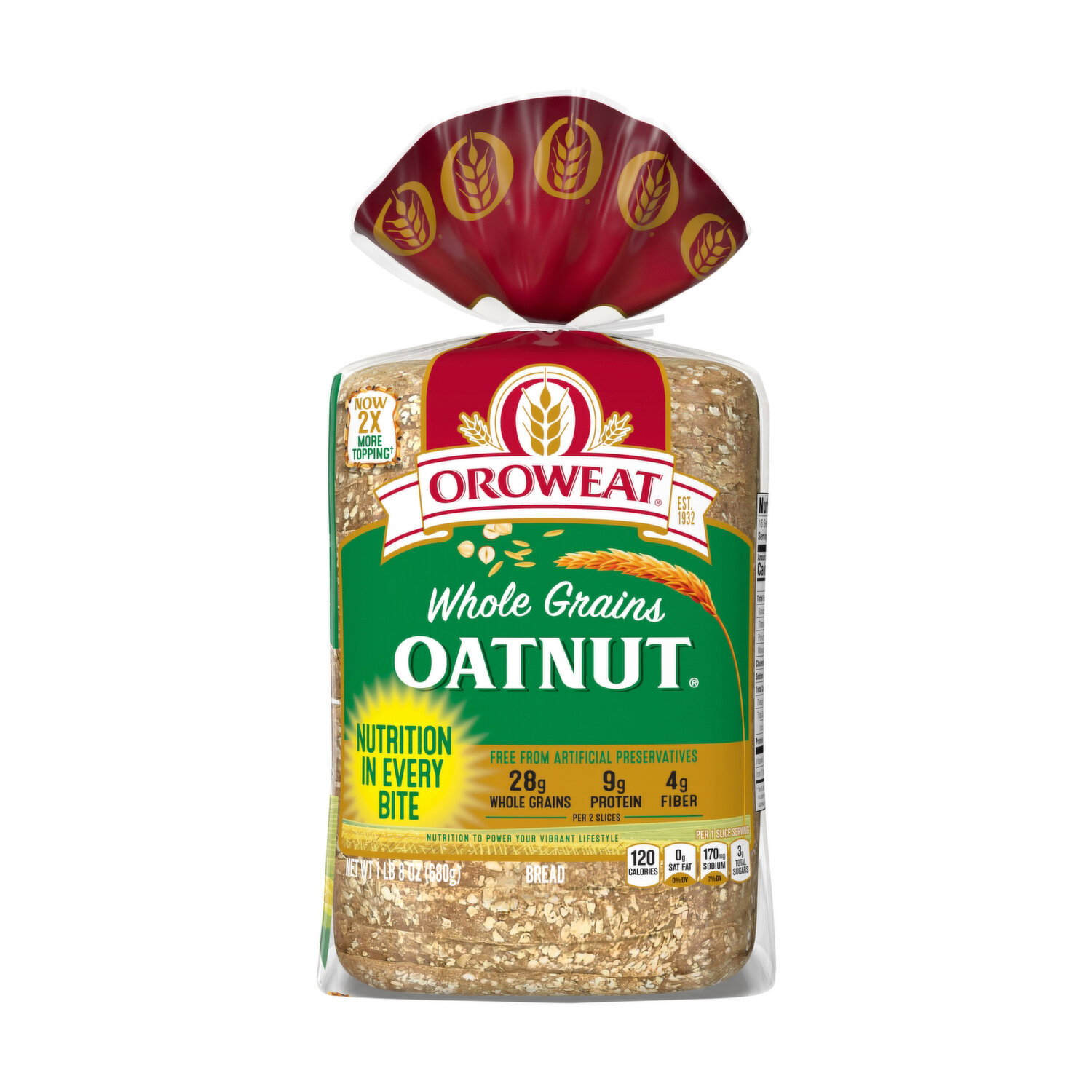



Oatnut bread
Summary
This oatnut bread contains several beneficial ingredients like whole wheat flour, oats, and various nuts, which provide fiber and healthy fats. However, the presence of enriched wheat flour, added sugar, and soybean oil, along with its high processing level, significantly impacts its healthiness. The use of additives and the ultra-processed nature of the product further limit its nutritional quality.
At a glance
Key ingredients 19
Whole Wheat FlourGood
Whole wheat flour is a source of dietary fiber and essential nutrients. It is less processed than refined flour, retaining more vitamins and minerals. This ingredient supports digestive health and provides sustained energy.
Benefits
Rich in dietary fiber, which aids in digestion and helps maintain stable blood sugar levels.
WaterNeutral
Water is a neutral ingredient used as a solvent and to provide moisture. It does not contribute any calories or nutrients. Its primary role is to aid in the mixing and baking process.
Benefits
Essential for hydration and necessary for the baking process.
Enriched Wheat FlourBad
Enriched wheat flour is refined flour with added vitamins and minerals. It lacks the fiber and nutrients found in whole grains. The enrichment process attempts to replace some lost nutrients but does not fully compensate for the loss of natural fiber.
Risks
May contribute to blood sugar spikes due to its refined nature and lack of fiber.
Benefits
Provides some essential vitamins and minerals due to enrichment, such as iron and B vitamins.
OatsGood
Oats are a whole grain rich in fiber, particularly beta-glucan, which supports heart health. They are minimally processed and provide a good source of vitamins, minerals, and antioxidants. Oats can help lower cholesterol levels and improve blood sugar control.
Benefits
High in soluble fiber, which can help reduce cholesterol and improve heart health.
SugarBad
Sugar is a refined carbohydrate that provides quick energy but lacks nutritional value. Excessive consumption can lead to health issues such as obesity and diabetes. It is often added to enhance flavor but should be consumed in moderation.
Risks
High intake can contribute to obesity, insulin resistance, and dental cavities.
Benefits
Provides quick energy but should be limited due to potential health risks.
Wheat GlutenNeutral
Wheat gluten is a protein that provides elasticity and structure to baked goods. It is a common ingredient in bread-making to improve texture. While it is beneficial for baking, it may cause issues for those with gluten sensitivity or celiac disease.
Risks
Can cause adverse reactions in individuals with gluten intolerance or celiac disease.
Benefits
Improves the texture and structure of bread, making it more palatable.
YeastGood
Yeast is a natural leavening agent that helps bread rise and develop flavor. It is a source of B vitamins and contributes to the fermentation process. Yeast enhances the nutritional profile of bread by producing beneficial compounds during fermentation.
Benefits
Contributes to the leavening and flavor development in bread, providing B vitamins.
Vegetable Oil (Soybean)Very Bad
Soybean oil is a seed oil high in omega-6 fatty acids, which can promote inflammation if consumed in excess. It is often highly processed and refined, which can reduce its nutritional quality. The high omega-6 content may disrupt the balance of fatty acids in the diet.
Risks
High omega-6 content may promote inflammation when consumed in excess.
HazelnutsGood
Hazelnuts are a nutrient-dense nut rich in healthy fats, vitamins, and minerals. They provide monounsaturated fats, which support heart health, and are a good source of vitamin E and antioxidants. Hazelnuts can improve lipid profiles and reduce inflammation.
Risks
May cause allergic reactions in individuals with nut allergies.
Benefits
Rich in monounsaturated fats and antioxidants, supporting heart health and reducing inflammation.
Cultured Wheat FlourNeutral
Cultured wheat flour is treated with natural cultures to enhance flavor and shelf life. It is used as a natural preservative in baked goods. While it does not provide significant nutritional benefits, it helps maintain product quality.
Benefits
Helps preserve the freshness and flavor of baked goods naturally.
Sea SaltGood
Unrefined sea salt — a minimally processed, natural source of sodium and essential trace minerals, and a legitimate whole-food seasoning. Treated as a positive ingredient.
Risks
Excessive consumption can lead to high blood pressure and related health issues.
Benefits
Contains trace minerals and enhances the flavor of food.
Sunflower SeedsGood
Sunflower seeds are a good source of healthy fats, protein, and essential nutrients like vitamin E and magnesium. They provide antioxidants and support heart health. Sunflower seeds can improve lipid profiles and reduce inflammation.
Risks
May cause allergic reactions in some individuals.
Benefits
Rich in healthy fats and antioxidants, supporting heart health and reducing inflammation.
Soy LecithinNeutral
Soy lecithin is an emulsifier used to improve texture and extend shelf life. It is derived from soybeans and is generally recognized as safe. While it does not provide significant nutritional benefits, it is widely used in food processing.
Risks
May cause allergic reactions in individuals with soy allergies.
Benefits
Improves texture and shelf life of products without significant nutritional benefits.
Grain VinegarNeutral
Grain vinegar is used as a flavor enhancer and preservative. It is made from fermented grains and adds acidity to foods. While it does not provide significant nutritional benefits, it can enhance the flavor profile of products.
Benefits
Enhances flavor and acts as a natural preservative.
Citric AcidNeutral
Citric acid is a natural preservative and flavor enhancer. It is commonly used to add acidity and improve shelf life. While it is generally recognized as safe, excessive consumption can cause digestive discomfort.
Risks
Excessive consumption may cause digestive discomfort.
Benefits
Acts as a natural preservative and enhances flavor.
SoyBad
Soy is a common allergen and can interfere with thyroid function in susceptible individuals. It is often genetically modified and heavily processed. While it provides protein, its potential health risks and processing concerns are notable.
Risks
May cause allergic reactions and interfere with thyroid function.
Benefits
Provides plant-based protein but with potential health concerns.
WheyGood
Whey is a high-quality protein source rich in essential amino acids. It supports muscle growth and repair and is easily digestible. Whey protein is beneficial for athletes and those looking to increase protein intake.
Risks
May cause digestive issues in lactose-intolerant individuals.
Benefits
Rich in essential amino acids, supporting muscle growth and repair.
NutsGood
Nuts like walnuts and almonds are rich in healthy fats, protein, and essential nutrients. They provide antioxidants and support heart health. Regular consumption of nuts can improve lipid profiles and reduce inflammation.
Risks
May cause allergic reactions in individuals with nut allergies.
Benefits
Rich in healthy fats and antioxidants, supporting heart health and reducing inflammation.
Sesame SeedsGood
Sesame seeds are a good source of healthy fats, protein, and essential minerals like calcium and magnesium. They provide antioxidants and support bone health. Sesame seeds can improve lipid profiles and reduce inflammation.
Risks
May cause allergic reactions in some individuals.
Benefits
Rich in healthy fats and minerals, supporting bone health and reducing inflammation.
Processing
Ultra-Processed Foods
Get the full breakdown in the Scout app
Scan any product to see lab results, healthy alternatives, and your personalized analysis.
Download on theApp Store