


At a glance
Summary
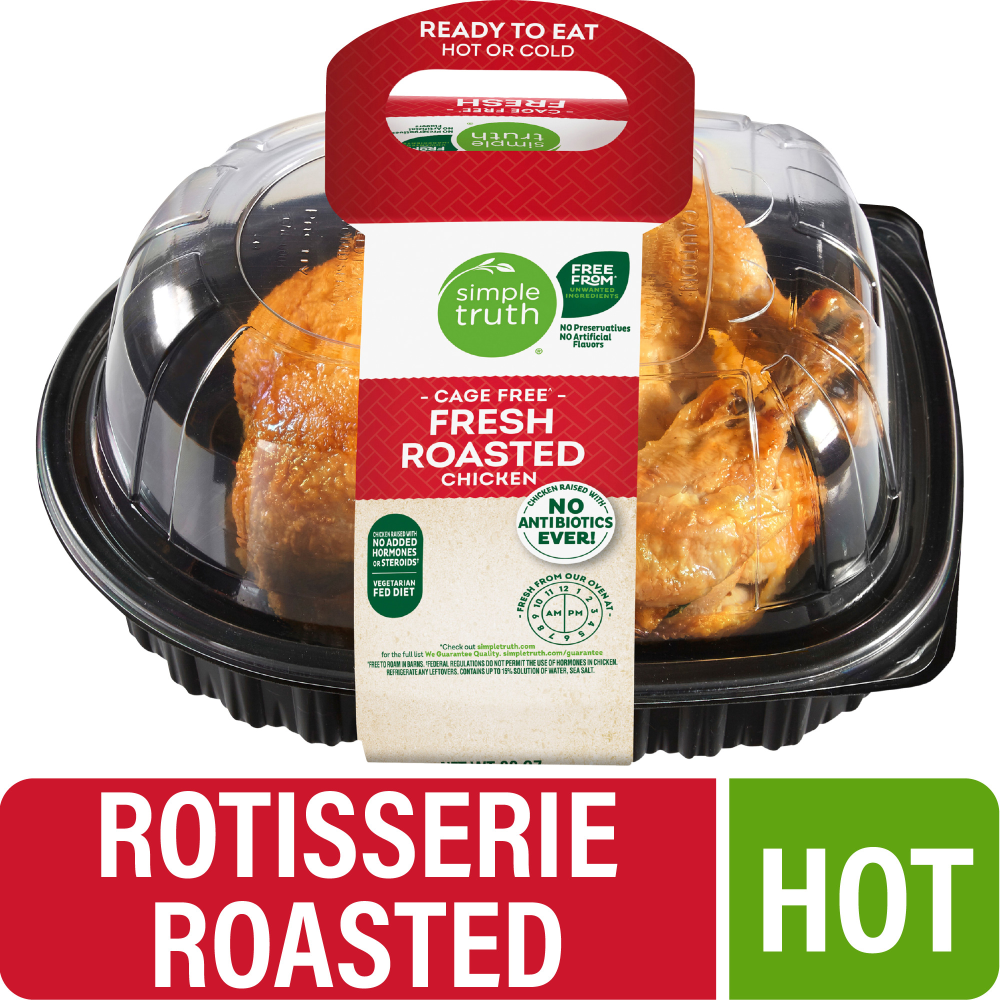
The whole roasted chicken is a source of high-quality protein and contains beneficial ingredients like whole chicken and sea salt. However, it is classified as ultra-processed due to the inclusion of additives such as natural flavors and evaporated cane sugar, which contribute to its processing level. The presence of these additives and the processing involved limit its health score despite the nutritional benefits of the chicken itself.
Key ingredients 8
Whole chickenGood
Whole chicken is a high-quality source of animal protein, providing essential amino acids. It is minimally processed compared to other meat products. The protein content supports muscle maintenance and overall health.
Risks
Potential risks include high cholesterol and saturated fat content if consumed in excess.
Benefits
Rich in protein and essential nutrients like B vitamins and selenium, which support metabolic and immune functions.
Sea saltGood
Sea salt is a natural source of sodium and trace minerals, minimally processed compared to table salt. It enhances flavor without the need for artificial additives. The trace minerals can contribute to electrolyte balance.
Risks
Excessive consumption can lead to high blood pressure and related health issues.
Benefits
Provides essential sodium for nerve and muscle function and contains trace minerals that may support overall health.
Rice starchNeutral
Rice starch is used as a thickening agent and is generally considered neutral in terms of health impact. It is derived from rice and is gluten-free. It does not provide significant nutritional benefits or risks.
See more about Rice starch →Guar gumNeutral
Guar gum is a thickening agent derived from guar beans, used to improve texture. It is generally recognized as safe but can cause digestive issues in sensitive individuals. It does not provide significant nutritional value.
Risks
May cause digestive discomfort such as bloating or gas in some individuals.
Xanthan gumNeutral
Xanthan gum is a polysaccharide used as a stabilizer and thickener in foods. It is produced through fermentation and is generally safe for consumption. It does not offer significant nutritional benefits.
Risks
May cause digestive issues like bloating or gas in sensitive individuals.
WaterNeutral
Water is used as a solvent and carrier in food products. It is essential for hydration but does not contribute additional nutrients in this context. It is a neutral component in terms of health impact.
Benefits
Essential for hydration and overall bodily functions.
Natural flavorsBad
Natural flavors are a catch-all term for flavoring agents that can include a variety of substances. They are often highly processed and lack transparency regarding their specific components. This can be concerning for individuals with allergies or sensitivities.
Risks
Potential allergen risk due to undisclosed ingredients and possible synthetic processing.
Evaporated cane sugarBad
Evaporated cane sugar is a refined sugar that contributes to added sugar intake. It can lead to increased calorie consumption without providing essential nutrients. Excessive intake is linked to metabolic issues.
Risks
High consumption can lead to weight gain, insulin resistance, and dental issues.
Processing
Ultra-Processed Foods
Get the full breakdown in the Scout appTake Scout shopping
Scan any product to see lab results, healthy alternatives, and your personalized analysis.
Download on theApp Store GET IT ONGoogle Play