
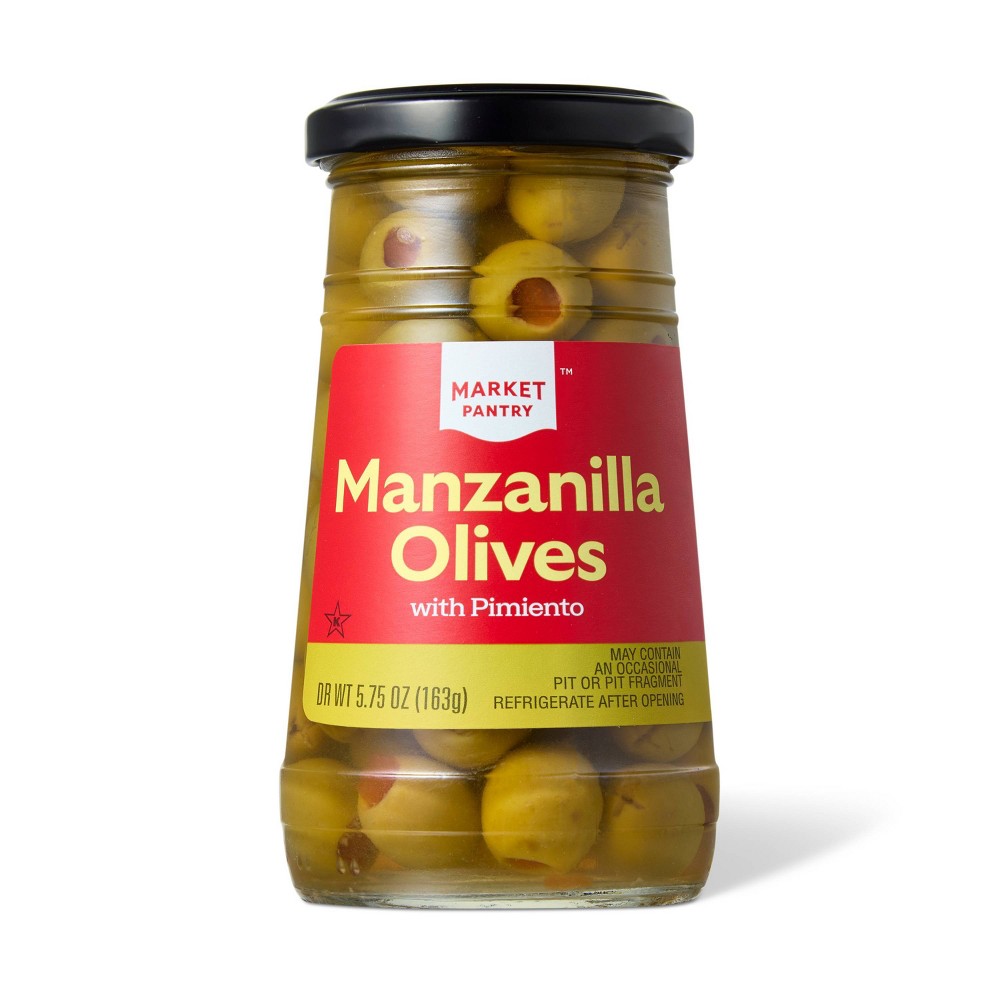


MANZANILLA OLIVES WITH PIMIENTO
Analysis updated September 2026 · How Scout scores
At a glance
Summary
This product contains manzanilla olives, which are a source of healthy monounsaturated fats and antioxidants. However, it is classified as ultra-processed due to the presence of multiple additives, including potassium sorbate, a synthetic preservative. The processing level and use of additives limit its health score despite the beneficial properties of olives.
Key ingredients 9
Manzanilla olivesGood
Manzanilla olives are a source of healthy monounsaturated fats. They contain antioxidants and anti-inflammatory compounds that support heart health. The natural fermentation process enhances their probiotic content.
Benefits
Rich in monounsaturated fats and antioxidants, which may support cardiovascular health and reduce inflammation.
WaterNeutral
Water is used as a solvent and carrier in food products. It is essential for maintaining the texture and moisture of the product. It does not contribute any nutritional value.
See more about Water →SaltNeutral
Salt is used for flavor enhancement and preservation. It is a common ingredient in processed foods to extend shelf life. Excessive consumption can lead to health issues such as hypertension.
Risks
High sodium intake can increase the risk of hypertension and cardiovascular diseases.
Benefits
Provides essential sodium for electrolyte balance and nerve function.
PimientoNeutral
Pimiento is used for flavor and color in food products. It is a type of sweet pepper that adds a mild, sweet taste. It is low in calories and provides some vitamins and antioxidants.
Benefits
Contains small amounts of vitamins and antioxidants, contributing to overall nutritional value.
Lactic acidNeutral
Lactic acid is used as a preservative and acidity regulator. It is naturally occurring and can enhance the flavor profile of foods. It is generally recognized as safe when used in food products.
Benefits
Helps preserve food and maintain its acidity, contributing to flavor and shelf life.
Sodium alginateNeutral
Sodium alginate is used as a thickening and gelling agent. It is derived from brown seaweed and is commonly used in food processing. It is considered safe for consumption in regulated amounts.
Risks
Excessive consumption may cause digestive discomfort.
Benefits
Provides texture and stability to food products without significant nutritional benefits.
Guar gumNeutral
Guar gum is used as a thickening agent and stabilizer in foods. It is derived from guar beans and helps improve texture and consistency. It is generally safe but can cause digestive issues in large amounts.
Risks
May cause digestive issues such as gas and bloating if consumed in large quantities.
Benefits
Improves texture and consistency of food products, aiding in product stability.
Calcium chlorideNeutral
Calcium chloride is used as a firming agent in food processing. It helps maintain the texture and firmness of foods like olives. It is generally recognized as safe when used in food products.
Benefits
Helps maintain firmness and texture in processed foods.
Potassium sorbateBad
Potassium sorbate is a preservative used to inhibit mold and yeast growth. It is a synthetic additive commonly used in processed foods. While generally recognized as safe, it can cause allergic reactions in sensitive individuals.
Risks
May cause allergic reactions or skin irritation in sensitive individuals.
Benefits
Extends shelf life by preventing mold and yeast growth in food products.
Processing
Ultra-Processed Foods
Get the full breakdown in the Scout appTake Scout shopping
Scan any product to see lab results, healthy alternatives, and your personalized analysis.
Download on theApp Store GET IT ONGoogle Play