
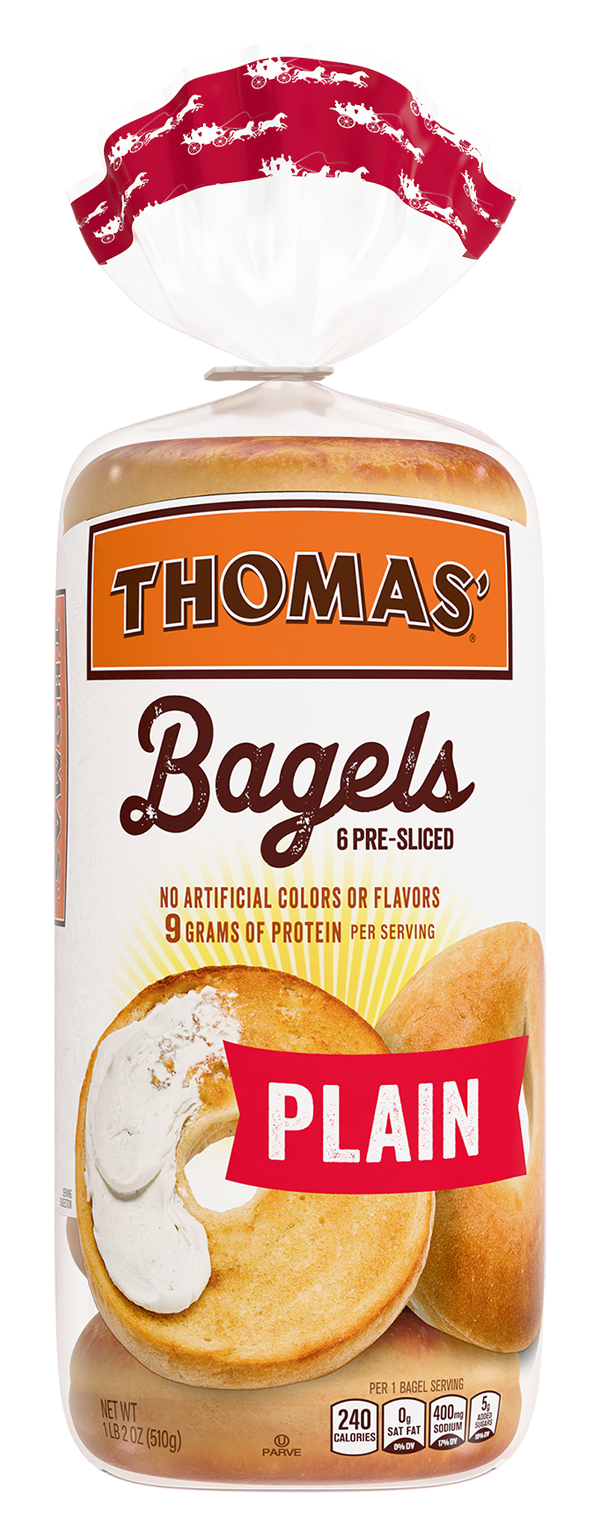



Plain Bagels
Summary
Plain Bagels are moderately processed and contain enriched wheat flour as a primary ingredient, which is less nutritious than whole grains. The product includes added sugars and salt, contributing to its processed nature. However, it lacks harmful additives like artificial colors or high-fructose corn syrup, which helps maintain a fair score within its category.
At a glance
Key ingredients 18
Enriched Wheat FlourNeutral
Enriched wheat flour is a refined flour that has been fortified with vitamins and minerals. It lacks the fiber and nutrients found in whole grain flour. The enrichment process adds back some nutrients lost during processing.
Risks
May contribute to blood sugar spikes due to its high glycemic index.
Benefits
Provides essential vitamins and minerals such as iron and B vitamins due to enrichment.
Wheat FlourNeutral
Wheat flour is a staple ingredient in many baked goods, providing structure and texture. It is typically refined, removing the bran and germ. This process reduces its nutritional content compared to whole wheat flour.
Risks
May cause blood sugar spikes and lacks fiber compared to whole grain options.
Benefits
Provides carbohydrates for energy and is a versatile baking ingredient.
Malted Barley FlourNeutral
Malted barley flour is used to enhance flavor and improve dough fermentation. It contains enzymes that help break down starches into sugars. This can improve the texture and rise of baked goods.
Benefits
Enhances flavor and aids in dough fermentation, improving texture and rise.
Reduced IronNeutral
Reduced iron is added to fortify flour with iron, an essential mineral. It helps prevent iron deficiency anemia. The form used is easily absorbed by the body.
Risks
Excessive iron intake can lead to toxicity, but this is rare from food sources.
Benefits
Helps prevent iron deficiency and supports oxygen transport in the body.
NiacinNeutral
Niacin, or vitamin B3, is added to enriched flour to support metabolic health. It plays a role in converting food into energy. Fortification helps prevent deficiencies in populations with limited dietary diversity.
Benefits
Supports energy metabolism and helps maintain healthy skin and nerves.
Thiamin MononitrateNeutral
Thiamin mononitrate is a form of vitamin B1 used to fortify flour. It is essential for energy metabolism and nerve function. Fortification helps prevent thiamin deficiency, especially in refined grain products.
Benefits
Supports energy metabolism and nerve function.
RiboflavinNeutral
Riboflavin, or vitamin B2, is added to enriched flour to support energy production. It is important for cellular function and growth. Fortification ensures adequate intake in diets lacking variety.
Benefits
Supports energy production and cellular function.
Folic AcidNeutral
Folic acid is a synthetic form of folate used to fortify flour. It is crucial for DNA synthesis and cell division. Fortification helps prevent neural tube defects in developing fetuses.
Risks
Excessive intake can mask vitamin B12 deficiency symptoms.
Benefits
Supports DNA synthesis and is important for fetal development.
WaterNeutral
Water is a basic ingredient used to hydrate flour and activate yeast. It is essential for dough formation and texture. Water quality can affect the final product's taste and texture.
Benefits
Essential for dough formation and contributes to the texture of baked goods.
Brown SugarNeutral
Brown sugar is used as a sweetener and flavor enhancer in baked goods. It contains molasses, which gives it a distinct flavor and color. It is less refined than white sugar but still contributes to added sugar intake.
Risks
Excessive consumption can contribute to weight gain and dental issues.
Benefits
Provides a distinct flavor and color to baked goods.
Wheat GlutenNeutral
Wheat gluten is added to improve dough elasticity and structure. It is a protein that helps trap air, giving bread its chewy texture. It is commonly used in bread-making to enhance texture.
Risks
Can cause adverse reactions in individuals with gluten intolerance or celiac disease.
Benefits
Improves dough elasticity and contributes to the chewy texture of bread.
SaltNeutral
Salt is used to enhance flavor and control yeast activity in dough. It is a common ingredient in baking for its preservative and flavor-enhancing properties. Excessive salt intake can lead to health issues.
Risks
High sodium intake is associated with increased blood pressure and cardiovascular risk.
Benefits
Enhances flavor and helps control yeast activity in dough.
Fermented Durum Wheat FlourNeutral
Fermented durum wheat flour is used to enhance flavor and improve dough texture. Fermentation can increase nutrient availability and digestibility. It is less common than regular wheat flour but offers unique properties.
Benefits
Enhances flavor and may improve nutrient availability through fermentation.
YeastNeutral
Yeast is a leavening agent that helps dough rise by producing carbon dioxide. It is essential for bread-making, contributing to texture and flavor. Yeast fermentation can also enhance nutrient availability.
Benefits
Essential for leavening and contributes to the texture and flavor of bread.
CornmealNeutral
Cornmeal is used to prevent sticking and add texture to baked goods. It is a coarse flour made from dried corn. While it adds texture, it is not a significant source of nutrients.
Benefits
Adds texture and prevents sticking in baked goods.
DextroseNeutral
Dextrose is a simple sugar used as a sweetener and to enhance browning in baked goods. It is chemically identical to glucose and quickly absorbed by the body. While it provides quick energy, it contributes to added sugar intake.
Risks
Excessive consumption can lead to weight gain and blood sugar spikes.
Benefits
Provides quick energy and enhances browning in baked goods.
Fermented Wheat FlourNeutral
Fermented wheat flour is used to enhance flavor and improve dough texture. Fermentation can increase nutrient availability and digestibility. It is less common than regular wheat flour but offers unique properties.
Benefits
Enhances flavor and may improve nutrient availability through fermentation.
Malted BarleyNeutral
Malted barley is used to enhance flavor and improve dough fermentation. It contains enzymes that help break down starches into sugars. This can improve the texture and rise of baked goods.
Benefits
Enhances flavor and aids in dough fermentation, improving texture and rise.
Processing
Processed Foods
Get the full breakdown in the Scout app
Scan any product to see lab results, healthy alternatives, and your personalized analysis.
Download on theApp Store