
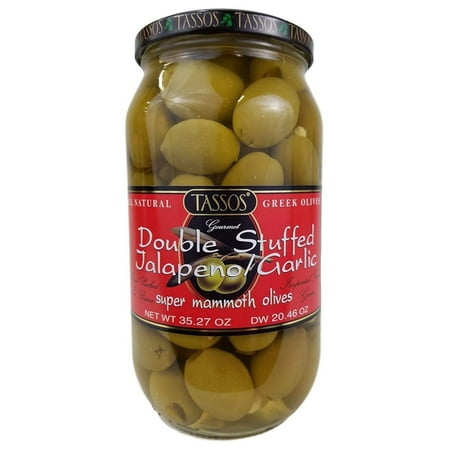
Member's Mark Pimento Stuffed Manzanilla Olives, 21 Ounce (Pack of 2)
Summary
This product is ultra-processed, containing multiple additives such as sodium alginate, guar gum, and potassium sorbate, which are used to preserve and stabilize the olives. While the olives themselves provide healthy fats and antioxidants, the presence of synthetic preservatives and the level of processing limit the overall healthiness of the product.
At a glance
Key ingredients 9
Pitted green olivesGood
Green olives are a source of healthy monounsaturated fats and antioxidants. They are minimally processed and provide beneficial nutrients like vitamin E. Their natural fermentation process can support gut health.
Risks
High sodium content may be a concern for individuals with hypertension or those on a low-sodium diet.
Benefits
Rich in monounsaturated fats that support heart health and provide anti-inflammatory properties. Contains antioxidants that may reduce oxidative stress.
WaterNeutral
Water is used as a solvent and carrier in food products. It is essential for hydration and does not contribute calories or nutrients. In this product, it helps maintain the texture and moisture of the olives.
See more about Water →Pimento peppersNeutral
Pimento peppers add flavor and color to the olives. They are a natural ingredient with minimal processing. While they provide some vitamins, their quantity in this product is likely too low to offer significant nutritional benefits.
Benefits
Adds flavor and color to the product, enhancing its sensory appeal.
Sodium alginateNeutral
Sodium alginate is a natural thickening agent derived from seaweed. It is used to improve texture and stability in food products. Its use in small amounts is generally considered safe.
Risks
Excessive consumption may lead to digestive discomfort in sensitive individuals.
Benefits
Helps maintain the desired texture and consistency of the product.
Guar gumNeutral
Guar gum is a natural thickener and stabilizer derived from guar beans. It is used to improve the texture and shelf-life of food products. It is generally recognized as safe when consumed in typical amounts.
Risks
May cause digestive issues such as gas or bloating in some individuals when consumed in large quantities.
Benefits
Improves texture and consistency, enhancing the overall quality of the product.
Potassium sorbateBad
Potassium sorbate is a synthetic preservative used to inhibit mold and yeast growth. It is commonly used in processed foods to extend shelf life. While generally recognized as safe, some individuals may experience allergic reactions.
Risks
Potential for allergic reactions or sensitivities in some individuals.
Benefits
Effectively prevents spoilage, extending the product's shelf life.
Lactic acidNeutral
Lactic acid is a naturally occurring acid used as a preservative and flavoring agent. It is produced through fermentation and is generally considered safe. It helps maintain the acidity and flavor profile of the product.
Benefits
Contributes to the preservation and flavor enhancement of the product.
Citric acidNeutral
Citric acid is a natural acid found in citrus fruits, used as a preservative and flavor enhancer. It is widely used in the food industry and is generally recognized as safe. It helps maintain the acidity and freshness of the product.
Risks
Excessive consumption may lead to dental erosion over time.
Benefits
Enhances flavor and preserves freshness, contributing to the product's shelf life.
Ascorbic acidNeutral
Ascorbic acid, also known as vitamin C, is used as an antioxidant to prevent oxidation and spoilage. It is a natural compound found in many fruits and vegetables. In this product, it helps maintain color and freshness.
Benefits
Acts as an antioxidant, helping to preserve the product and maintain its quality.
Processing
Ultra-Processed Foods
Get the full breakdown in the Scout app
Scan any product to see lab results, healthy alternatives, and your personalized analysis.
Download on theApp Store