



At a glance
Summary
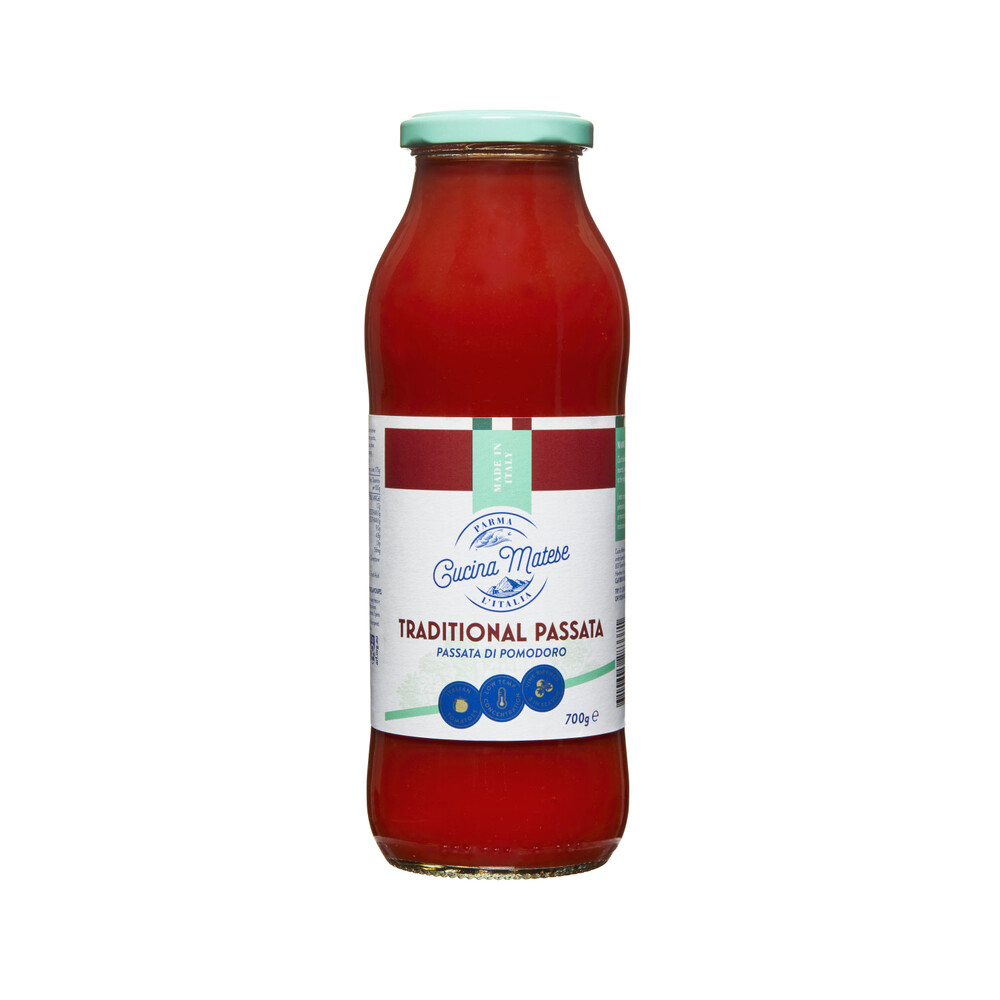
This passata is primarily made from tomatoes, basil, and onions, which are minimally processed and retain their nutritional benefits. However, the addition of sugar, a refined carbohydrate, introduces a processed element that can contribute to increased caloric intake and potential health issues. The product's processing level and the presence of sugar slightly reduce its overall health score, despite the beneficial ingredients.
Key ingredients 7
Peeled chopped tomatoesGood
Peeled chopped tomatoes are a rich source of vitamins A and C, and antioxidants like lycopene. They are minimally processed, retaining most of their nutritional value. The peeling process removes some fiber but enhances the absorption of lycopene.
Benefits
Rich in antioxidants that may reduce the risk of chronic diseases. Provides essential vitamins and minerals that support overall health.
Passata tomatoesGood
Passata tomatoes are pureed and strained to remove seeds and skins, providing a smooth texture. This process retains the natural nutrients and enhances the bioavailability of lycopene. They are a good source of vitamins and antioxidants.
Benefits
High in lycopene, which may support heart health and reduce inflammation. Provides vitamins A and C, contributing to immune function and skin health.
BasilGood
Basil is an aromatic herb known for its anti-inflammatory and antioxidant properties. It contains essential oils that may support digestive health. The herb is minimally processed, preserving its beneficial compounds.
Benefits
Contains antioxidants that may protect cells from damage. Supports digestive health and adds flavor without calories.
OnionGood
Onion is a vegetable rich in vitamins, minerals, and antioxidants. It is minimally processed, retaining its nutritional benefits. Onions may support heart health and have anti-inflammatory properties.
Benefits
Contains antioxidants that may reduce inflammation and support heart health. Provides vitamins and minerals essential for overall health.
SaltNeutral
Salt is used as a seasoning and preservative, providing essential sodium for bodily functions. It is a refined product without additional minerals. While necessary in small amounts, excessive intake can lead to health issues.
Risks
High sodium intake may contribute to hypertension and cardiovascular diseases.
Benefits
Provides essential sodium needed for nerve and muscle function.
Citric acidNeutral
Citric acid is used as an acidity regulator and preservative in foods. It is a naturally occurring compound found in citrus fruits. In processed foods, it is synthetically produced but generally recognized as safe.
Risks
Excessive consumption may cause digestive discomfort in sensitive individuals.
Benefits
Helps preserve the freshness and flavor of foods without significant nutritional benefits.
SugarBad
Sugar is a refined carbohydrate that can contribute to increased blood sugar levels and caloric intake. It is highly processed and lacks nutritional benefits. Excessive consumption is linked to various health issues, including obesity and diabetes.
Risks
High intake may lead to weight gain, insulin resistance, and increased risk of chronic diseases.
Processing
Processed Foods
Get the full breakdown in the Scout appTake Scout shopping
Scan any product to see lab results, healthy alternatives, and your personalized analysis.
Download on theApp Store GET IT ONGoogle Play