

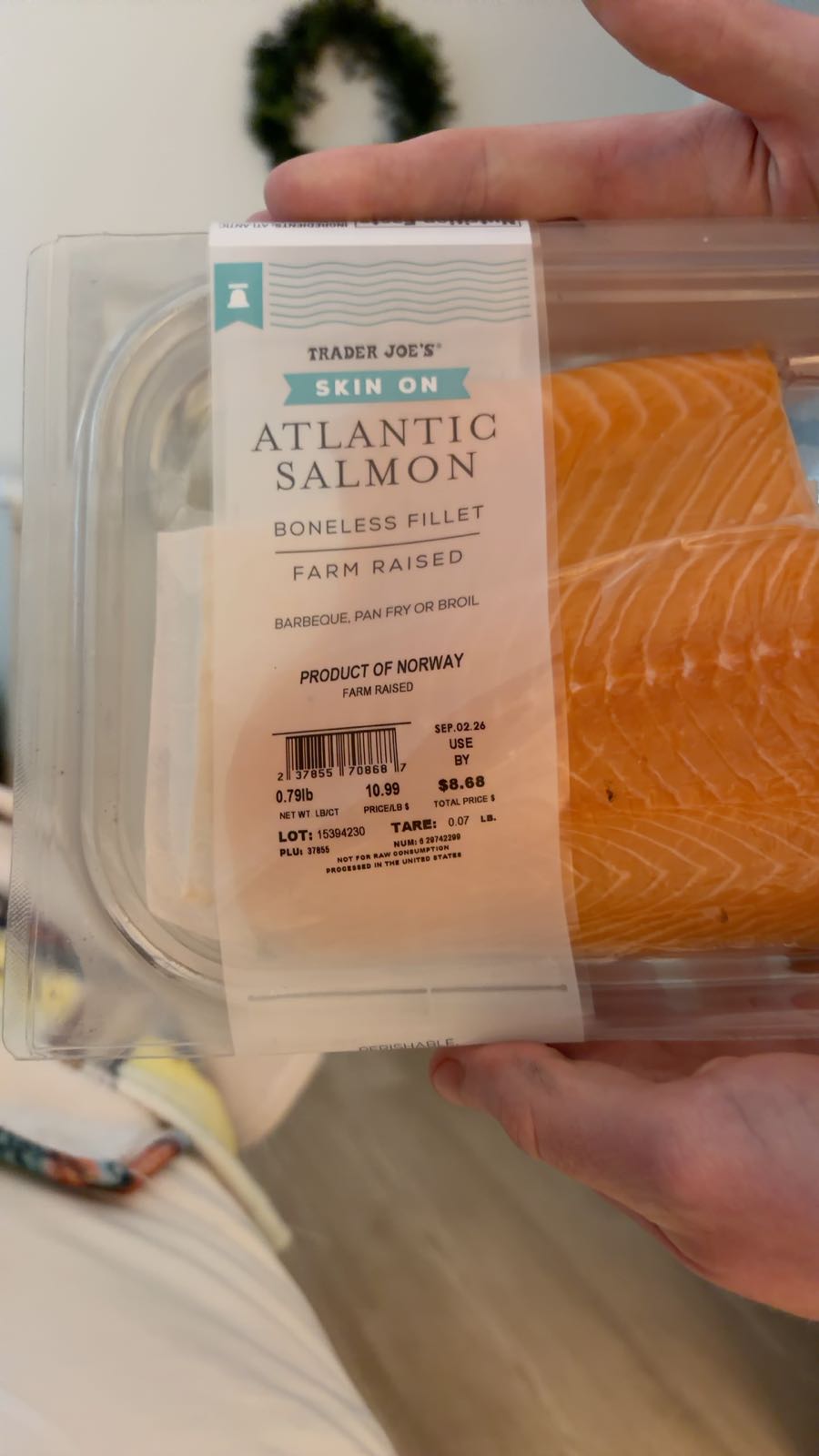






ATLANTIC SALMON BONELESS FILLET
Trader Joe'sAnalysis updated September 2026 · How Scout scores
Near you
Trader Joe's is carried at Trader Joe stores. Find one within 25 miles.
At a glance
Summary
The Atlantic Salmon Boneless Fillet is a processed product due to the addition of color, which is used to enhance appearance and may involve artificial dyes. While the primary ingredient is a whole food, the use of color additives detracts from its natural quality. The processing level and presence of added color limit the score, despite the product being a good source of protein.
Key ingredients 2
Atlantic salmonNeutral
Atlantic salmon is a good source of protein and omega-3 fatty acids, which are beneficial for heart health. However, farmed salmon may contain higher levels of contaminants compared to wild-caught salmon. The nutritional profile can vary based on the farming practices and feed used.
Risks
Farmed salmon may contain higher levels of contaminants such as PCBs and dioxins.
Benefits
Rich in omega-3 fatty acids, which support cardiovascular health and reduce inflammation.
Color addedBad
The addition of color to salmon is often used to enhance its appearance, which may involve artificial dyes. Artificial colorings can have potential health risks and may cause allergic reactions in sensitive individuals. The use of color additives is a sign of processing, which can detract from the natural quality of the product.
Risks
Artificial dyes may cause allergic reactions and have been linked to behavioral issues in children.
Processing
Processed Foods
Get the full breakdown in the Scout appTake Scout shopping
Scan any product to see lab results, healthy alternatives, and your personalized analysis.
Download on theApp Store GET IT ONGoogle Play