
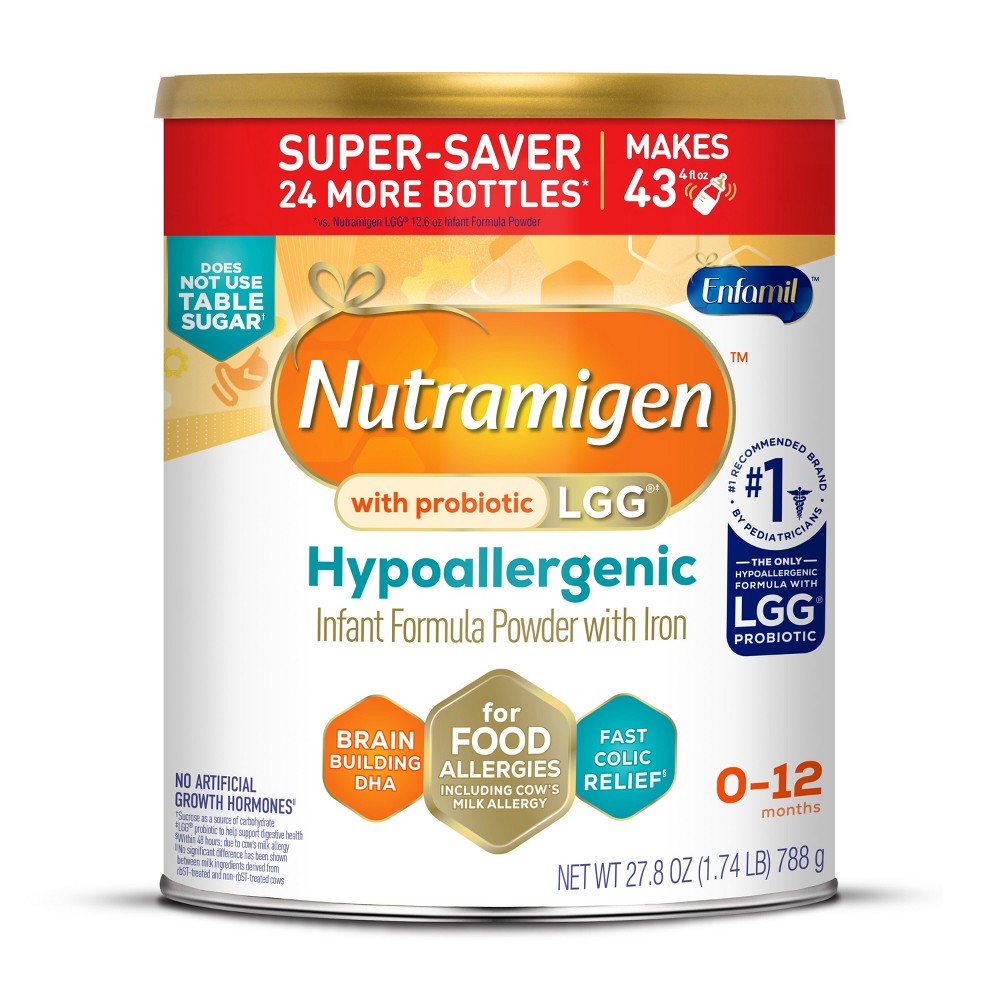


Enfamil Nutramigen LGG Hypoallergenic Powder Infant Formula - 27.8oz: Unflavored, Mixable
Analysis updated August 2026 · How Scout scores
At a glance
Summary
This infant formula contains beneficial ingredients such as casein hydrolysate, which is easier to digest for infants with milk protein allergies, and essential fatty acids like DHA and ARA for brain and eye development. However, the presence of corn syrup solids, a processed sugar, raises concerns due to its potential impact on blood sugar levels. The formula is moderately processed, but it includes important nutrients and probiotics that support infant health.
Key ingredients 15
Casein HydrolysateGood
Casein hydrolysate is a pre-digested form of milk protein, making it easier to digest for infants with milk protein allergies. It provides essential amino acids necessary for growth and development. The hydrolyzed form reduces allergenic potential.
Benefits
Easily digestible protein source for infants with allergies.
Mortierella Alpina OilGood
Mortierella alpina oil is a source of arachidonic acid (ARA), an omega-6 fatty acid important for brain and eye development in infants. It is derived from a fungus and used in infant formulas to mimic the fatty acid profile of breast milk. ARA is crucial for infant growth and cognitive development.
Benefits
Supports brain and eye development in infants.
Crypthecodinium Cohnii OilGood
Crypthecodinium cohnii oil is a source of docosahexaenoic acid (DHA), an omega-3 fatty acid essential for brain and eye development. It is derived from microalgae and is a common addition to infant formulas. DHA is crucial for cognitive development and visual acuity.
Benefits
Supports cognitive development and visual acuity in infants.
Lactobacillus Rhamnosus GGGood
Lactobacillus rhamnosus GG is a probiotic strain that supports gut health and immune function. It is well-researched and known for its ability to survive stomach acid and colonize the gut. Probiotics can help reduce the risk of gastrointestinal infections and improve digestion.
Benefits
Promotes healthy gut flora and supports immune function.
Calcium CitrateGood
Calcium citrate is a highly absorbable form of calcium, essential for bone development and maintenance. It is used in infant formulas to ensure adequate calcium intake for growing infants. Calcium is crucial for strong bones and teeth.
Benefits
Supports bone health and development in infants.
Calcium PhosphateGood
Calcium phosphate provides both calcium and phosphorus, essential minerals for bone and teeth development. It is commonly used in infant formulas to support skeletal growth. Adequate intake of these minerals is crucial for healthy bone formation.
Benefits
Supports healthy bone and teeth development.
Ferrous SulfateGood
Ferrous sulfate is a form of iron used to prevent and treat iron deficiency anemia. It is an essential mineral for oxygen transport in the blood. Adequate iron intake is crucial for cognitive development and energy production.
Benefits
Prevents iron deficiency anemia and supports cognitive development.
Vegetable OilNeutral
Vegetable oil blend includes palm olein, coconut, soy, and high oleic sunflower oils. High oleic sunflower oil is bred to be low in linoleic acid, making it a neutral choice in infant formulas. The blend provides essential fatty acids necessary for infant development.
Risks
Soy oil is a seed oil and may contribute to inflammation if consumed in excess.
Benefits
High oleic sunflower oil provides monounsaturated fats beneficial for heart health.
Modified Corn StarchNeutral
Modified corn starch is used as a thickening agent to improve texture and stability. It is generally considered safe but offers little nutritional value. It is processed to alter its properties for specific food applications.
Benefits
Improves texture and stability of the formula.
Potassium ChlorideNeutral
Potassium chloride is used to provide potassium, an essential electrolyte for maintaining fluid balance and nerve function. It is a common ingredient in infant formulas to ensure adequate potassium intake. Potassium is vital for muscle function and heart health.
Benefits
Supports fluid balance and nerve function.
Potassium CitrateNeutral
Potassium citrate is used to provide potassium and help regulate acidity in the formula. It is an important electrolyte for maintaining fluid balance and muscle function. Potassium citrate is often used to prevent kidney stones.
Benefits
Helps maintain fluid balance and prevent kidney stones.
Sodium CitrateNeutral
Sodium citrate is used as an acidity regulator and to provide sodium, an essential electrolyte. It helps maintain the pH balance of the formula. Sodium is important for nerve function and fluid balance.
Benefits
Helps regulate acidity and maintain fluid balance.
Calcium HydroxideNeutral
Calcium hydroxide is used to adjust acidity and provide calcium. It is a common additive in food processing. Calcium is essential for bone health.
Benefits
Provides calcium for bone health.
Magnesium OxideNeutral
Magnesium oxide is used to provide magnesium, an essential mineral for muscle and nerve function. It is a common supplement form of magnesium. Magnesium supports energy production and bone health.
Benefits
Supports muscle and nerve function.
Corn Syrup SolidsBad
Corn syrup solids are a processed form of sugar that can contribute to high glycemic load. They are often used as a cheap sweetener and can lead to increased blood sugar levels. Excessive consumption may contribute to obesity and metabolic disorders.
Risks
High glycemic index may lead to spikes in blood sugar levels.
Benefits
Provides a source of carbohydrates for energy.
Processing
Processed Foods
Get the full breakdown in the Scout appTake Scout shopping
Scan any product to see lab results, healthy alternatives, and your personalized analysis.
Download on theApp Store GET IT ONGoogle Play