
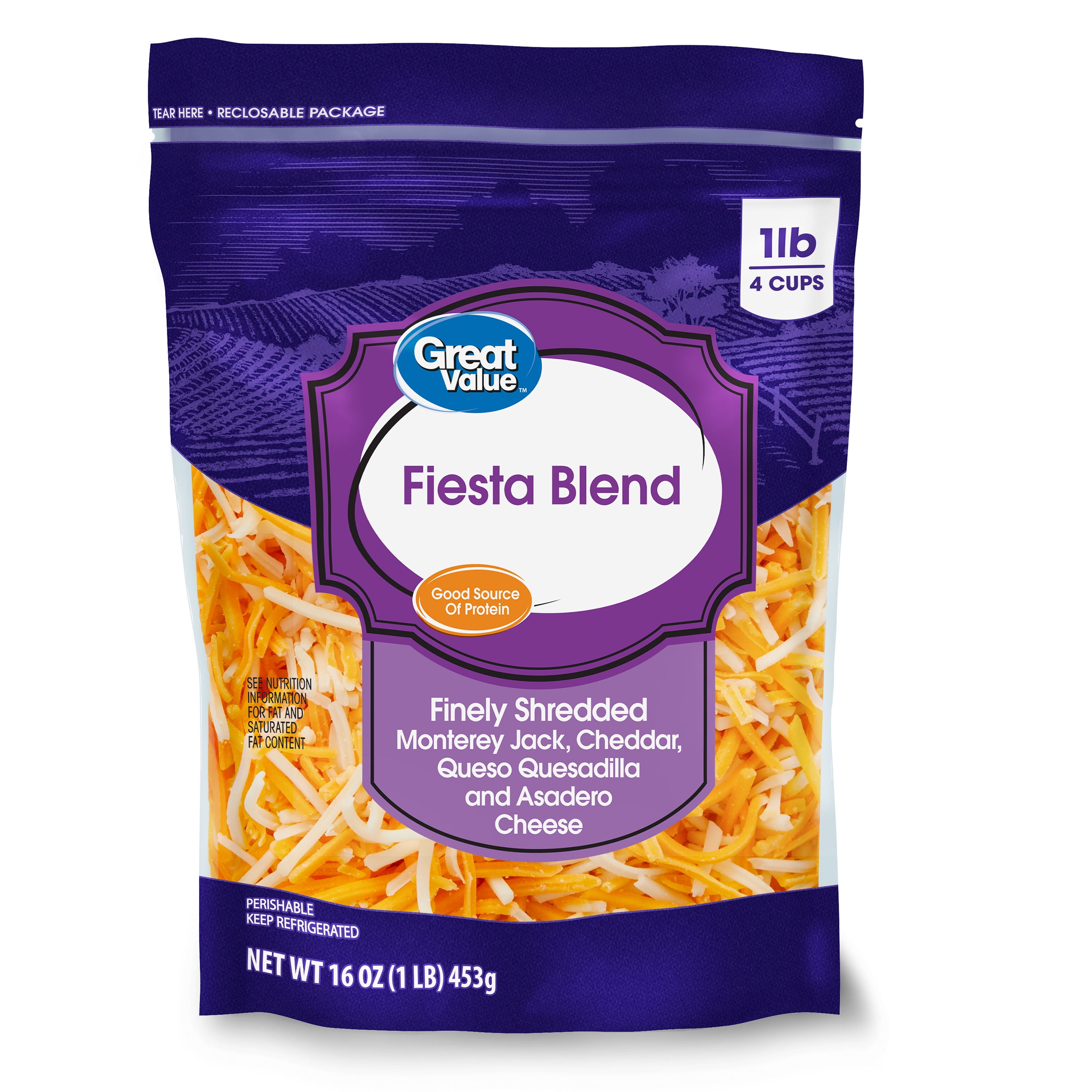


GREAT VALUE, FINELY SHREDDED FIESTA BLEND CHEESE
Great ValueAnalysis updated August 2026 · How Scout scores
Near you
Great Value is carried at Walmart stores. Find one within 25 miles.
At a glance
Summary
This cheese blend is composed of multiple types of cheese, which are generally nutritious and provide a good source of protein and calcium. However, the product is considered ultra-processed due to the inclusion of additives like natamycin and starches, which are used to prevent clumping and spoilage. While these additives are not harmful in small quantities, they contribute to the product's processing level, limiting its score.
Key ingredients 7
Cheddar cheeseGood
Beneficial ingredient — whole-food or functional value in this product class.
Risks
High in saturated fats, which can increase cholesterol levels if consumed excessively.
Benefits
Rich in protein and calcium, supporting bone health and muscle maintenance.
Monterey Jack cheeseNeutral
Monterey Jack cheese is a dairy product made from pasteurized milk, cheese culture, salt, and enzymes. It is a source of protein and calcium but also contains saturated fats. The cheese is minimally processed, retaining its natural nutrients.
Risks
Contains saturated fats which may contribute to heart disease if consumed in excess.
Benefits
Provides protein and calcium, essential for bone health and muscle function.
Asadero cheeseNeutral
Asadero cheese is a traditional Mexican cheese made from pasteurized milk, cheese culture, salt, and enzymes. It is known for its melting properties and is a source of protein and calcium. The cheese is minimally processed, preserving its nutritional content.
Risks
Contains saturated fats, which may pose cardiovascular risks if consumed in large amounts.
Benefits
Provides essential nutrients like protein and calcium, beneficial for bone and muscle health.
Quesadilla cheeseNeutral
Quesadilla cheese is made from pasteurized milk, cheese culture, salt, and enzymes, commonly used for its melting qualities. It offers protein and calcium but also contains saturated fats. The cheese is minimally processed, maintaining its natural benefits.
Risks
High in saturated fats, potentially increasing the risk of heart disease with excessive intake.
Benefits
Supplies protein and calcium, important for maintaining healthy bones and muscles.
Potato starchNeutral
Potato starch is used as an anti-caking agent in shredded cheese products. It is a refined carbohydrate with no significant nutritional value. The starch helps prevent clumping without altering the cheese's flavor.
See more about Potato starch →Tapioca starchNeutral
Tapioca starch is used to prevent clumping in shredded cheese. It is a refined carbohydrate with minimal nutritional content. The starch is derived from the cassava root and is gluten-free.
See more about Tapioca starch →NatamycinBad
Natamycin is a natural mold inhibitor used to extend the shelf life of cheese. While it is effective in preventing spoilage, it is an additive that some consumers may prefer to avoid. Its use is generally recognized as safe in small quantities.
Risks
Potential for allergic reactions in sensitive individuals, though generally considered safe.
Benefits
Helps prevent mold growth, extending the product's shelf life.
Processing
Ultra-Processed Foods
Get the full breakdown in the Scout appTake Scout shopping
Scan any product to see lab results, healthy alternatives, and your personalized analysis.
Download on theApp Store GET IT ONGoogle Play