
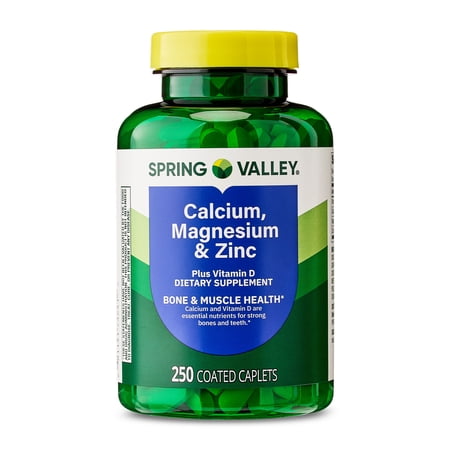

Spring Valley Calcium Magnesium & Zinc Plus Vitamin D3 Coated Caplets 250 Count
Analysis updated July 2026 · How Scout scores
At a glance
Summary
This supplement contains beneficial ingredients such as calcium carbonate, cholecalciferol, and zinc sulfate, which support bone health and immune function. However, the presence of maltodextrin and magnesium stearate, both highly processed additives, detracts from its overall quality. Additionally, the product includes a significant number of additives, which impacts its processing level and overall formulation integrity.
Key ingredients 16
CholecalciferolVery Good
Cholecalciferol, or Vitamin D3, is a highly effective form of vitamin D used to support bone health and immune function. It is well-absorbed and helps in the regulation of calcium and phosphorus in the body. Compared to Vitamin D2, it is more potent and longer-lasting.
Risks
Excessive intake can lead to vitamin D toxicity, resulting in hypercalcemia and associated health issues.
Benefits
Crucial for maintaining healthy bones and teeth, and supports immune system function.
Zinc SulfateGood
Zinc sulfate is a form of zinc used in supplements to support immune function and wound healing. It is a highly bioavailable form of zinc, though it may cause gastrointestinal discomfort in some individuals. Compared to other forms, it is effective in addressing zinc deficiencies.
Risks
High doses can cause nausea, vomiting, and interfere with the absorption of other minerals.
Benefits
Essential for immune function, DNA synthesis, and cell division, and supports overall health.
Calcium CarbonateNeutral
Standard formulation ingredient — neither beneficial nor harmful at typical use.
Risks
Excessive intake can lead to hypercalcemia, which may cause kidney stones or impaired absorption of other minerals.
Benefits
Essential for maintaining strong bones and teeth, and plays a role in muscle function and nerve signaling.
Magnesium OxideNeutral
Magnesium oxide is a common form of magnesium used in supplements, known for its high magnesium content. However, it has lower bioavailability compared to other forms like magnesium citrate. It is often used to support muscle and nerve function.
Risks
May cause gastrointestinal discomfort or diarrhea in some individuals when taken in high doses.
Benefits
Supports muscle and nerve function, and is involved in over 300 biochemical reactions in the body.
Carnauba WaxNeutral
Carnauba wax is used as a coating agent in supplements to provide a shiny finish and protect the tablet. It is derived from the leaves of the carnauba palm and is considered safe for consumption. It is commonly used in food and pharmaceutical products.
Benefits
Provides a protective coating that enhances the stability and shelf-life of the product.
Citric AcidNeutral
Citric acid is used as a preservative and flavoring agent in supplements. It is naturally found in citrus fruits and is generally recognized as safe. It helps to stabilize the product and enhance flavor.
Risks
May cause tooth enamel erosion if consumed in large quantities over time.
Benefits
Acts as a natural preservative and enhances the flavor profile of the product.
Croscarmellose SodiumNeutral
Croscarmellose sodium is used as a disintegrant in tablets to help them dissolve quickly. It is a cellulose derivative and is considered safe for consumption. It ensures the tablet breaks down efficiently in the digestive tract.
Benefits
Facilitates the rapid disintegration of tablets, improving the bioavailability of active ingredients.
GlycerinNeutral
Glycerin is used as a humectant and sweetener in supplements. It is a sugar alcohol that helps to maintain moisture and improve texture. It is generally recognized as safe and non-toxic.
Risks
Excessive consumption may cause gastrointestinal discomfort or laxative effects.
Benefits
Helps to retain moisture and improve the texture of the product.
Hydroxypropyl MethylcelluloseNeutral
Hydroxypropyl methylcellulose is used as a thickener and emulsifier in supplements. It is a cellulose derivative that is non-toxic and safe for consumption. It helps to stabilize the product and improve its consistency.
Benefits
Improves the stability and consistency of the product, ensuring uniformity in each dose.
Magnesium StearateNeutral
Standard formulation ingredient — neither beneficial nor harmful at typical use.
Risks
May interfere with the absorption of nutrients and is associated with potential contamination concerns.
PoloxamerNeutral
Poloxamer is used as a surfactant and emulsifier in supplements to improve solubility. It is a synthetic polymer that is generally recognized as safe. It helps to enhance the dispersion of ingredients in the digestive tract.
Benefits
Improves the solubility and dispersion of active ingredients, enhancing their bioavailability.
TalcNeutral
Talc is used as an anti-caking agent in supplements to prevent clumping. It is a naturally occurring mineral that is generally recognized as safe. It helps to improve the flow properties of powders during manufacturing.
Risks
Concerns about contamination with asbestos have been raised, but food-grade talc is considered safe.
Benefits
Prevents clumping and improves the flow properties of powders, aiding in manufacturing efficiency.
Triethyl CitrateNeutral
Triethyl citrate is used as a plasticizer in supplements to improve flexibility and coating properties. It is derived from citric acid and is considered safe for consumption. It helps to enhance the durability and stability of coated tablets.
Benefits
Improves the flexibility and durability of coated tablets, enhancing their stability.
MaltodextrinBad
Maltodextrin is a polysaccharide used as a filler or thickener in supplements. It is highly processed and can cause rapid spikes in blood sugar levels. It lacks nutritional value and is often used to bulk up products.
Risks
May contribute to blood sugar spikes and is not suitable for individuals with insulin sensitivity or diabetes.
Polysorbate 80Bad
Processed additive flagged under Scout's ingredient doctrine.
Risks
May cause allergic reactions or gastrointestinal discomfort in sensitive individuals.
Benefits
Enhances the stability and consistency of the product, ensuring uniformity in each dose.
Titanium DioxideVery Bad
Heavily flagged ingredient class under Scout's doctrine.
Risks
Concerns about potential carcinogenicity have been raised, but it is considered safe in regulated amounts.
Benefits
Improves the appearance of the product by providing a uniform white color.
Processing
Ultra-Processed Foods
Get the full breakdown in the Scout appTake Scout shopping
Scan any product to see lab results, healthy alternatives, and your personalized analysis.
Download on theApp Store GET IT ONGoogle Play